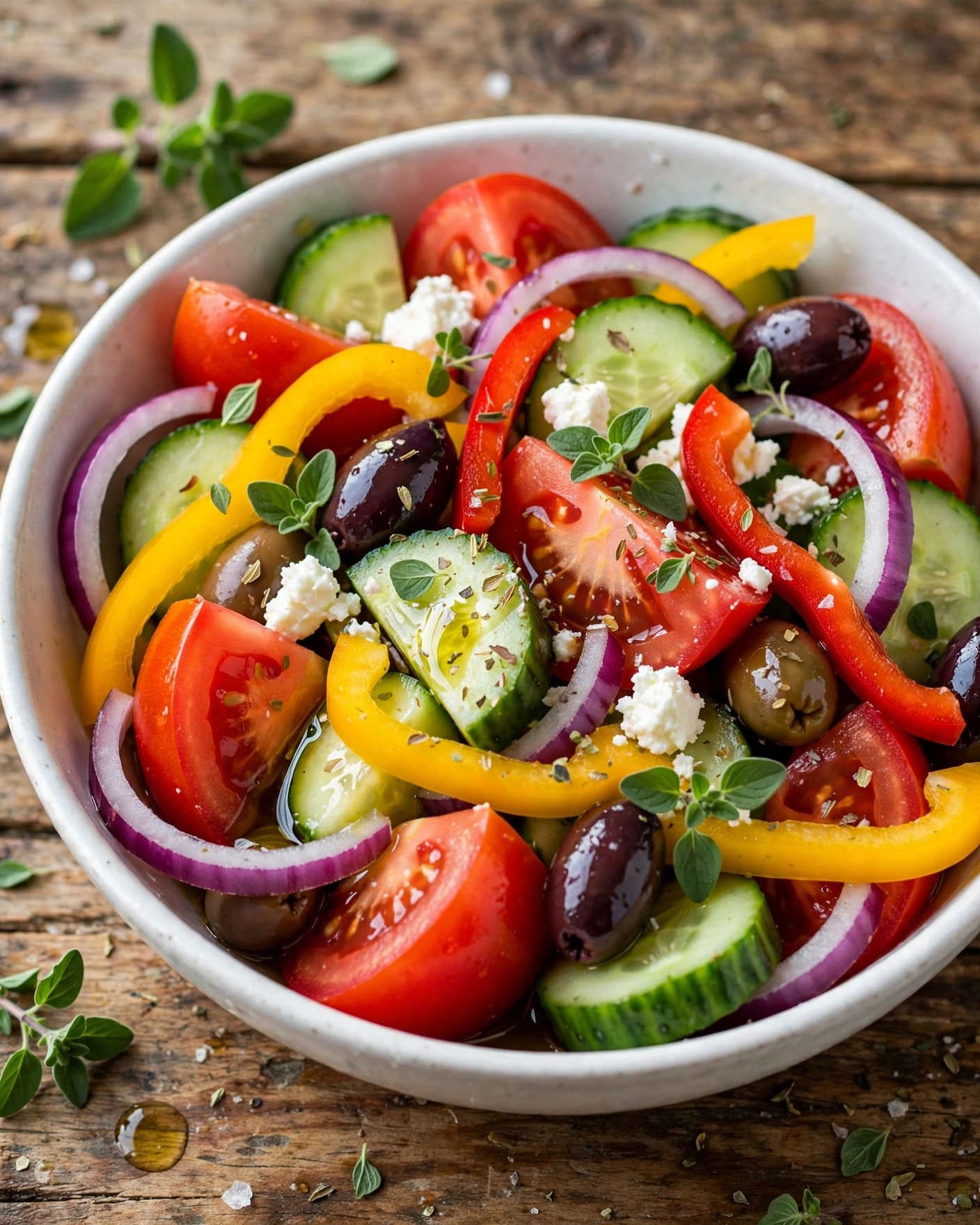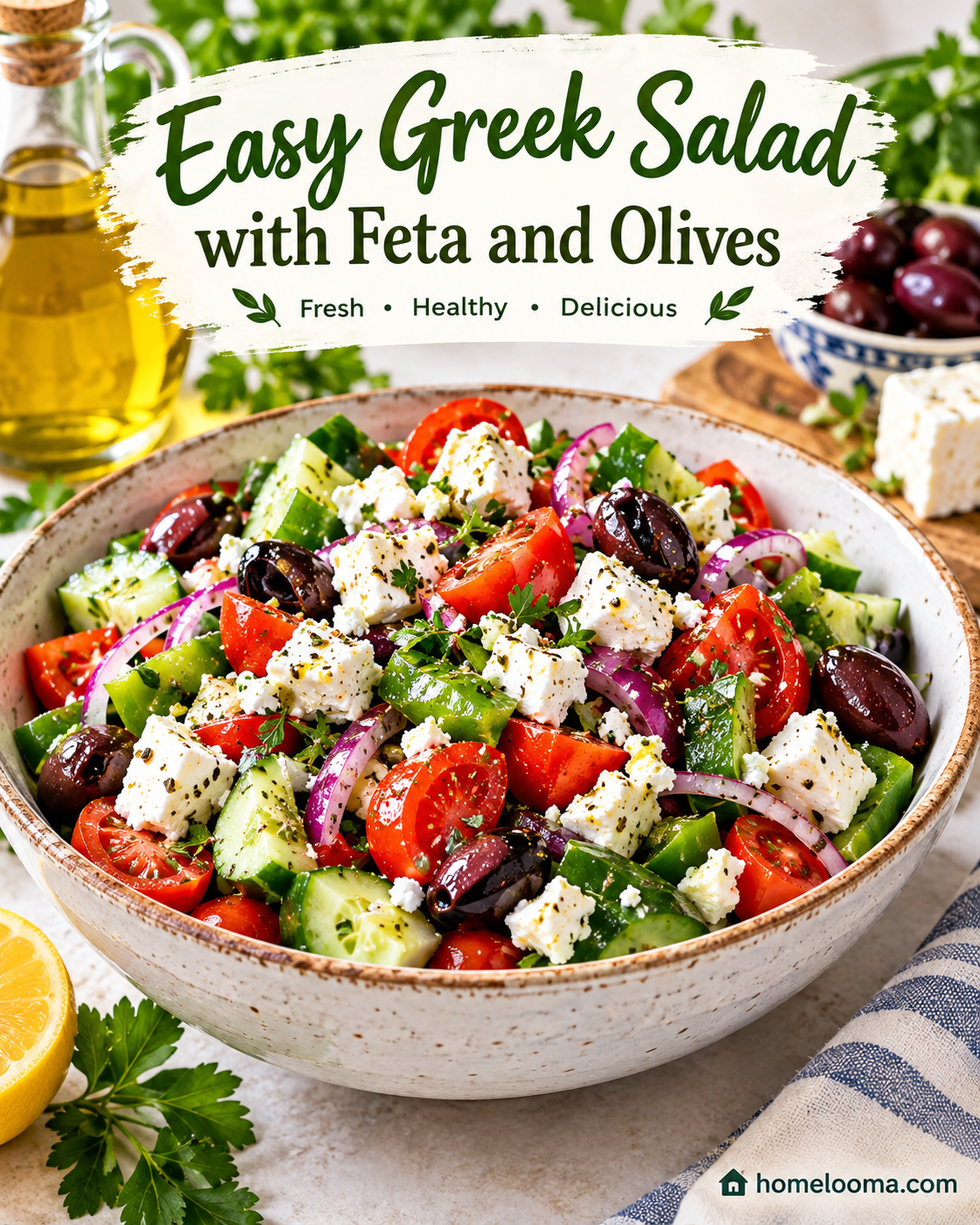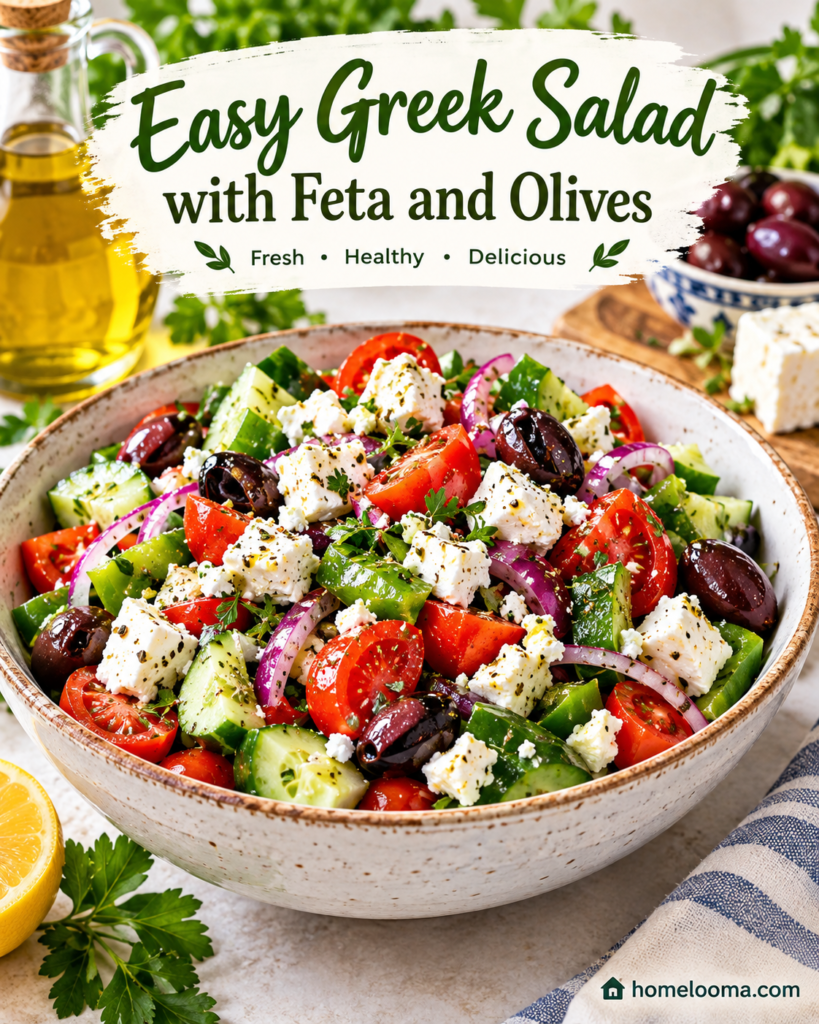
If you’re looking for a fresh, colorful, and easy side dish, this Easy Greek Salad with Feta and Olives is a perfect choice. It combines crisp cucumbers, juicy tomatoes, crunchy bell peppers, red onion, creamy feta cheese, and briny Kalamata olives with a simple homemade dressing.
This classic Mediterranean-inspired salad takes only a few minutes to prepare and works beautifully for lunch, dinner, picnics, summer gatherings, or meal prep.
Why You’ll Love This Greek Salad
This Greek salad is simple enough for a busy weeknight but flavorful enough to serve at a dinner party. You don’t need complicated ingredients or special cooking skills to make it.
The combination of fresh vegetables, tangy feta, olives, and a bright lemon-herb dressing creates a delicious balance of salty, juicy, crunchy, and refreshing flavors.
Here are a few reasons to try it:
- Quick and easy to prepare
- Uses fresh and simple ingredients
- Naturally packed with vegetables
- Great as a side dish or light lunch
- Perfect for Mediterranean-style meals
- Easy to customize
- No cooking required
Ingredients You’ll Need
For the Salad
- 2 large ripe tomatoes, chopped
- 1 large cucumber, sliced
- 1 green bell pepper, chopped
- 1/2 small red onion, thinly sliced
- 1/2 cup Kalamata olives
- 4 ounces feta cheese, cut into cubes or crumbled
- 2 tablespoons fresh parsley, chopped
- 1 tablespoon fresh oregano, optional
For the Greek Salad Dressing
- 1/4 cup extra-virgin olive oil
- 2 tablespoons fresh lemon juice
- 1 tablespoon red wine vinegar
- 1 teaspoon dried oregano
- 1 small garlic clove, finely minced
- 1/2 teaspoon salt
- 1/4 teaspoon black pepper
How to Make Easy Greek Salad
1. Prepare the Vegetables
Start by washing and drying all of your vegetables. Chop the tomatoes into bite-sized pieces and slice the cucumber into rounds or half-moons.
Chop the bell pepper and thinly slice the red onion. Keeping the vegetables relatively similar in size makes every bite more balanced.
2. Add the Olives and Feta
Place the chopped tomatoes, cucumber, bell pepper, and red onion into a large salad bowl. Add the Kalamata olives and gently toss everything together.
Add the feta cheese near the end so it keeps its shape instead of becoming completely mixed into the vegetables.
3. Make the Dressing
In a small bowl, whisk together the olive oil, lemon juice, red wine vinegar, oregano, minced garlic, salt, and black pepper.
Taste the dressing and adjust the seasoning if needed. If you prefer a sharper flavor, add a little more lemon juice or vinegar.
4. Combine Everything
Pour the dressing over the vegetables and gently toss the salad until everything is lightly coated.
Be careful not to overmix because the feta can break apart easily.
5. Let the Salad Rest
For the best flavor, let the salad sit for about 10 minutes before serving. This gives the vegetables time to absorb some of the dressing.
Serve immediately or chill it briefly before serving.
Tips for the Best Greek Salad
Use Ripe Tomatoes
Fresh, ripe tomatoes make a major difference. Choose tomatoes that are firm but juicy and full of flavor.
Choose Good Feta
For a more authentic texture and flavor, use block feta when possible. It tends to be creamier and more flavorful than finely crumbled feta.
Don’t Overdress the Salad
Start with most of the dressing and add more only if necessary. Too much dressing can make the vegetables watery.
Use Kalamata Olives
Kalamata olives provide the salty, slightly fruity flavor that makes this salad taste distinctly Mediterranean. If you don’t have them, another type of pitted olive can work.
Slice the Onion Thinly
Red onion adds a delicious sharpness, but thick pieces can overpower the other ingredients. Thin slices distribute the flavor more evenly.
Easy Greek Salad Variations
One of the best things about this salad is how easy it is to customize.
Add Chickpeas
Add a cup of drained chickpeas to turn the salad into a more filling vegetarian meal.
Add Grilled Chicken
Top the salad with sliced grilled chicken for a protein-rich lunch or dinner.
Add Avocado
For a creamy twist, add diced avocado just before serving. Keep in mind that avocado can brown, so this version is best eaten fresh.
Add Fresh Herbs
Fresh parsley, oregano, dill, or mint can add extra Mediterranean flavor.
Add Pita Bread
Serve the salad with warm pita bread for an easy and satisfying meal.
What to Serve with Greek Salad
This salad pairs well with many Mediterranean-inspired dishes. Try serving it alongside grilled chicken, fish, shrimp, lamb, or roasted vegetables.
It also works well with hummus, pita bread, tzatziki, grilled meats, rice dishes, and Mediterranean pasta.
For a simple lunch, serve a generous bowl of Greek salad with warm pita and hummus.
How to Store Greek Salad
Store leftover salad in an airtight container in the refrigerator.
For the best texture, keep the dressing separate if you are preparing the salad in advance. Undressed vegetables can generally stay crisp longer than vegetables that have already been coated with dressing.
Because tomatoes and cucumbers release water over time, the salad is best enjoyed within a day or two.
Can You Make Greek Salad Ahead of Time?
Yes. You can prepare most of the ingredients several hours ahead of time.
Chop the vegetables, prepare the dressing, and store them separately in the refrigerator. Add the feta, olives, and dressing shortly before serving for the freshest texture.
Is Greek Salad Healthy?
Greek salad can be a nutritious addition to a balanced diet because it contains a variety of fresh vegetables, healthy fats from olive oil and olives, and protein and calcium from feta cheese.
The exact nutritional value depends on portion size and the amount of dressing and feta used.
Frequently Asked Questions
What is a traditional Greek salad made of?
A traditional Greek salad commonly includes tomatoes, cucumbers, onions, green peppers, olives, feta cheese, olive oil, and oregano. Ingredients can vary depending on the recipe and region.
Can I use black olives instead of Kalamata olives?
Yes. Kalamata olives provide a distinctive Mediterranean flavor, but black olives can be used if that is what you have available.
Should Greek salad be served cold?
Greek salad is usually served cool or at room temperature. Chilling it briefly can make it especially refreshing during warm weather.
Can I make Greek salad without feta?
Absolutely. You can leave out the feta for a dairy-free version. Chickpeas or white beans can be added for extra substance.
How long does homemade Greek salad last?
For the best quality, enjoy Greek salad within one to two days. Keep it refrigerated in an airtight container and expect some liquid to collect as the vegetables release moisture.
Final Thoughts
This Easy Greek Salad with Feta and Olives is proof that delicious food doesn’t need to be complicated. Fresh vegetables, creamy feta, flavorful olives, and a simple homemade dressing come together to create a refreshing Mediterranean-inspired dish.
Whether you’re preparing a quick weekday lunch, a family dinner, or a summer gathering, this colorful salad is an easy recipe worth keeping in your collection.