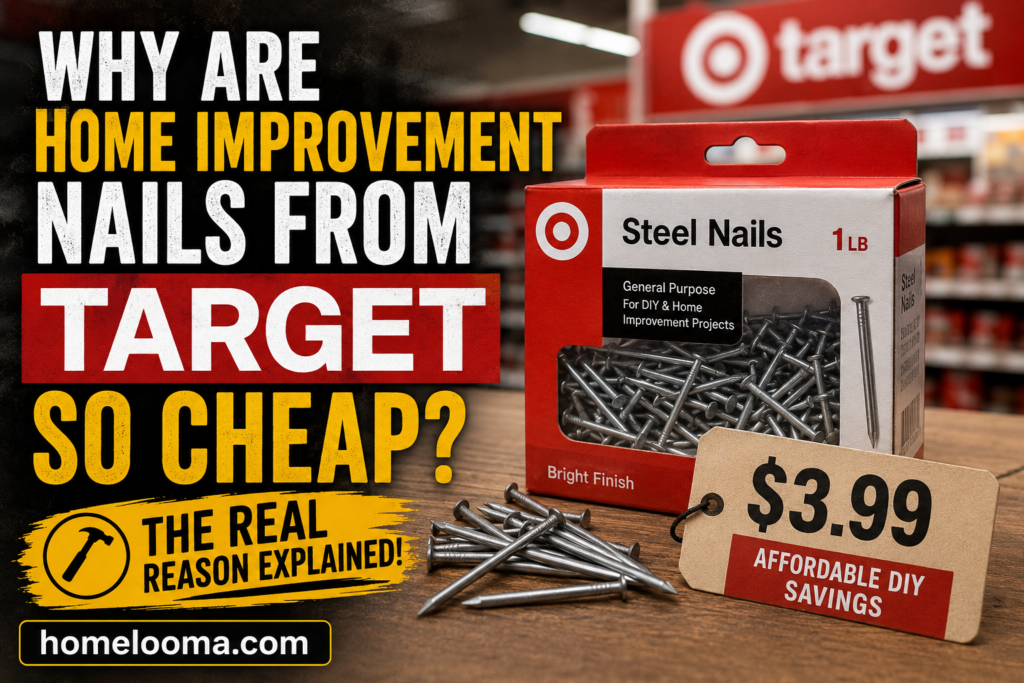
Discover why home improvement nails from Target are often cheaper, how quality compares, and when budget nails are worth buying.
Why Are Home Improvement Nails From Target So Cheap?
If you’ve walked through the hardware aisle at Target, you may have noticed that boxes of home improvement nails often cost less than similar products at dedicated hardware stores. That naturally raises a question many DIYers ask: why are home improvement nails from Target so cheap?
The short answer is that price is influenced by retail strategy, packaging, brand positioning, supply chain efficiency, and intended use—not necessarily because the nails are unsafe or defective. In many cases, Target sells nails aimed at casual DIY customers rather than professional contractors, and that difference affects both pricing and product selection.
This guide explains why Target’s nails can be cheaper, how they compare with hardware-store alternatives, and when buying the lower-priced option makes sense for your project.
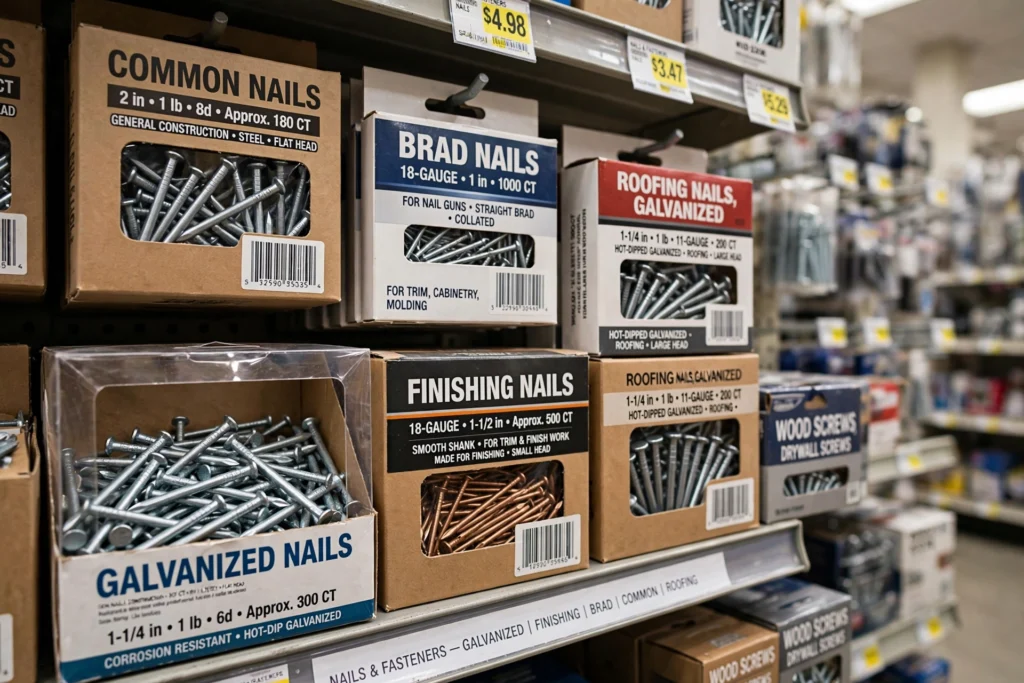
The Main Reason: Target Competes on Convenience and Volume
Target is primarily a general merchandise retailer, not a contractor-focused hardware supplier. Because it sells thousands of product categories, it often negotiates large purchasing agreements and uses certain items to attract shoppers.
Hardware products such as nails may be priced aggressively because they help customers complete small home projects while already shopping for other household items.
Target’s pricing advantages
- Large purchasing volume across many product categories
- Lower marketing costs for hardware-specific products
- Smaller packaging sizes aimed at DIY users
- Private-label or value-oriented brands
- Promotional pricing to increase basket size
These factors can make a small box of nails appear significantly cheaper than a contractor-grade box at a home improvement store.
Smaller Boxes Often Mean Lower Shelf Prices
One of the biggest reasons for the price difference is package size. A box that looks inexpensive may contain far fewer nails than a professional-grade package.
Example Comparison
| Store Type | Package Size | Price |
|---|---|---|
| Target | 1 lb | $3.99 |
| Hardware Store | 5 lb | $14.99 |
The Target box looks cheaper at first glance, but the price per pound may be similar—or occasionally even higher.
Always compare unit price rather than just the sticker price.
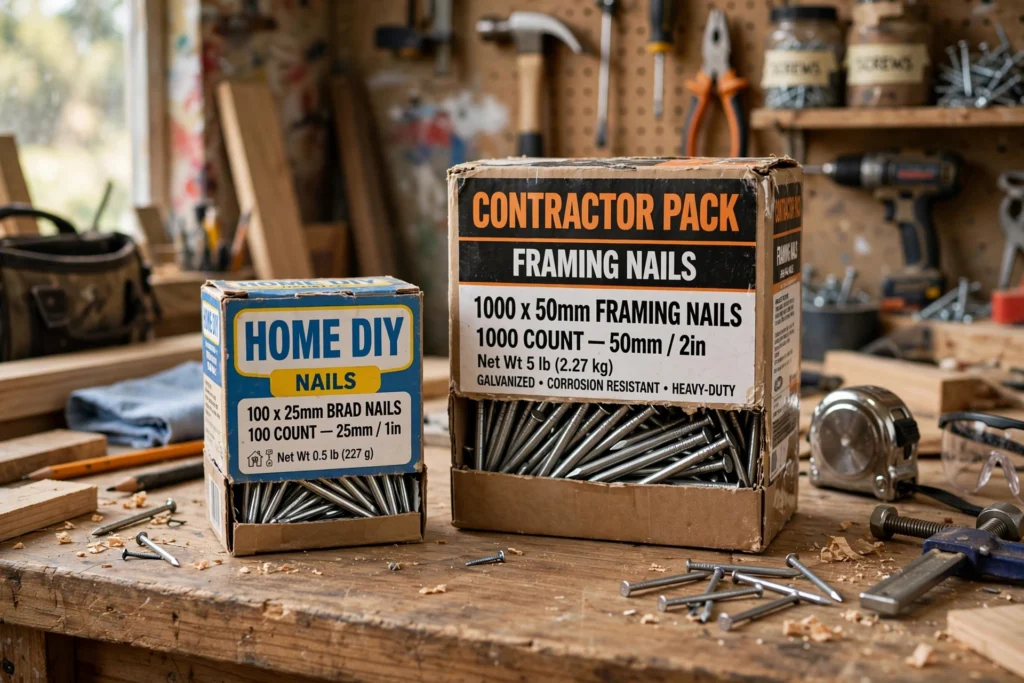
Different Customer, Different Product
Target’s hardware section is generally designed for homeowners, renters, and occasional DIYers.
Professional contractors usually buy:
- Large bulk boxes
- Specialized fasteners
- Collated nails for nail guns
- Code-approved structural fasteners
- Specific corrosion-resistant coatings
Target typically focuses on basic household repairs such as:
- Hanging trim
- Repairing fences
- Small woodworking projects
- Picture hanging
- Light-duty home maintenance
Because the products are less specialized, they can often be sold at lower prices.
Are Target Nails Lower Quality?
Not necessarily. Many nails sold at Target meet the same basic manufacturing standards as nails sold elsewhere.
However, there can be differences in:
| Feature | Budget Nails | Contractor-Grade Nails |
|---|---|---|
| Steel consistency | Good | Excellent |
| Coating thickness | Basic | Heavier-duty |
| Corrosion resistance | Standard | Enhanced options |
| Bulk availability | Limited | Extensive |
| Job-site durability | DIY use | Professional use |
For most indoor DIY projects, the difference may be negligible. For structural, exterior, or code-regulated work, contractor-grade fasteners are usually the better choice.
The Role of Brand Names
Brand has a major impact on price.
Well-known fastener brands often charge more because they offer:
- Consistent manufacturing tolerances
- Broader product ranges
- Professional support
- Code documentation
- Job-site reputation
Target may carry value-oriented brands or store-exclusive packaging, which can reduce costs without dramatically affecting performance for light-duty applications.
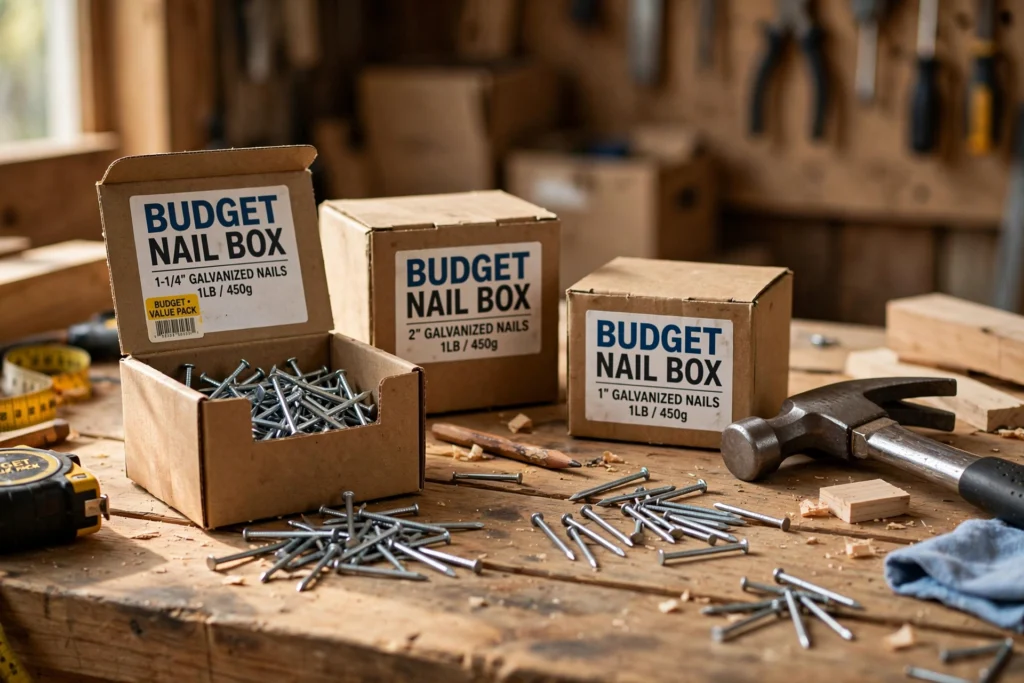
Image Title: Budget nails for DIY home projects
Alt Text: Budget nail boxes and a hammer on a wooden workbench
Supply Chain Efficiency Matters
Large retailers have sophisticated logistics networks. Nails are inexpensive to manufacture, lightweight relative to many building materials, and easy to transport in bulk.
Target can distribute hardware products through the same network used for household goods, which helps reduce overall costs. A dedicated hardware store may have higher operating expenses related to inventory depth and professional services.
What Types of Nails Are Usually Cheapest?
At Target and similar retailers, the lowest-priced options are typically:
- Common nails
- Finishing nails
- Brad nails
- Picture-hanging nails
- Small galvanized nails
These are produced in enormous quantities worldwide, which keeps manufacturing costs low.
When Cheap Nails Are Perfectly Fine
Budget nails can be an excellent choice for many household tasks.
Good uses for inexpensive nails
- Decorative trim
- Craft projects
- Small shelves
- Furniture repairs
- Picture frames
- Garden boxes
- Temporary structures
If the project is non-structural and indoors, a lower-cost box of nails may perform just as well as a premium option.
When You Should Spend More
For certain projects, fastener quality and specifications become much more important.
Choose higher-grade nails for
- Deck construction
- Roofing
- Framing walls
- Outdoor structures
- Coastal environments
- Code-inspected work
- Load-bearing applications
In these situations, hot-dip galvanized, stainless steel, or code-rated structural fasteners are often required.
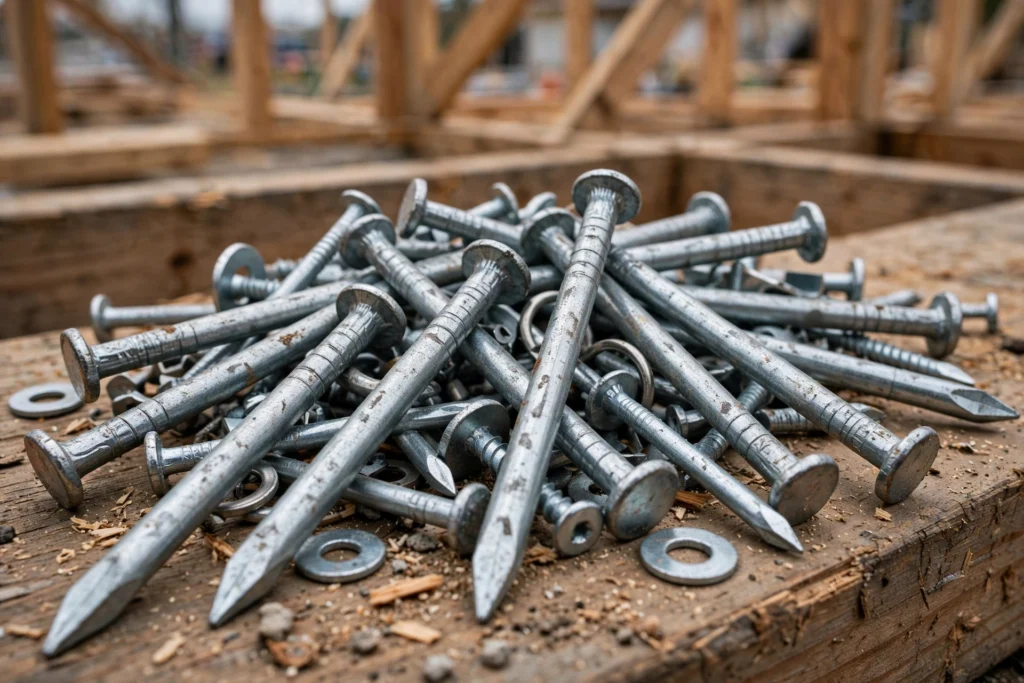
Comparing Cheap vs Premium Nails
Side-by-Side Comparison
| Feature | Budget Nails | Premium Nails |
|---|---|---|
| Price | Lower | Higher |
| Package size | Smaller | Larger |
| Corrosion resistance | Standard | Enhanced |
| Consistency | Good | Excellent |
| Structural suitability | Limited | Better |
| Best user | DIY homeowner | Contractor |
This table shows why a cheap box isn’t automatically a bad value—it’s simply designed for a different user.
The Psychology of Low Prices
Retailers know that small hardware items are often impulse purchases. A box of nails priced at a few dollars feels inexpensive, encouraging customers to add it to their cart while buying paint, storage bins, or household supplies.
That pricing strategy helps explain why Target may accept lower margins on certain hardware items.
How to Tell If Cheap Nails Are a Good Buy
Before purchasing, check:
- Weight or quantity in the package
- Material (steel, galvanized, stainless)
- Intended use listed on the package
- Coating type for outdoor projects
- Customer reviews if available
These details matter more than the store name alone.
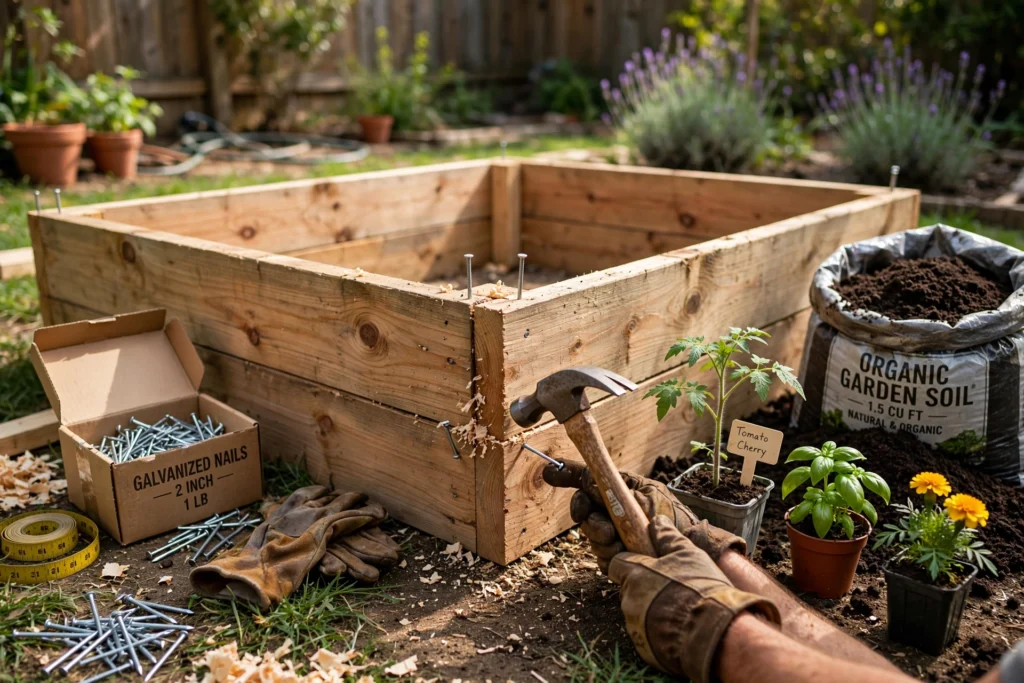
Example: Building a Simple Garden Box
Suppose you’re building a small raised garden bed from untreated lumber.
Target nails may work well if:
- The bed is temporary
- You’re using galvanized nails
- The structure isn’t carrying heavy loads
A premium fastener may be better if:
- The bed will last for years
- You’re using pressure-treated lumber
- The area gets frequent rain
- You want maximum corrosion resistance
The right choice depends on project lifespan and exposure, not just price.
Are Cheap Nails Safe?
For their intended applications, yes. Nails sold by major retailers must generally meet basic safety and manufacturing standards.
The key issue is using the correct nail for the job. Problems occur when a light-duty fastener is used in a structural or outdoor application where a stronger or more corrosion-resistant nail is required.
Signs You’re Buying the Wrong Nails
Consider upgrading if:
- The nails bend excessively during use.
- The coating flakes off easily.
- The project is outdoors year-round.
- Local building codes specify a particular fastener.
- You’re attaching structural framing members.
In those cases, a contractor-grade fastener is worth the extra cost.
What Contractors Usually Buy
Professional builders often prioritize speed, consistency, and code compliance over the lowest purchase price.
They commonly buy:
- Bulk framing nails
- Hot-dip galvanized nails
- Stainless steel fasteners
- Collated nail-gun nails
- Engineered structural connectors
These products cost more because they’re designed for demanding job-site conditions.
The Bottom Line on Value
So, why are home improvement nails from Target so cheap? Usually because they are:
- Sold in smaller packages
- Targeted at DIY homeowners
- Priced competitively to encourage convenience shopping
- Often less specialized than contractor-grade fasteners
- Distributed through a high-volume retail network
That doesn’t automatically mean they’re poor quality. For many indoor repairs and simple projects, inexpensive nails can provide excellent value. The important thing is matching the fastener to the project’s load, environment, and longevity requirements.
Conclusion
If you’re tackling basic household repairs, trim work, crafts, or small DIY projects, the affordable nail options at Target are often perfectly adequate and can save money. However, for decks, framing, roofing, and other structural or outdoor projects, it’s wise to invest in the specific fasteners recommended for that application.
In other words, cheap doesn’t always mean bad—it often means the product was designed for a different customer and a different type of project.
Frequently Asked Questions
1. Are nails from Target good quality?
For most light-duty household projects, yes. They are generally suitable for DIY repairs, crafts, and basic woodworking.
2. Why are Target nails cheaper than hardware-store nails?
Target often sells smaller packages, value-oriented brands, and products aimed at homeowners rather than professional contractors.
3. Can I use cheap nails for framing?
It’s best to use code-approved framing nails specified for structural work rather than the cheapest available option.
4. Are galvanized nails worth the extra cost?
Yes, especially for outdoor projects where moisture can cause regular steel nails to rust.
5. Do cheap nails bend more easily?
Some budget nails may bend more often than premium fasteners, but many perform adequately for light-duty applications.
6. Are smaller boxes actually cheaper?
Not always. Compare the price per pound or price per nail to determine the true value.
7. What nails should I use for outdoor wood projects?
Choose hot-dip galvanized or stainless steel nails for the best corrosion resistance outdoors.
8. Do professional contractors buy nails from Target?
Most contractors purchase bulk fasteners from lumberyards or hardware suppliers that carry specialized and code-rated products.
9. Are cheap nails safe?
Yes, when used for their intended purpose. Safety issues usually arise from using the wrong fastener for the application.
10. How can I tell if a nail is suitable for my project?
Check the package for size, material, coating, and recommended use, and follow local building-code requirements when applicable.





1 thought on “Why Are Home Improvement Nails From Target So Cheap?”