Learn how to use mild dish soap for cleaning jewelry safely. Discover step-by-step methods, expert tips, mistakes to avoid, and care advice for every jewelry type.
Introduction
Jewelry is more than just an accessory. Whether it’s a treasured family heirloom, a wedding ring, or your favorite everyday necklace, keeping it clean helps preserve its beauty and shine. Over time, lotions, oils, soap residue, dust, and everyday dirt can dull even the brightest jewelry.
Fortunately, one of the safest and most affordable cleaning methods is using mild dish soap for cleaning jewelry. Unlike harsh chemicals or abrasive cleaners, a gentle dish soap solution can effectively remove dirt without damaging many common jewelry materials.
However, not every type of jewelry should be cleaned the same way. Some gemstones are delicate, certain metals require special care, and improper cleaning techniques can lead to scratches or permanent damage.
This comprehensive guide explains everything you need to know about using mild dish soap to clean jewelry safely. You’ll learn which jewelry can be cleaned this way, which items should be avoided, the supplies you’ll need, step-by-step cleaning instructions, and professional maintenance tips to keep your favorite pieces sparkling for years.
What Is Mild Dish Soap?
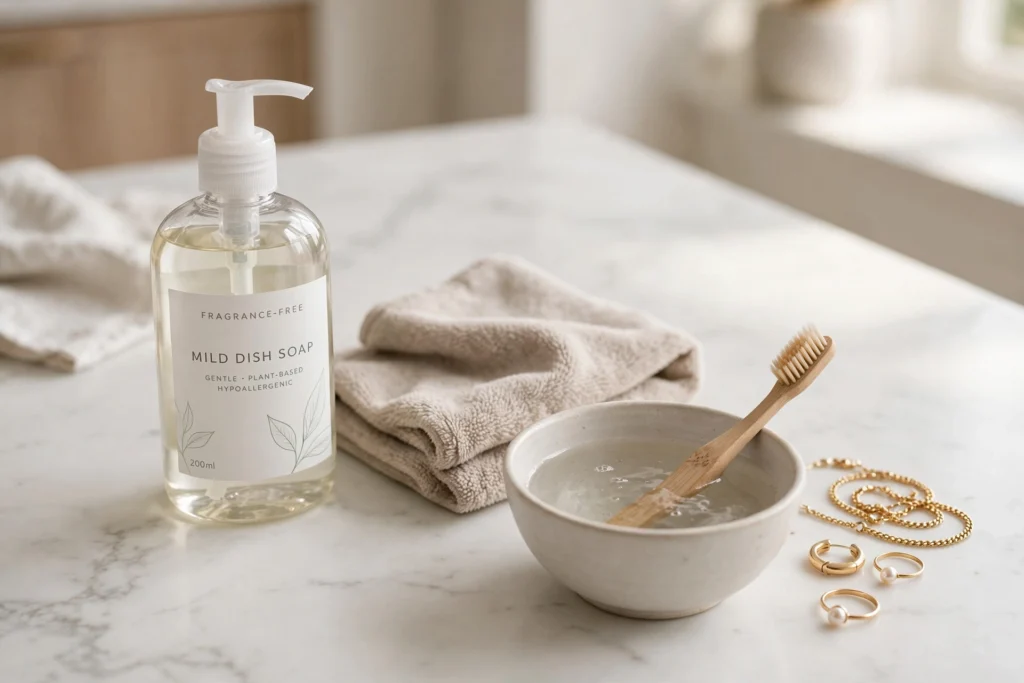
Mild dish soap is a gentle liquid detergent designed to remove grease and dirt without containing harsh bleaching agents or strong chemicals. These soaps are formulated to clean effectively while remaining gentle on surfaces.
For jewelry cleaning, choosing the right dish soap is essential. Look for products that are:
- Fragrance-free whenever possible
- Dye-free
- Free from bleach
- Non-abrasive
- Gentle on skin
- pH-balanced
These characteristics help minimize the risk of damaging precious metals or delicate gemstones.
Why Mild Soap Works So Well
The cleaning power comes from surfactants that lift oils, dirt, and grime from jewelry surfaces. Instead of scratching the metal, these ingredients loosen contaminants so they can be rinsed away easily.
This makes mild dish soap one of the safest DIY jewelry cleaning solutions recommended by many jewelers for routine maintenance.
Benefits of Using Mild Dish Soap for Cleaning Jewelry
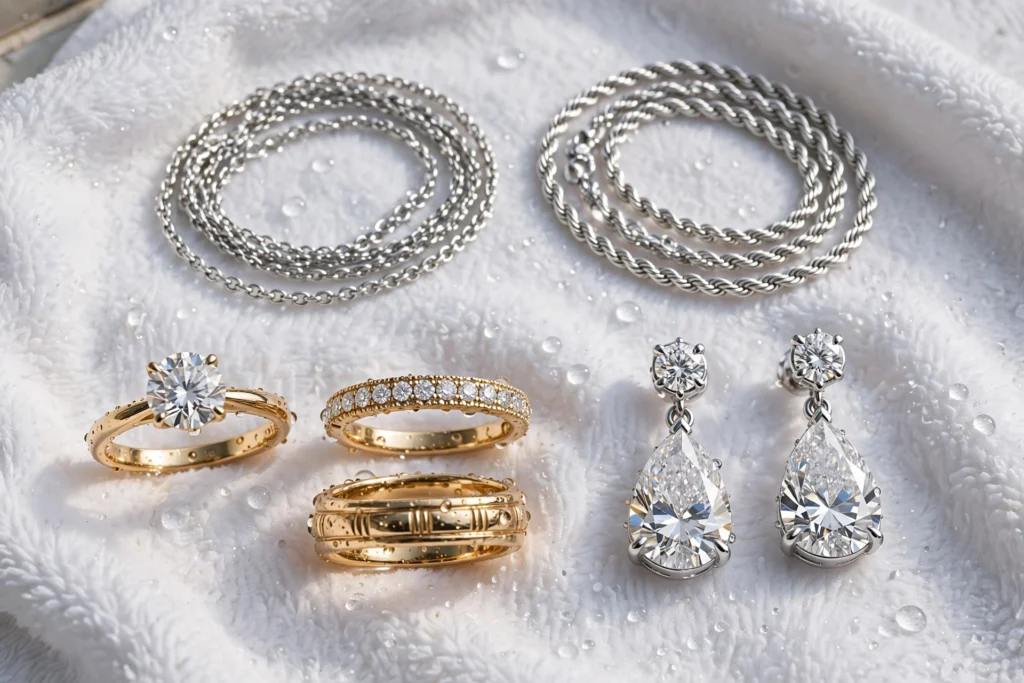
Cleaning jewelry with mild dish soap offers several important advantages.
Safe for Most Jewelry
Unlike harsh cleaners, mild dish soap is generally safe for:
- Gold jewelry
- Platinum jewelry
- Sterling silver
- Stainless steel
- Diamonds
- Rubies
- Sapphires
Routine cleaning with gentle soap helps remove buildup without exposing jewelry to aggressive chemicals.
Affordable
Professional jewelry cleaning services can be expensive over time. Mild dish soap is inexpensive, widely available, and effective for regular maintenance.
Easy to Use
No specialized equipment is necessary. Most homeowners already have everything needed for cleaning jewelry safely.
Removes Everyday Buildup
Daily wear exposes jewelry to:
- Skin oils
- Sweat
- Cosmetics
- Sunscreen
- Dust
- Soap residue
- Lotions
A mild soap solution helps restore shine by removing these common contaminants.
Environmentally Friendly
Many gentle dish soaps are biodegradable and contain fewer harsh chemicals than specialized cleaners, making them a more environmentally conscious choice.
Supplies You’ll Need
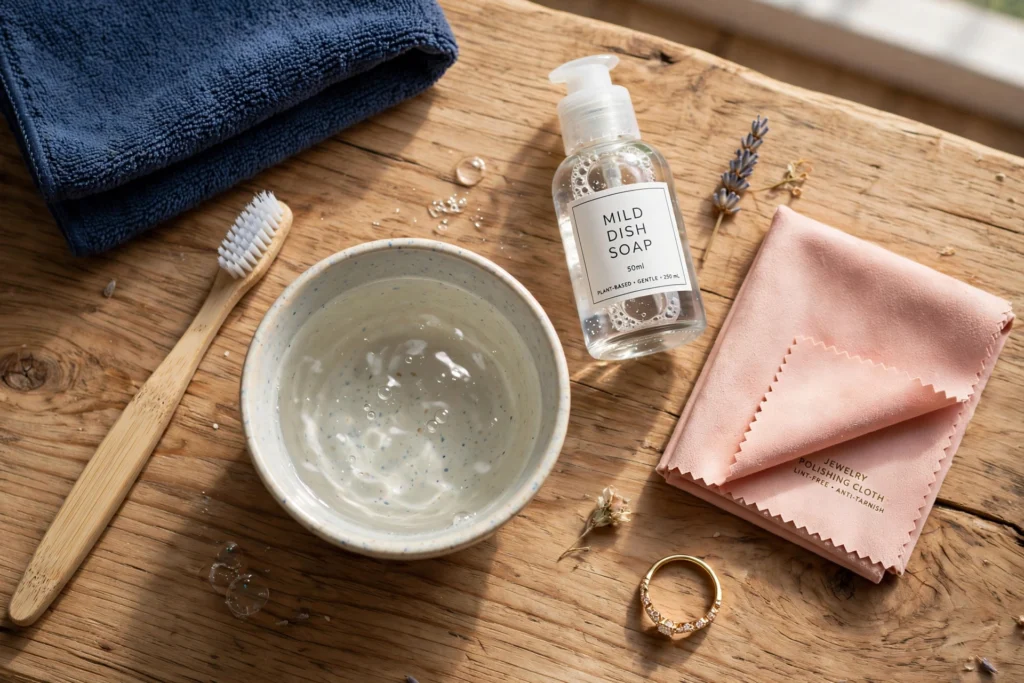
Before cleaning your jewelry, gather these simple supplies.
| Item | Purpose |
|---|---|
| Mild dish soap | Removes oils and dirt |
| Warm water | Loosens grime |
| Small bowl | Mixing cleaning solution |
| Soft toothbrush | Cleans intricate details |
| Microfiber cloth | Dries jewelry safely |
| Soft towel | Prevents scratches |
| Fine mesh strainer (optional) | Prevents losing small jewelry |
Avoid paper towels because they can leave tiny scratches on polished metals.
Which Jewelry Can Be Cleaned with Mild Dish Soap?
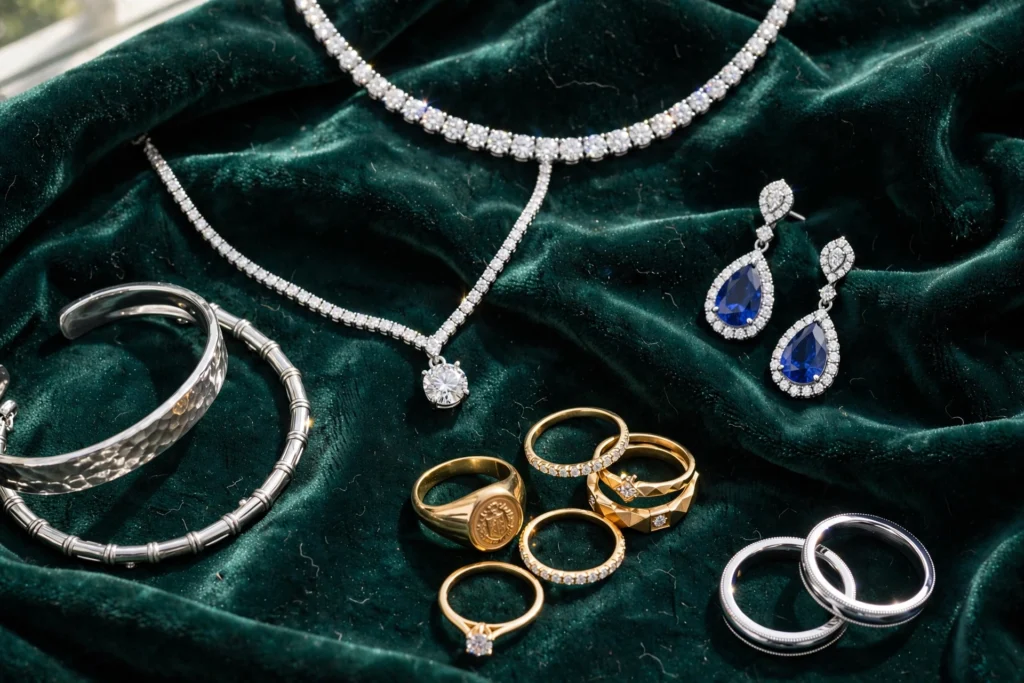
Not all jewelry responds the same way to cleaning. Understanding which pieces are safe helps prevent accidental damage.
Jewelry That Is Generally Safe
| Jewelry Type | Safe with Mild Dish Soap? |
|---|---|
| Gold | ✔ Yes |
| Platinum | ✔ Yes |
| Sterling Silver | ✔ Yes |
| Stainless Steel | ✔ Yes |
| Diamonds | ✔ Yes |
| Rubies | ✔ Yes |
| Sapphires | ✔ Yes |
These materials are durable enough for occasional cleaning using a gentle soap solution.
Jewelry That Requires Extra Care
Some jewelry should only be cleaned carefully or after consulting the manufacturer’s recommendations.
Examples include:
- Emeralds
- Pearls
- Opals
- Turquoise
- Coral
- Amber
- Lapis Lazuli
Many of these gemstones are porous or relatively soft. Excessive soaking or vigorous brushing may cause permanent damage.
Jewelry That Should Not Be Soaked
Avoid soaking:
- Antique jewelry
- Vintage glued jewelry
- Costume jewelry
- Pieces with loose stones
- Jewelry containing adhesives
Water may weaken glue or loosen settings.
Why Jewelry Gets Dirty So Quickly
Even expensive jewelry loses its sparkle with everyday wear.
Common causes include:
Body Oils
Natural skin oils gradually create a film over gemstones and precious metals.
Soap Residue
Ironically, washing your hands while wearing rings leaves soap deposits behind.
Lotions and Cosmetics
Moisturizers, sunscreen, perfume, and makeup contain ingredients that build up over time.
Household Dust
Tiny airborne particles cling to jewelry surfaces, reducing brilliance.
Sweat
Sweat contains salts and minerals that accumulate after daily wear, particularly during warmer months.
Signs Your Jewelry Needs Cleaning
Image Title:
Before and After Jewelry Cleaning
Alt Text:
Comparison showing dull jewelry before cleaning and sparkling jewelry after cleaning.
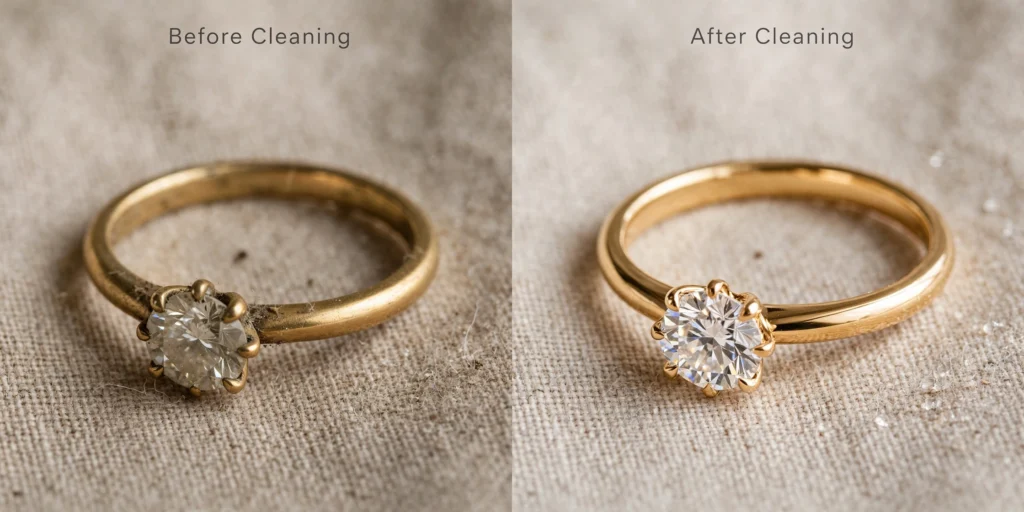
You don’t need to wait until jewelry looks extremely dirty before cleaning it. Watch for these signs:
- Reduced sparkle
- Cloudy gemstones
- Visible fingerprints
- Greasy appearance
- Dirt trapped beneath settings
- Darkened metal
- Loss of shine
Regular maintenance helps prevent stubborn buildup and keeps jewelry looking its best.
Why Regular Cleaning Matters
Cleaning jewelry isn’t only about appearance. Dirt and debris can accumulate around prongs and settings, making it harder to inspect your jewelry for wear or loose stones. Regular cleaning also reduces long-term buildup that may require professional attention later.
For jewelry worn every day—such as engagement rings or wedding bands—a gentle cleaning routine using mild dish soap every few weeks can help maintain brilliance while minimizing exposure to harsh cleaning chemicals.
In the next section, you’ll learn the complete step-by-step process for cleaning jewelry with mild dish soap, along with expert tips, common mistakes to avoid, and special care instructions for different types of jewelry.
How to Clean Jewelry with Mild Dish Soap: Step-by-Step Guide
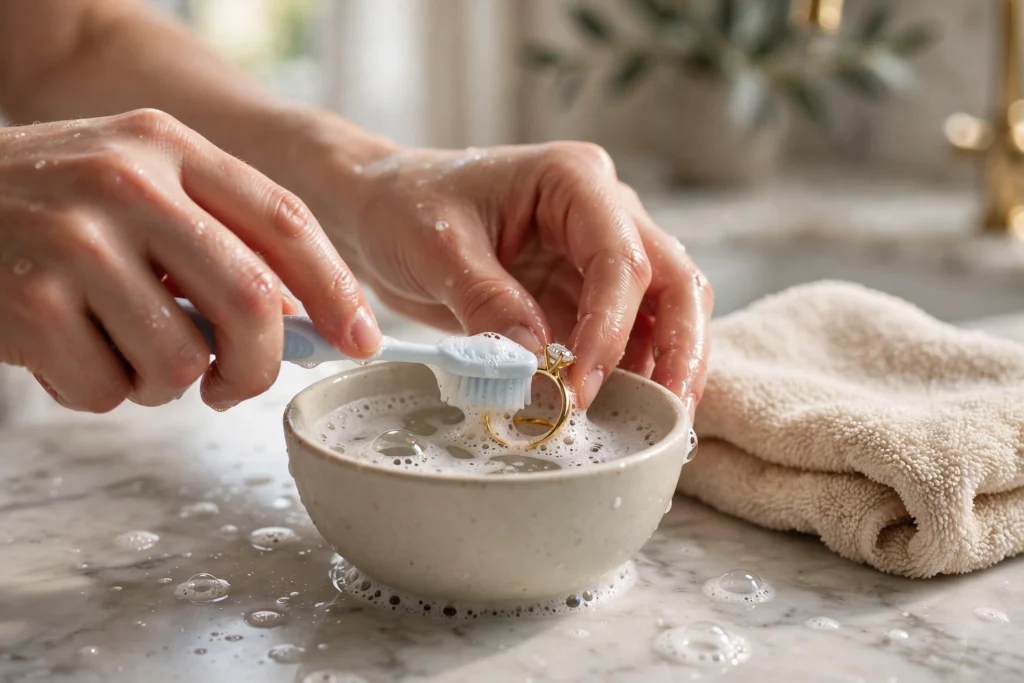
Cleaning jewelry at home is simple when done correctly. Follow these steps for the best results.
Step 1: Prepare the Cleaning Solution
Fill a small bowl with warm—not hot—water.
Add just a few drops of mild dish soap and gently stir until bubbles begin to form.
Avoid using boiling water because sudden temperature changes may damage delicate gemstones.
Step 2: Soak the Jewelry
Place the jewelry into the solution and allow it to soak.
Recommended soaking times:
| Jewelry Type | Soaking Time |
|---|---|
| Gold | 15–20 minutes |
| Platinum | 15–20 minutes |
| Silver | 10–15 minutes |
| Diamond Jewelry | 20 minutes |
| Stainless Steel | 15 minutes |
Do not soak pearls, opals, turquoise, coral, or glued costume jewelry.
Step 3: Gently Brush Away Dirt
After soaking, use a soft toothbrush to clean difficult areas.
Focus on:
- Under gemstones
- Ring settings
- Chain links
- Clasps
- Decorative engravings
Never scrub aggressively. Gentle circular motions are enough to remove dirt without scratching the surface.
Step 4: Rinse Thoroughly
Rinse each piece under lukewarm running water.
If cleaning small earrings or rings, place a fine mesh strainer over the drain to prevent accidental loss.
Step 5: Dry Completely
Pat the jewelry dry using a soft microfiber cloth.
Allow it to air dry for several minutes before wearing or storing it.
Never use paper towels or rough fabrics, as they can create tiny scratches over time.
Cleaning Different Types of Jewelry
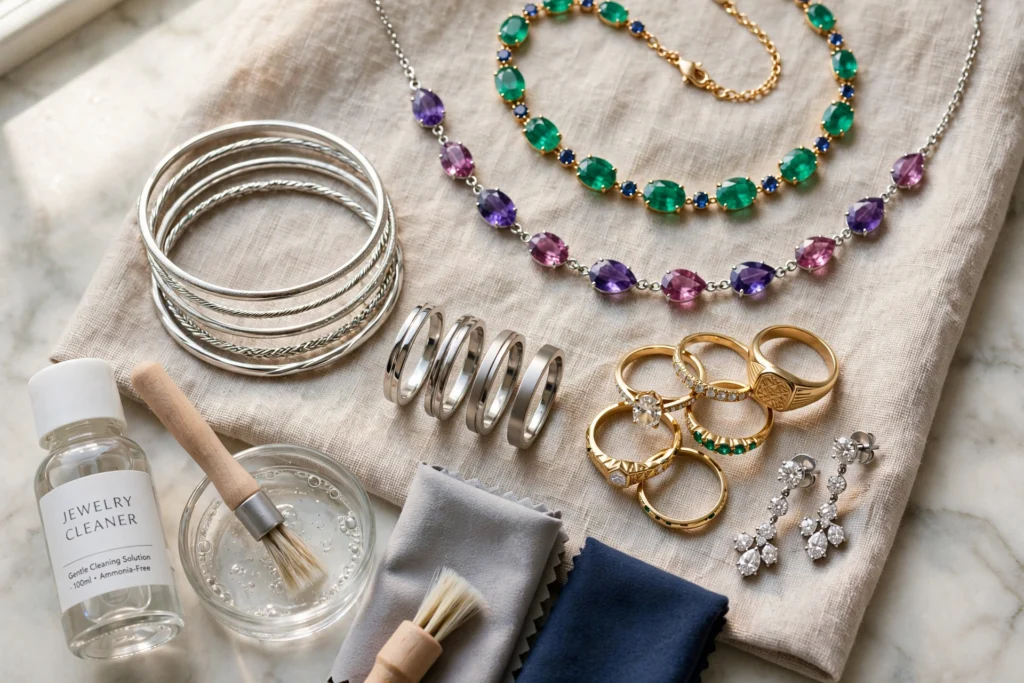
Gold Jewelry
Gold jewelry is generally one of the safest metals to clean using mild dish soap.
Best practices:
- Use warm water
- Brush gently around settings
- Dry with microfiber cloth
- Polish lightly after drying
Sterling Silver
Silver naturally tarnishes over time.
Mild dish soap removes dirt but does not always eliminate heavy tarnish.
For severe tarnish, use a silver polishing cloth after cleaning.
Avoid abrasive silver cleaners unless necessary.
Platinum Jewelry
Platinum is highly durable and responds well to mild soap cleaning.
Routine cleaning keeps its naturally bright appearance intact.
Diamond Jewelry
Diamonds attract oils quickly.
Cleaning every two to four weeks restores brilliance and keeps stones sparkling.
Pay extra attention beneath the stone where oils often accumulate.
Stainless Steel Jewelry
Stainless steel is highly resistant to corrosion.
A simple soap-and-water cleaning is usually all that’s needed.
Jewelry That Needs Special Care
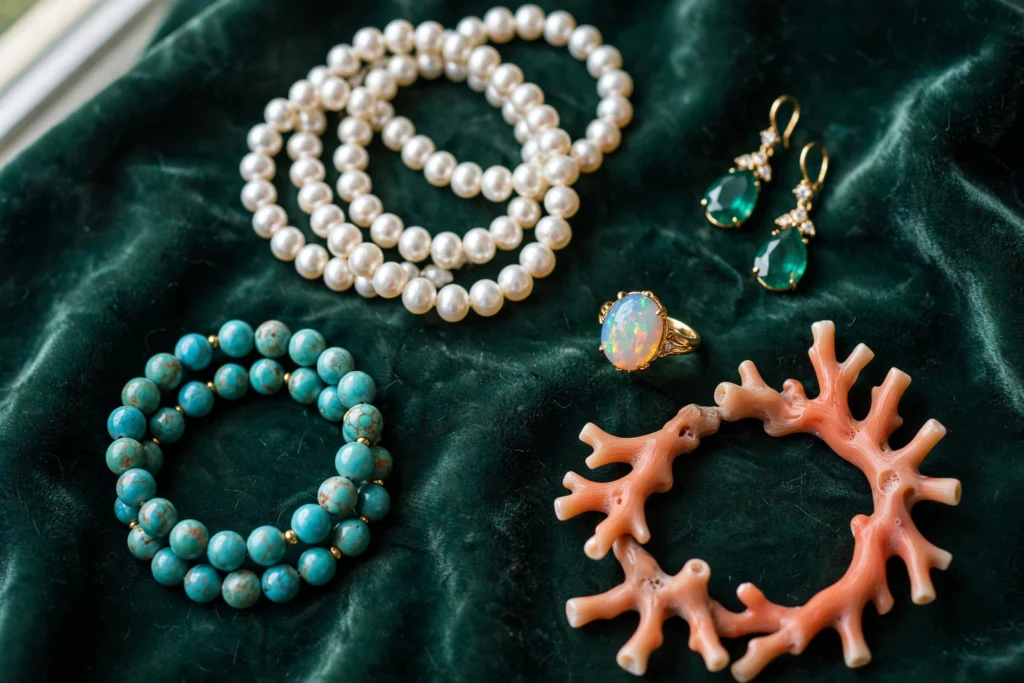
Certain gemstones require extra caution because they are softer, porous, or treated.
| Gemstone | Mild Soap | Soaking |
|---|---|---|
| Pearls | Light wipe only | ✘ No |
| Opals | Very limited | ✘ No |
| Emeralds | Carefully | Short only |
| Turquoise | Avoid soaking | ✘ No |
| Coral | Damp cloth only | ✘ No |
| Amber | Damp cloth only | ✘ No |
If you’re unsure how a gemstone was treated, consult a professional jeweler before cleaning.
Common Mistakes to Avoid
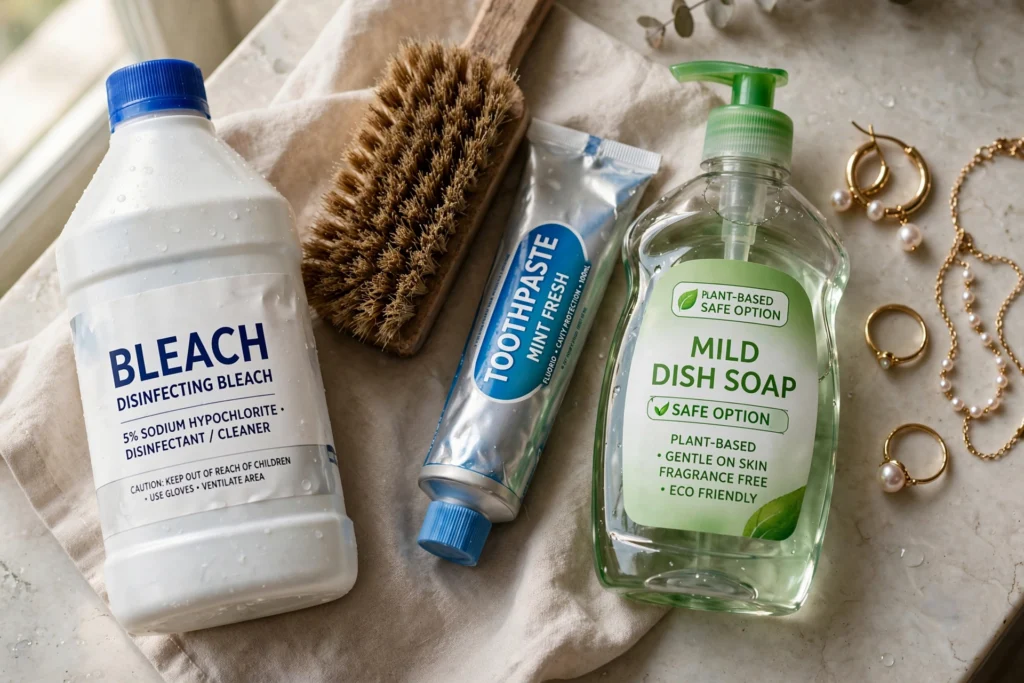
Many jewelry owners unintentionally damage valuable pieces by using the wrong cleaning methods.
Avoid these common mistakes.
Using Toothpaste
Toothpaste contains mild abrasives that may scratch:
- Gold
- Silver
- Platinum
- Soft gemstones
Using Bleach
Bleach can weaken precious metals and permanently damage jewelry.
Never mix bleach with jewelry cleaning solutions.
Using Hot Water
Extremely hot water may loosen gemstone settings or crack temperature-sensitive stones.
Warm water is always the safer option.
Using Hard Brushes
Stiff bristles create fine scratches that reduce shine over time.
Always choose a baby toothbrush or extra-soft brush.
Over-Soaking Jewelry
Leaving jewelry in water for several hours is unnecessary.
Long soaking times may damage adhesives or porous stones.
How Often Should You Clean Jewelry?
The ideal cleaning schedule depends on how often you wear your jewelry.
| Jewelry Type | Recommended Cleaning |
|---|---|
| Engagement Rings | Every 2 weeks |
| Wedding Bands | Every 2–4 weeks |
| Everyday Necklaces | Monthly |
| Earrings | Monthly |
| Bracelets | Monthly |
| Occasion Jewelry | Before and after use |
Professional inspections are recommended once or twice each year to ensure gemstones remain secure.
Storage Tips After Cleaning
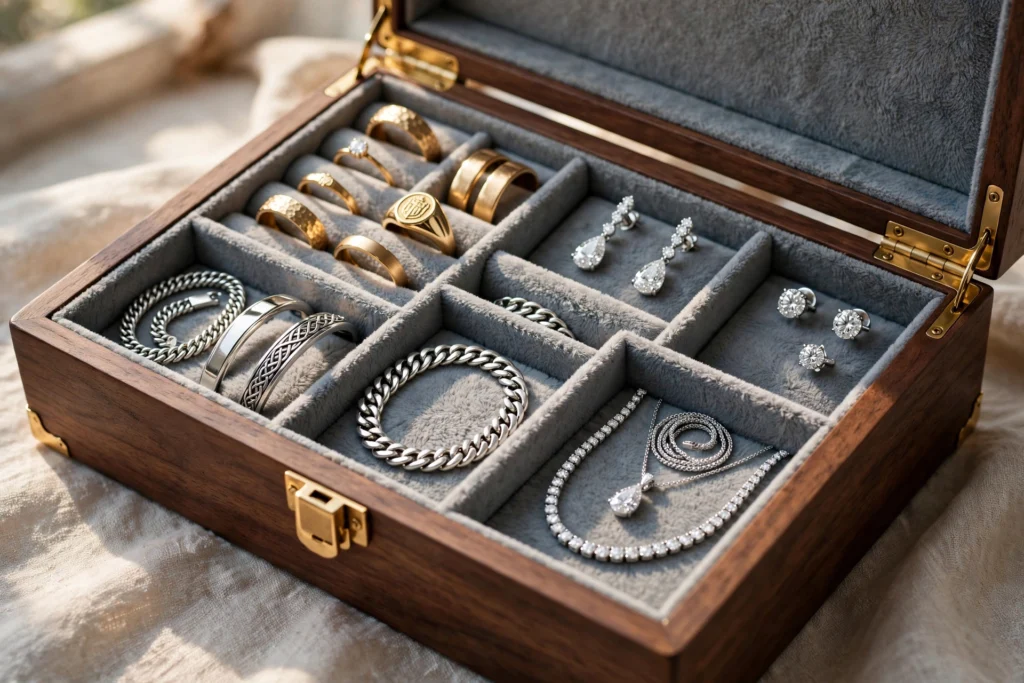
Proper storage is just as important as proper cleaning.
Follow these best practices:
- Store each piece separately.
- Use soft fabric-lined jewelry boxes.
- Keep necklaces untangled.
- Store silver in anti-tarnish pouches.
- Keep jewelry away from humidity.
- Remove jewelry before swimming.
- Remove jewelry before exercising.
- Avoid storing jewelry in direct sunlight.
These simple habits reduce scratches, tarnishing, and unnecessary wear.
Expert Tips for Keeping Jewelry Sparkling Longer
Professional jewelers recommend a few easy habits that can significantly extend the life and beauty of your jewelry:
- Put jewelry on after applying lotion, perfume, hairspray, or makeup.
- Remove rings before gardening, lifting weights, or cleaning the house.
- Wipe frequently worn pieces with a microfiber cloth after each use to remove oils.
- Inspect prongs and clasps regularly for signs of wear.
- Schedule a professional cleaning and inspection once or twice a year for valuable pieces.
- Avoid exposing jewelry to chlorine, household cleaners, and harsh chemicals.
By combining these habits with routine cleaning using mild dish soap, you can keep most everyday jewelry looking bright, clean, and well-maintained for years to come.
In the final section, we’ll cover the conclusion, answer the most common questions about cleaning jewelry with mild dish soap, and provide internal linking suggestions for your website.
Conclusion
Using mild dish soap for cleaning jewelry is one of the easiest, safest, and most cost-effective ways to maintain the beauty of your favorite pieces. With just a few household supplies, you can remove everyday dirt, oils, lotion residue, and grime without exposing most jewelry to harsh chemicals.
The key to successful jewelry cleaning is understanding that not every material should be treated the same way. Durable metals like gold, platinum, sterling silver, and stainless steel generally respond well to a gentle soap-and-water solution. Likewise, hard gemstones such as diamonds, rubies, and sapphires can usually be cleaned safely using this method.
However, delicate gemstones—including pearls, opals, turquoise, coral, and amber—require extra care and should not be soaked in water. Antique, vintage, or glued jewelry also deserves special attention to prevent damage.
Regular maintenance is just as important as occasional deep cleaning. Wiping jewelry after wearing it, storing it properly, and scheduling periodic professional inspections can significantly extend its lifespan and preserve its brilliance.
By following the techniques and precautions outlined in this guide, you’ll keep your jewelry looking clean, sparkling, and beautiful for years to come.
Frequently Asked Questions (FAQs)
1. Can I use any dish soap to clean jewelry?
No. Choose a mild, non-abrasive dish soap that is free from bleach, ammonia, and harsh chemicals. Gentle, fragrance-free formulas are generally the safest option.
2. Is Dawn dish soap safe for cleaning jewelry?
Yes. Original Dawn is commonly recommended because it is a mild grease-cutting dish soap. It is generally safe for cleaning most gold, platinum, sterling silver, diamond, ruby, and sapphire jewelry when diluted with warm water.
3. Can mild dish soap damage gold jewelry?
No. Mild dish soap is considered safe for solid gold jewelry when used occasionally with warm water and a soft brush.
4. How often should I clean my engagement ring?
If you wear your engagement ring every day, clean it every two to four weeks. This helps remove oils, lotions, and dirt that can reduce its sparkle.
5. Can I clean sterling silver with dish soap?
Yes. Mild dish soap effectively removes dirt and grease from sterling silver. However, it may not remove heavy tarnish, which often requires a silver polishing cloth.
6. Should I soak pearl jewelry in soapy water?
No. Pearls are delicate and porous. Instead of soaking them, wipe them gently with a soft, damp cloth and dry them immediately.
7. Is warm water better than hot water?
Yes. Warm water is recommended because it loosens dirt without exposing jewelry to sudden temperature changes that may affect certain gemstones or settings.
8. Can I use a toothbrush on jewelry?
Yes, but only an extra-soft toothbrush or a baby toothbrush. Hard bristles can scratch precious metals and damage delicate finishes.
9. What household cleaners should never be used on jewelry?
Avoid using:
- Bleach
- Ammonia
- Acetone
- Toothpaste
- Baking soda on soft metals
- Abrasive powders
- Chlorine-based cleaners
These products can scratch, discolor, or weaken jewelry.
10. When should I have jewelry professionally cleaned?
High-value jewelry should be professionally cleaned and inspected once or twice a year. Regular inspections help identify loose stones, worn prongs, or damaged clasps before they become costly repairs.
Quick Jewelry Cleaning Checklist
| Task | Recommended |
|---|---|
| Use mild dish soap | ✔ Yes |
| Use warm water | ✔ Yes |
| Use a soft toothbrush | ✔ Yes |
| Dry with a microfiber cloth | ✔ Yes |
| Store pieces separately | ✔ Yes |
| Clean every 2–4 weeks | ✔ Yes |
| Use bleach | ✘ No |
| Use toothpaste | ✘ No |
| Soak pearls or opals | ✘ No |
| Use hard brushes | ✘ No |
Pros and Cons of Using Mild Dish Soap for Cleaning Jewelry
| Pros | Cons |
|---|---|
| Affordable and widely available | Not suitable for all gemstones |
| Safe for most precious metals | Doesn’t remove heavy tarnish |
| Easy home cleaning method | Antique jewelry requires extra care |
| Removes oils and everyday dirt | Won’t repair damaged settings |
| Gentle on diamonds and hard gemstones | Professional cleaning is still recommended periodically |
Internal Linking Suggestions
- How to Build a Home Climbing Wall DIY Plans
- Old Palm Golf Club Palm Beach Gardens, Florida
- Gothic Home Decor: Ultimate Guide to Elegant Dark Interior Design
- Are Home Improvements Tax Deductible? Complete 2026 Guide
- How to Improve Home Security With Better Locks: A Complete Homeowner’s Guide
Final Thoughts
Keeping your jewelry clean doesn’t require expensive products or frequent trips to a jeweler. A simple mixture of warm water and mild dish soap can safely restore shine to many of your favorite pieces while helping preserve their beauty over time.
The most important rule is to match your cleaning method to the type of jewelry you own. When in doubt, choose the gentlest approach or seek advice from a trusted jeweler. With regular care, proper storage, and a simple cleaning routine, your jewelry can continue to sparkle and remain in excellent condition for generations.






1 thought on “Mild Dish Soap for Cleaning Jewelry: Safe Cleaning Guide”