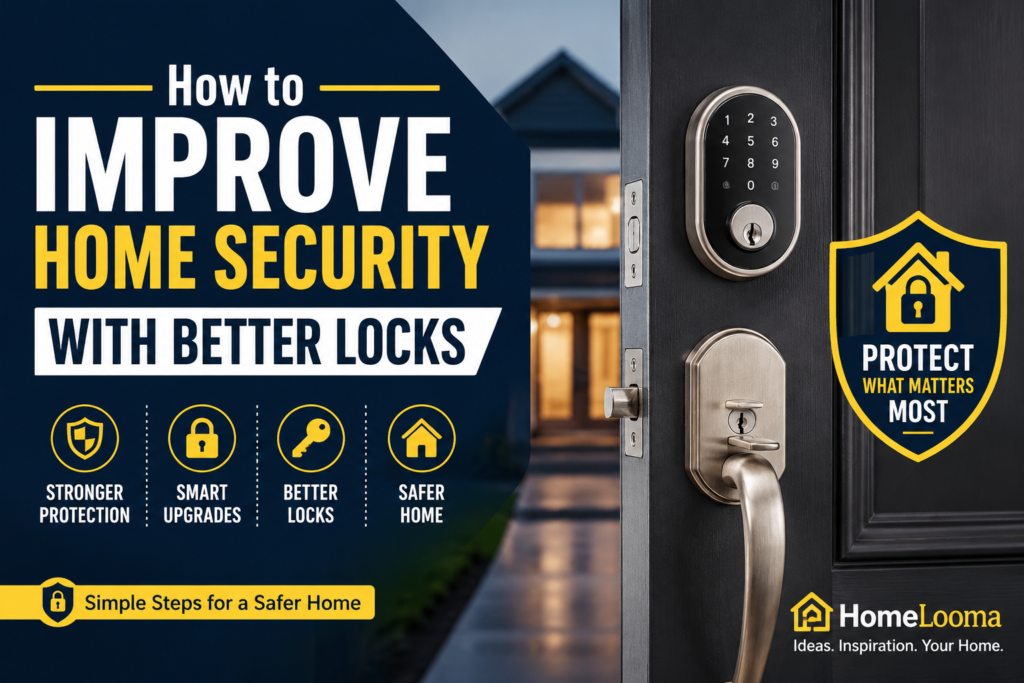
Learn how to improve home security with better locks. Discover the best deadbolts, smart locks, installation tips, and expert strategies to protect your home and family.
Keeping your home safe starts with one of the most important security features: your locks. Whether you own a house, rent an apartment, or have recently moved into a new property, upgrading your locks is one of the smartest investments you can make. Modern locks offer stronger protection against break-ins, while smart lock technology provides convenience without compromising security.
Unfortunately, many homeowners assume that locking the front door is enough to keep intruders away. In reality, burglars often look for weak locks, poorly secured entry points, or outdated hardware that can be bypassed within minutes. A simple lock upgrade can significantly reduce your home’s vulnerability and give you greater peace of mind.
In this guide, you’ll learn everything you need to know about improving home security with better locks. From understanding different lock types to choosing the best options for your budget, we’ll cover practical tips that help protect your family and belongings.
Why Better Locks Matter for Home Security
Your front door is the primary barrier between your family and potential intruders. Even the strongest security system cannot fully protect a home if the door lock itself is weak.
Many homes still use builder-grade locks installed during construction. While these locks meet basic safety standards, they often lack advanced security features and can wear out over time. Older locks may also be vulnerable to common burglary techniques such as lock picking, bumping, drilling, or forced entry.
High-quality locks provide several important benefits:
Stronger Protection
Premium locks are designed using hardened steel components, reinforced cylinders, and anti-drill plates that make forced entry much more difficult.
Better Durability
Weather, moisture, and daily use can weaken cheaper locks. Quality locks last longer and require less maintenance over the years.
Improved Convenience
Modern smart locks allow homeowners to lock or unlock doors remotely, monitor access, and create temporary access codes for guests or service providers.
Insurance Benefits
Some insurance companies offer discounts for homes equipped with upgraded security hardware, including certified deadbolts and smart locking systems.
Understanding Common Types of Door Locks
Not all locks provide the same level of protection. Understanding the available options helps you choose the right solution for your home.
Deadbolt Locks
Deadbolts remain one of the most effective residential security options.
Unlike spring latch locks, deadbolts cannot simply be pushed back with a credit card or similar tool.
There are three primary types:
Single-Cylinder Deadbolt
This is the most common option found in American homes.
Features include:
- Key access from outside
- Thumb turn on the inside
- Easy operation
- Affordable price
- Excellent everyday security
Single-cylinder deadbolts are ideal for most front and back doors.
Double-Cylinder Deadbolt
These locks require a key from both sides of the door.
Advantages include:
- Extra protection near glass panels
- Prevents burglars from reaching inside to unlock the door
- Increased resistance against forced entry
However, homeowners should ensure everyone knows where the key is stored for emergency exits.
Vertical Deadbolt
Vertical deadbolts resist prying attacks better than many traditional horizontal models.
Although less common, they provide excellent protection for high-risk properties.
Knob Locks
Knob locks are often installed alongside deadbolts but should never be relied upon as the primary security lock.
Because the locking mechanism is inside the door knob, experienced burglars can often break or twist the knob to gain entry.
Best practice:
Always pair knob locks with a high-quality deadbolt.
Lever Handle Locks
Lever locks are commonly used on interior doors, offices, and commercial buildings.
While they provide convenience and accessibility, they generally offer lower security than deadbolts unless specifically designed for exterior use.
Smart Locks
Smart locks have become increasingly popular among homeowners seeking convenience and enhanced control.
Features may include:
- Smartphone control
- Fingerprint access
- PIN codes
- Temporary guest codes
- Auto-lock functionality
- Activity history
- Voice assistant integration
- Remote locking and unlocking
Smart locks eliminate many problems associated with lost keys while allowing homeowners to manage access from virtually anywhere.
Mortise Locks
Mortise locks are commonly found in older homes and commercial properties.
Their locking mechanism is installed inside a pocket cut into the door, making them extremely durable.
Advantages include:
- Excellent strength
- Long lifespan
- High resistance against forced entry
- Premium appearance
Although installation is more complex, mortise locks remain one of the strongest mechanical locking systems available.
Signs It’s Time to Replace Your Locks
Many homeowners wait until a lock completely fails before replacing it. In reality, there are several warning signs that indicate your locks should be upgraded soonerYour Locks Are More Than 10 Years Old
Older locks may still function properly, but years of wear can reduce their effectiveness. Newer models often include stronger materials and advanced security features that weren’t available a decade ago.
You Recently Moved Into a New Home
One of the first things every homeowner should do after moving is replace or rekey the locks.
You never know who might still have copies of the previous keys, including:
- Former owners
- Contractors
- Realtors
- House cleaners
- Neighbors
- Family members of the previous occupants
Replacing the locks ensures that only trusted individuals have access to your home.
Your Keys Are Difficult to Turn
If you frequently struggle to insert or turn your key, the lock may be worn or internally damaged.
Ignoring this issue could eventually leave you locked out—or worse, with a lock that fails to secure your home properly.
Visible Rust or Corrosion
Exterior locks are constantly exposed to:
- Rain
- Snow
- Heat
- Dust
- Humidity
Over time, corrosion can weaken internal components and make locks easier to damage or bypass.
Regular inspections can help identify these issues before they become serious.
You’ve Lost Your Keys
If your keys are lost or stolen, replacing or rekeying your locks should be a top priority.
Even if you believe the keys are simply misplaced, upgrading the lock provides peace of mind and eliminates the risk of unauthorized access.
How to Choose the Best Lock for Your Home
With so many options available, selecting the right lock can feel overwhelming. The best choice depends on your home’s layout, budget, and security needs.
Consider Your Entry Points
Not every door requires the same level of protection. Start by evaluating each entry point, including:
- Front door
- Back door
- Garage entry door
- Basement entrance
- Patio doors
- Side doors
Your main entry door should always have the highest-quality lock available, as it is the most common target for burglars.
Look for ANSI/BHMA Ratings
When shopping for a new lock, pay attention to its ANSI/BHMA security grade.
These ratings indicate how well a lock performs under testing for durability, strength, and resistance to forced entry.
In general:
- Grade 1: Highest residential and commercial security.
- Grade 2: Excellent protection for most homes.
- Grade 3: Basic residential security, suitable for low-risk applications.
Choosing a Grade 1 or Grade 2 lock can significantly improve your home’s overall security.
Deadbolts vs. Smart Locks: Which One Is Better?
One of the most common questions homeowners ask is whether they should install a traditional deadbolt or upgrade to a smart lock. The truth is that both options can provide excellent security when you choose a high-quality product and install it correctly.
Rather than asking which one is better, it’s more helpful to consider which option best fits your lifestyle.
Traditional Deadbolts
Deadbolts have protected homes for decades because they are simple, dependable, and highly resistant to forced entry.
Advantages:
- No batteries or Wi-Fi required
- Reliable during power outages
- Lower purchase cost
- Minimal maintenance
- Excellent physical security
Potential Drawbacks:
- Keys can be lost or duplicated.
- You cannot check the lock status remotely.
- No access history or visitor management.
Traditional deadbolts remain one of the best choices for homeowners who value simplicity and long-term reliability.
Smart Locks
Smart locks combine mechanical security with modern technology, making them an excellent option for busy households.
Most smart locks allow you to unlock your door using:
- A smartphone app
- A keypad
- Fingerprint recognition
- Voice assistants
- A physical key (on many models)
Some premium models even use facial recognition or proximity unlocking.
Benefits of Smart Locks
Remote Access
Forgot to lock your front door before leaving for work?
A smart lock allows you to lock it from almost anywhere using your smartphone.
Temporary Access Codes
Instead of giving someone a spare key, you can create temporary access codes for:
- House cleaners
- Dog walkers
- Contractors
- Friends
- Family members
- Vacation rental guests
These codes can automatically expire after a specific date or time.
Activity Monitoring
Many smart locks record every lock and unlock event.
This allows you to know:
- When children arrive home
- When deliveries are collected
- Whether someone attempted unauthorized access
Auto Lock Features
Some models automatically lock the door after it closes.
This is particularly useful if someone in your household frequently forgets to lock the door.
Integration With Smart Home Systems
Many smart locks integrate with:
- Security cameras
- Video doorbells
- Motion sensors
- Home automation systems
Together, these devices create a more comprehensive home security solution.
Which Lock Is Right for You?
Choose a traditional deadbolt if you:
- Prefer simple security
- Want maximum reliability
- Have a limited budget
- Don’t need remote features
Choose a smart lock if you:
- Travel frequently
- Receive regular visitors
- Want remote control
- Already use smart home devices
- Value convenience alongside security
For many homeowners, the ideal solution is a smart lock paired with a high-security deadbolt.
Reinforce Your Door Along With the Lock
Even the strongest lock cannot fully protect a weak door.
A determined intruder often attacks the entire door assembly rather than the lock itself.
Strengthening your door can significantly improve overall security.
Upgrade the Strike Plate
The strike plate is the metal piece attached to the door frame where the deadbolt extends.
Many homes use thin strike plates secured with short screws that can pull out during a kick-in attempt.
Replace them with:
- Heavy-duty steel strike plates
- Reinforced security plates
- Four-inch hardened screws that anchor into the wall studs
This simple upgrade dramatically increases resistance against forced entry.
Install Longer Screws
Many door hinges and strike plates are installed using one-inch screws.
Replacing these with three- or four-inch screws allows them to anchor directly into the structural framing.
This inexpensive improvement can greatly strengthen your entry door.
Strengthen the Door Frame
A reinforced lock is only as strong as the frame surrounding it.
Consider installing:
- Steel reinforcement kits
- Door jamb shields
- Security wrap plates
These products distribute impact across a larger area, making kick-ins much more difficult.
Replace Hollow-Core Exterior Doors
Exterior doors should always be solid.
Good options include:
- Solid wood
- Steel
- Fiberglass
Hollow-core doors are intended for interior use and provide very little protection against forced entry.
Secure Sliding Glass Doors
Sliding doors are frequent targets for burglars because many standard locks are easy to bypass.
Improve their security by adding:
- Security bars
- Anti-lift devices
- Secondary locking mechanisms
- Glass security film
Features Worth Looking for in Modern Locks
Not all locks offer the same level of protection.
When shopping, prioritize these security features.
Anti-Pick Protection
Special pin designs make lock picking much more difficult.
Anti-Bump Technology
Lock bumping is a technique used to open some traditional locks.
Modern high-security cylinders are designed to resist this attack.
Drill Resistance
Hardened steel inserts prevent burglars from drilling through the cylinder.
Reinforced Bolt
A hardened steel deadbolt provides better resistance against sawing and impact attacks.
Key Control
Some manufacturers produce keys that cannot legally be duplicated without authorization.
This reduces the risk of unauthorized copies.
Common Lock Installation Mistakes
Buying an excellent lock is only half the job.
Incorrect installation can leave your home vulnerable despite using premium hardware.
Installing the Deadbolt Too Close to the Door Edge
Proper spacing ensures maximum strength and smooth operation.
Poor positioning weakens the surrounding wood.
Ignoring Door Alignment
If the deadbolt doesn’t align perfectly with the strike plate, homeowners often avoid fully locking the door.
Even slight misalignment can reduce security.
Using Short Screws
Short screws are one of the biggest weaknesses in residential door security.
Always use manufacturer-recommended security screws whenever possible.
Forgetting the Back Door
Many burglars avoid the front entrance altogether.
Back doors, garage doors, and side entrances deserve the same level of protection as the main entry.
Mixing Old and New Hardware
Installing a premium deadbolt on an old, damaged door frame limits its effectiveness.
Security should be viewed as an entire system rather than a single upgrade.
Additional Ways to Improve Home Security
Better locks are the foundation of home protection, but they work best alongside other security improvements.
Install Motion-Activated Outdoor Lighting
Well-lit entryways discourage unwanted visitors by reducing places to hide.
Install motion lights near:
- Front entrance
- Garage
- Backyard
- Side gates
- Driveway
Add a Video Doorbell
Video doorbells let you:
- See visitors in real time
- Speak with delivery drivers
- Record suspicious activity
- Receive instant alerts
Visible cameras can also discourage opportunistic criminals.
Install Outdoor Security Cameras
Strategically placed cameras provide another layer of protection.
Focus on:
- Front door
- Backyard
- Garage
- Driveway
- Side entrances
Choose cameras with high-definition video, night vision, and motion detection for the best results.
Use a Home Security System
A monitored alarm system can detect unauthorized entry and notify emergency services when necessary.
Modern systems often include:
- Door sensors
- Window sensors
- Glass-break detectors
- Indoor cameras
- Mobile alerts
When combined with quality locks, they create a much stronger defense against intrusions.
Lock Maintenance Tips to Keep Your Home Secure
Installing high-quality locks is only the first step. Regular maintenance ensures they continue to perform effectively for years.
Clean Your Locks Regularly
Dust, dirt, and moisture can build up inside lock cylinders over time. Wipe exterior surfaces with a soft cloth and keep the keyway free of debris.
Lubricate the Lock
Use a dry graphite or silicone-based lubricant designed for locks. Avoid oil-based products, as they can attract dust and cause the mechanism to become sticky.
For most homes, lubricating locks once or twice a year is sufficient.
Tighten Loose Hardware
Check screws on door handles, deadbolts, hinges, and strike plates every few months. Loose hardware can affect both security and smooth operation.
Test Smart Lock Batteries
If you use a smart lock, replace the batteries before they become fully depleted. Many smart locks provide low-battery alerts, but replacing batteries proactively helps prevent unexpected lockouts.
Inspect Doors After Severe Weather
Temperature changes and humidity can cause wooden doors to expand or contract, affecting lock alignment. If you notice the deadbolt sticking, adjust the strike plate before the problem worsens.
Common Myths About Home Door Locks
Many homeowners unknowingly rely on outdated advice. Here are a few common myths—and the facts behind them.
Myth 1: Any Lock Is Good Enough
Fact: Not all locks provide the same level of protection. High-quality, properly installed locks are much more resistant to picking, drilling, and forced entry than basic models.
Myth 2: Smart Locks Are Easy to Hack
Fact: Reputable smart locks use encryption and multiple security features. Keeping the lock’s firmware updated and using strong, unique passwords greatly reduces security risks.
Myth 3: Burglars Only Enter Through the Front Door
Fact: Intruders often look for the easiest point of entry, which may be a back door, side entrance, garage access door, or even an unlocked window. Every entry point deserves attention.
Myth 4: Locks Never Need Replacing
Fact: Locks wear out over time. If a lock is damaged, corroded, difficult to operate, or you’ve moved into a new home, replacing or rekeying it is a wise investment.
Expert Tips for Better Home Security
Improving home security is about combining strong habits with quality hardware. Consider these best practices:
- Always lock doors and windows, even when you’re home.
- Replace locks immediately after losing your keys.
- Keep shrubs and bushes trimmed around entry points to improve visibility.
- Avoid hiding spare keys under doormats, flowerpots, or decorative rocks.
- Install outdoor lighting near entrances and walkways.
- Consider a monitored home security system for additional protection.
- Review your home’s security annually and upgrade outdated hardware as needed.
Small improvements can add up to a much safer home.
Frequently Asked Questions (FAQs)
What is the best type of lock for a front door?
A high-quality deadbolt with an ANSI/BHMA Grade 1 or Grade 2 rating is an excellent choice for most residential front doors. Homeowners who value convenience may also consider a reputable smart lock with strong security features.
Should I replace my locks after moving into a new home?
Yes. You can’t be certain who may still have copies of the previous keys. Replacing or rekeying the locks ensures that only authorized people have access to your home.
Are smart locks safe?
Quality smart locks from trusted manufacturers are generally secure when installed correctly. Use strong passwords, enable multi-factor authentication if available, and keep the device’s firmware up to date.
How often should locks be replaced?
There is no fixed replacement schedule. Replace locks if they become damaged, difficult to operate, outdated, or after losing your keys or moving into a new home.
Can I install a new lock myself?
Many homeowners can install a standard deadbolt with basic tools by following the manufacturer’s instructions. If your door requires modifications or you’re installing a more complex locking system, hiring a professional locksmith is often the best option.
What’s the difference between replacing and rekeying a lock?
Replacing a lock involves installing entirely new hardware. Rekeying changes the internal pins so that existing keys no longer work while keeping the same lock body.
Internal Linking Suggestions
To help readers discover related content on Home Looma, consider linking this article to:
- Best Smart Home Devices for Home Security
- How to Secure Sliding Glass Doors
- DIY Home Maintenance Checklist for Every Season
- Home Improvement Projects That Increase Property Value
- Essential Garage Security Tips for Homeowners
- Outdoor Lighting Ideas for a Safer Home
These related articles provide additional value while helping readers explore other home improvement topics.
Conclusion
Your home’s security begins at the front door, and choosing the right locks is one of the smartest investments you can make. Whether you prefer a dependable traditional deadbolt or the convenience of a modern smart lock, selecting high-quality hardware and installing it correctly can significantly reduce the risk of unauthorized entry.
Remember that effective home security goes beyond the lock itself. Reinforced doors, sturdy strike plates, quality lighting, security cameras, and good daily habits all work together to create a safer environment for your family.
Take time to inspect your current locks, identify weak points, and make upgrades where needed. Even small improvements today can provide lasting peace of mind for years to come.
Final Thoughts
Home security is not a one-time project—it’s an ongoing commitment. By investing in better locks, maintaining them regularly, and combining them with other practical security measures, you’ll create a stronger first line of defense against potential threats. A secure home allows you to focus on what matters most: enjoying your space with confidence, comfort, and peace of mind.
Ready to improve your home’s security? Start by evaluating your existing locks, upgrading weak hardware, and building a comprehensive security plan that protects your home and everyone inside.




2 thoughts on “How to Improve Home Security With Better Locks: A Complete Homeowner’s Guide”