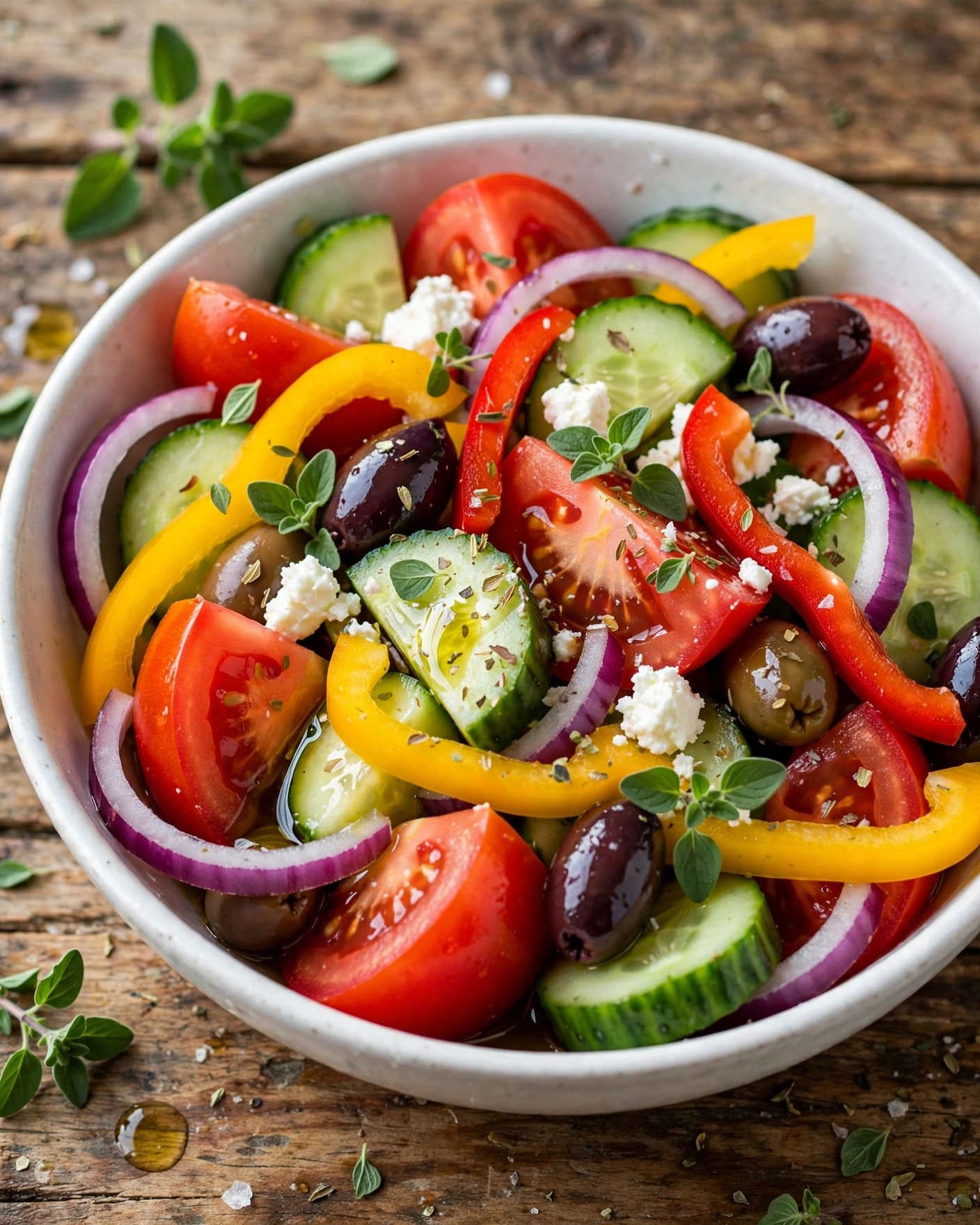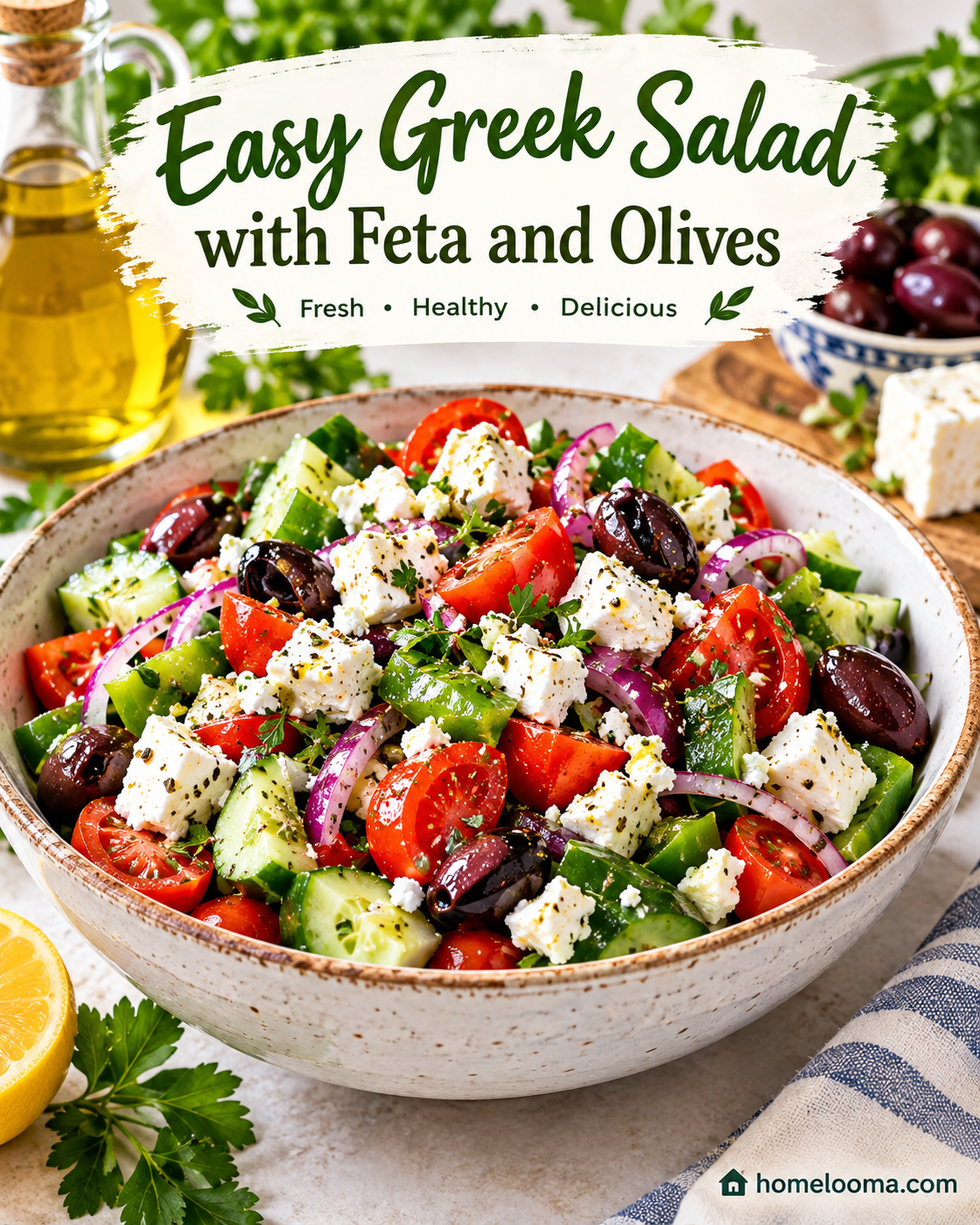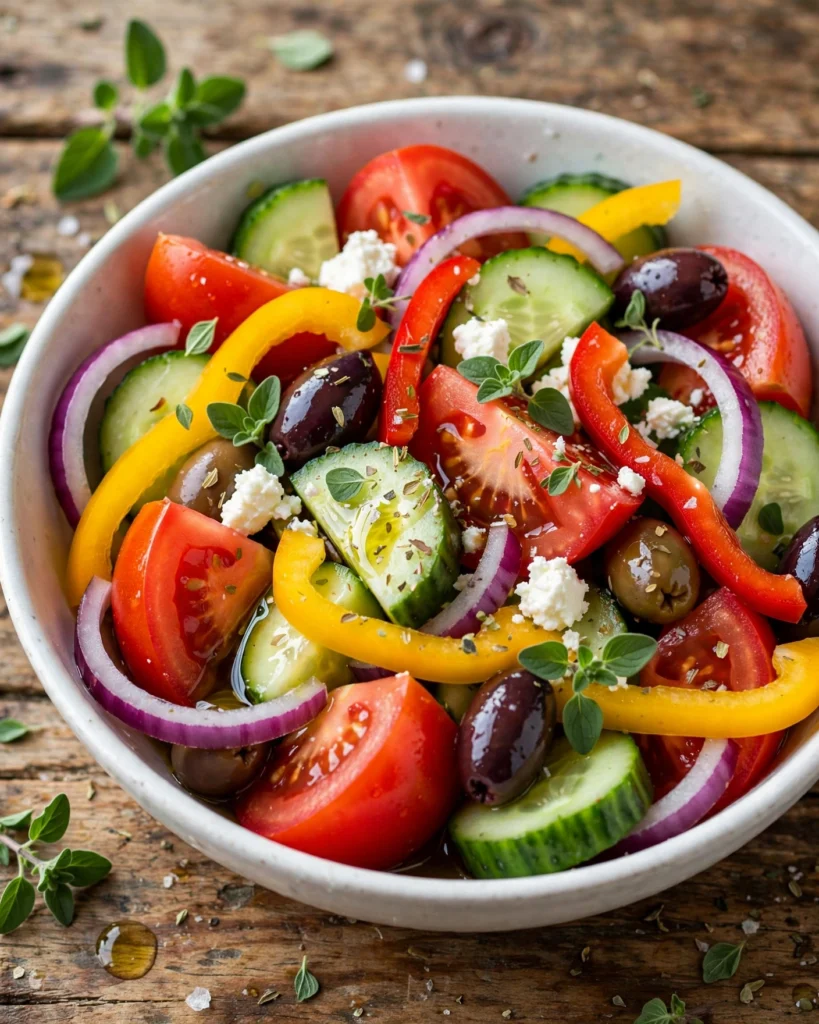
Fresh, colorful, and incredibly easy to make, this Classic Mediterranean Greek Salad with Feta is the kind of recipe you can turn to whenever you want something light, flavorful, and satisfying. Crisp cucumbers, juicy tomatoes, crunchy bell peppers, briny olives, and creamy feta come together with a simple homemade dressing for a salad that tastes like summer in every bite.
Unlike heavily dressed salads, a traditional Greek-style salad lets the quality of the ingredients shine. The vegetables stay fresh and crunchy, while extra-virgin olive oil, red wine vinegar, oregano, and feta add plenty of Mediterranean character without making the dish complicated.
Serve this Mediterranean Greek salad as a refreshing side dish with grilled chicken, fish, lamb, or warm pita. It also makes an excellent light lunch when paired with crusty bread or a little extra feta.
Why You’ll Love This Recipe
- Quick and easy: You can have this salad ready in about 15 minutes.
- Fresh ingredients: It relies on simple vegetables that are easy to find.
- No cooking required: Just chop, whisk, toss, and serve.
- Full of Mediterranean flavor: Olive oil, oregano, olives, feta, and vinegar create a classic combination.
- Perfect for meal pairing: It works beautifully with grilled meats, seafood, sandwiches, and pita.
- Naturally colorful: Tomatoes, cucumbers, peppers, and olives make it look as good as it tastes.
- Easy to customize: You can adjust the vegetables, dressing, or toppings to suit your preferences.
Ingredients You’ll Need
For the Greek Salad
- 4 medium ripe tomatoes, cut into wedges or large chunks
- 1 large English cucumber, sliced into half-moons
- 1 green bell pepper, sliced into thin strips
- 1/2 medium red onion, thinly sliced
- 1/2 cup Kalamata olives, pitted
- 5 ounces feta cheese, cut into cubes or broken into large pieces
- 2 tablespoons fresh parsley, chopped
- 1 teaspoon dried oregano
- 1/4 teaspoon freshly ground black pepper
For the Dressing
- 1/4 cup extra-virgin olive oil
- 2 tablespoons red wine vinegar
- 1 teaspoon dried oregano
- 1 small garlic clove, finely minced
- 1/2 teaspoon Dijon mustard, optional
- 1/4 teaspoon salt, or to taste
- 1/4 teaspoon freshly ground black pepper
The best Greek salad starts with good produce. Choose tomatoes that are ripe and fragrant, cucumbers that feel firm, and high-quality feta with a creamy texture. Kalamata olives add a distinctive salty, fruity flavor, but another good-quality Greek olive can work if needed.
How to Make Classic Mediterranean Greek Salad with Feta
1. Prepare the Ingredients
Start by washing and drying all of the vegetables thoroughly. Excess water can dilute the dressing, so dry the produce well before chopping.
Cut the tomatoes into wedges or large bite-sized chunks. Avoid cutting them too small because Greek salad is best when the vegetables remain substantial and easy to pick up with a fork.
Slice the cucumber into half-moons. If you’re using a standard cucumber with thick seeds, you can remove some of the seeds first, although an English cucumber generally doesn’t need this step.
Slice the green bell pepper into thin strips and cut the red onion into very thin slices. If you prefer a milder onion flavor, soak the sliced onion in cold water for about 5 minutes, then drain and pat dry.
2. Combine the Ingredients
Place the tomatoes, cucumber, bell pepper, red onion, and Kalamata olives in a large serving bowl.
Gently toss the vegetables together using salad spoons or clean hands. Try not to mash the tomatoes, as their juices are an important part of the finished salad.
Add the feta cheese on top rather than aggressively mixing it into the vegetables. Keeping larger pieces of feta intact gives the salad a more traditional appearance and lets you enjoy creamy bites of cheese throughout.
3. Prepare the Dressing
In a small bowl or jar, combine the extra-virgin olive oil, red wine vinegar, oregano, minced garlic, Dijon mustard if using, salt, and black pepper.
Whisk vigorously until the dressing looks slightly thickened and well combined. You can also place everything in a small jar, close the lid tightly, and shake until emulsified.
Taste the dressing before adding it to the salad. If you prefer more acidity, add a little extra vinegar. For a rounder flavor, add another small splash of olive oil.
4. Cook or Assemble the Recipe
There is no cooking required for this recipe. Pour the dressing over the prepared vegetables and gently toss until everything is lightly coated.
Sprinkle the dried oregano and fresh parsley over the top. If you’ve kept the feta in larger pieces, arrange it over the salad after tossing.
Allow the salad to rest for about 5–10 minutes before serving. This short resting period gives the vegetables time to absorb some of the dressing while keeping their fresh texture.
5. Serve and Enjoy
Serve the salad immediately at room temperature or slightly chilled.
For a beautiful presentation, transfer it to a wide serving platter and arrange the feta, olives, and colorful vegetables so they’re easy to see. Finish with a small drizzle of extra-virgin olive oil and a pinch of oregano.
A few slices of warm pita or crusty bread are especially good alongside the salad because they can soak up the flavorful dressing and tomato juices.
Tips for the Best Classic Mediterranean Greek Salad with Feta
Use ripe tomatoes. Tomatoes provide much of the salad’s natural sweetness and juice, so choose ripe seasonal tomatoes whenever possible.
Don’t overmix. Toss gently to prevent the tomatoes from breaking down and the feta from disappearing into the dressing.
Choose good olive oil. Since the dressing contains only a handful of ingredients, extra-virgin olive oil makes a noticeable difference.
Don’t overdress the salad. Start with most of the dressing and add more only if needed. The vegetables should look lightly coated rather than swimming in dressing.
Cut vegetables into similar-sized pieces. This makes every forkful more balanced and gives the salad a more attractive appearance.
Use block feta when possible. Feta sold in a block often has a creamier texture and stronger flavor than pre-crumbled varieties.
Let the salad rest briefly. Five to ten minutes is enough to allow the flavors to mingle without making the vegetables overly soft.
Season carefully. Feta and olives are naturally salty, so taste the salad before adding additional salt.
Easy Variations
Add Fresh Herbs
Fresh parsley works beautifully, but you can also add a little fresh mint or dill for a different Mediterranean-inspired flavor.
Make It More Filling
Turn the salad into a complete meal by adding grilled chicken, chickpeas, white beans, or cooked quinoa. These additions provide extra substance while keeping the fresh character of the salad.
Try Cherry Tomatoes
Cherry or grape tomatoes are a convenient alternative to large tomatoes. Simply cut them in half before adding them to the bowl.
Use a Different Pepper
Green bell pepper is traditional in many Greek-style salads, but red, yellow, or orange bell peppers can be used when you want a slightly sweeter flavor and brighter color.
Add a Lemon Twist
For a brighter dressing, replace part of the red wine vinegar with fresh lemon juice. A little lemon zest can also add a fresh citrus note.
Add Pepperoncini
For a tangy, slightly spicy variation, add a few sliced pepperoncini peppers. Their acidity pairs especially well with feta and olives.
Make It Protein-Rich
Add chickpeas, grilled shrimp, or sliced grilled chicken for an easy lunch bowl. Keep the dressing separate if you’re preparing it several hours ahead.
What to Serve With Classic Mediterranean Greek Salad with Feta
This salad is extremely versatile and pairs well with many Mediterranean-inspired dishes.
Serve it alongside grilled chicken for an easy weeknight dinner. The fresh vegetables and acidic dressing balance the richness of grilled meat particularly well.
It’s also delicious with grilled salmon, shrimp, baked white fish, or grilled lamb. For a vegetarian meal, serve it with warm pita, hummus, roasted vegetables, or crispy chickpeas.
You can also serve it with Mediterranean rice, roasted potatoes, falafel, chicken souvlaki, or a simple bowl of lentil soup.
For drinks, sparkling water with lemon, iced tea, or a refreshing citrus drink complements the crisp vegetables nicely.
How to Store Leftovers
Store leftover Greek salad in an airtight container in the refrigerator.
For the best texture, enjoy it within 1–2 days. Tomatoes and cucumbers release water as they sit, so the vegetables will gradually become softer and the salad may become more watery.
If you’re specifically preparing leftovers, consider storing the vegetables and dressing separately. This keeps the vegetables much crisper.
If the salad has already been dressed, give it a gentle toss before serving and drain away any excess liquid if necessary.
Can You Make It Ahead?
Yes, but a little planning will give you a much better texture.
You can wash and chop the vegetables several hours ahead and refrigerate them in a covered container. The dressing can also be prepared ahead and stored separately in the refrigerator.
For the best results, combine the vegetables, dressing, olives, and feta shortly before serving. This prevents the cucumbers and tomatoes from becoming too soft.
If you need to prepare the entire salad in advance, keep the dressing separate until you’re ready to eat.
Is This Recipe Healthy?
This Mediterranean Greek salad with feta is made primarily with vegetables, olives, olive oil, and feta cheese. Tomatoes and peppers provide vitamins and antioxidants, while cucumbers contribute water and a refreshing crunch.
Extra-virgin olive oil provides unsaturated fats, and feta contributes protein and calcium. Olives and feta also contain sodium, so people watching their sodium intake may want to use smaller portions or choose lower-sodium options.
The overall nutritional profile depends on portion sizes and the specific ingredients you use. Serving the salad with a lean protein or legumes can also make it a more substantial and balanced meal.
Frequently Asked Questions
What is a traditional Greek salad made of?
A classic Greek-style salad generally features tomatoes, cucumbers, green peppers, red onion, olives, and feta cheese. It’s commonly dressed with olive oil, vinegar, and oregano.
Can I make Greek salad without feta?
Absolutely. Feta provides the characteristic creamy and salty element, but you can leave it out for a dairy-free version. You can also add chickpeas or white beans to make the salad more filling.
Should Greek salad be served cold?
Greek salad can be served chilled or at cool room temperature. Slightly chilled vegetables are refreshing, but allowing the salad to sit outside the refrigerator for a few minutes before serving can help the flavors become more pronounced.
Can I use crumbled feta?
Yes. Crumbled feta works perfectly well, although larger pieces or cubes of block feta create a more traditional presentation and give you noticeable bites of cheese.
How long does homemade Greek salad last?
For the best texture and flavor, eat it within 1–2 days. If the dressing is stored separately, the chopped vegetables can stay crisp longer.
Can I use lemon juice instead of vinegar?
Yes. Fresh lemon juice is a delicious alternative or addition to red wine vinegar. It gives the dressing a brighter, more citrusy flavor.
Why does my Greek salad become watery?
Tomatoes and cucumbers naturally release water, especially after they’re cut and salted. To reduce excess liquid, use firm produce, avoid over-salting, and add the dressing shortly before serving.
Final Thoughts
This Classic Mediterranean Greek Salad with Feta proves that a great side dish doesn’t need complicated ingredients or hours in the kitchen. Fresh vegetables, briny olives, creamy feta, fragrant oregano, and a simple homemade dressing create a combination that’s bright, satisfying, and incredibly versatile.
Make it for a quick lunch, serve it alongside grilled chicken for dinner, or bring it to your next summer gathering. Once you have the basic recipe down, it’s easy to adjust with your favorite Mediterranean ingredients while keeping the fresh, colorful character that makes Greek salad so enjoyable.