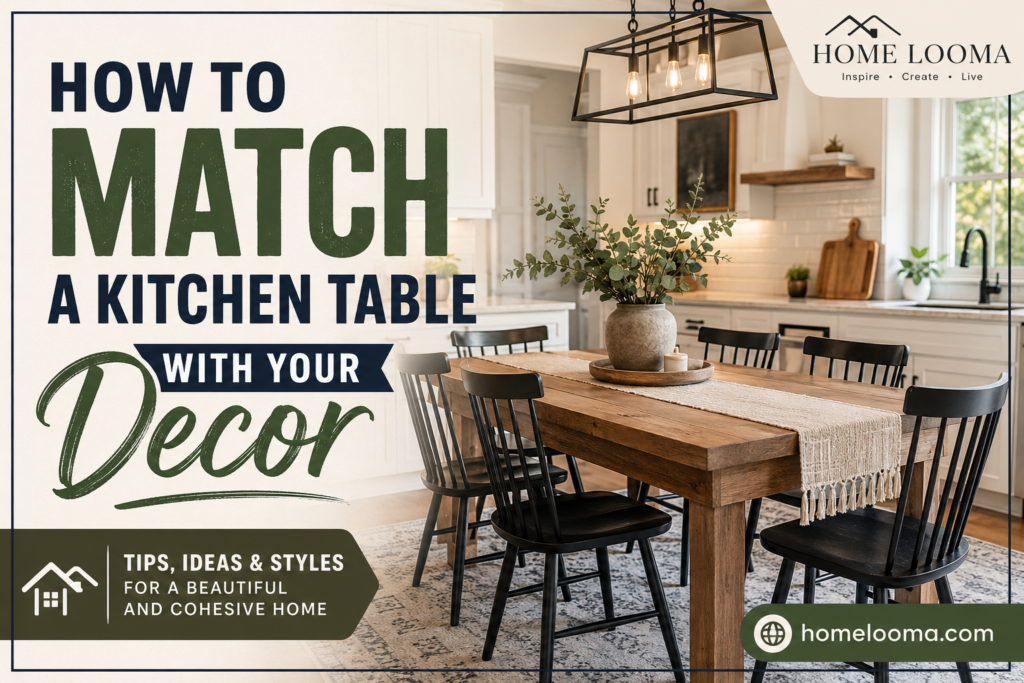
Learn how to match a kitchen table with your decor using expert tips on style, color, size, materials, and design for a beautiful, functional dining space.
Introduction
Your kitchen table is much more than a place to enjoy meals. It’s where families gather, friends share conversations, children complete homework, and memories are made every day. Because it’s often the centerpiece of the kitchen or dining area, choosing a table that complements your existing decor is essential.
Many homeowners struggle with selecting the right table because there are countless styles, materials, finishes, and sizes available. A table that looks beautiful in a showroom may not fit the personality or layout of your home.
Fortunately, learning how to match a kitchen table with your decor doesn’t have to be difficult. By understanding your home’s style, selecting the right materials, coordinating colors, and balancing proportions, you can create a space that feels cohesive, welcoming, and timeless.
Whether you’re decorating a cozy breakfast nook, a modern apartment, or a spacious farmhouse kitchen, this guide will help you choose the perfect kitchen table that blends beautifully with your interior design.
Understand Your Home’s Decorating Style
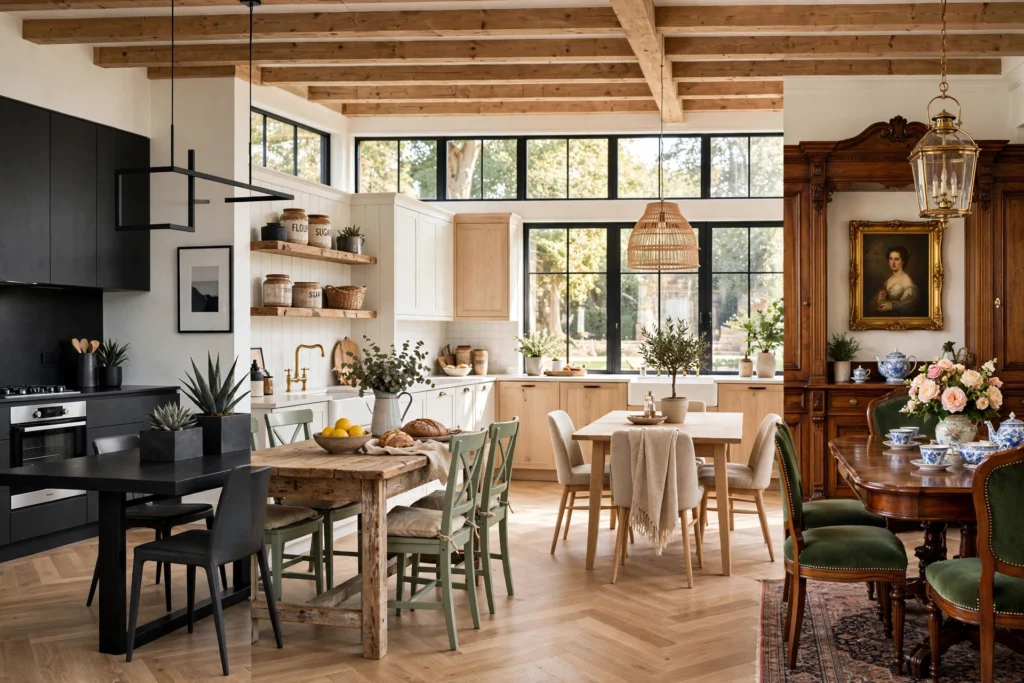
Before buying a kitchen table, identify the overall design style of your home. Matching furniture becomes much easier when you understand the visual language of your space.
Modern Style
Modern kitchens feature:
- Clean lines
- Neutral colors
- Minimal decorations
- Metal accents
- Smooth finishes
Choose a table with:
- Glass tops
- Matte finishes
- Black steel legs
- Simple rectangular or round designs
Avoid ornate carvings or overly decorative details that can make the room feel cluttered.
Farmhouse Style
Farmhouse interiors create warmth and comfort.
Look for tables with:
- Solid wood
- Distressed finishes
- Rustic textures
- Thick legs
- Natural grain patterns
Oak, pine, and reclaimed wood are excellent choices.
Scandinavian Style
Scandinavian decor emphasizes simplicity and brightness.
Ideal kitchen tables include:
- Light oak
- Ash wood
- White finishes
- Rounded edges
- Slim wooden legs
Pair these tables with neutral chairs and plenty of natural light.
Traditional Style
Traditional homes feature timeless elegance.
Choose tables with:
- Rich wood tones
- Detailed craftsmanship
- Curved legs
- Dark walnut or cherry finishes
- Classic rectangular shapes
These tables pair beautifully with upholstered dining chairs.
Match the Table Material to Your Decor
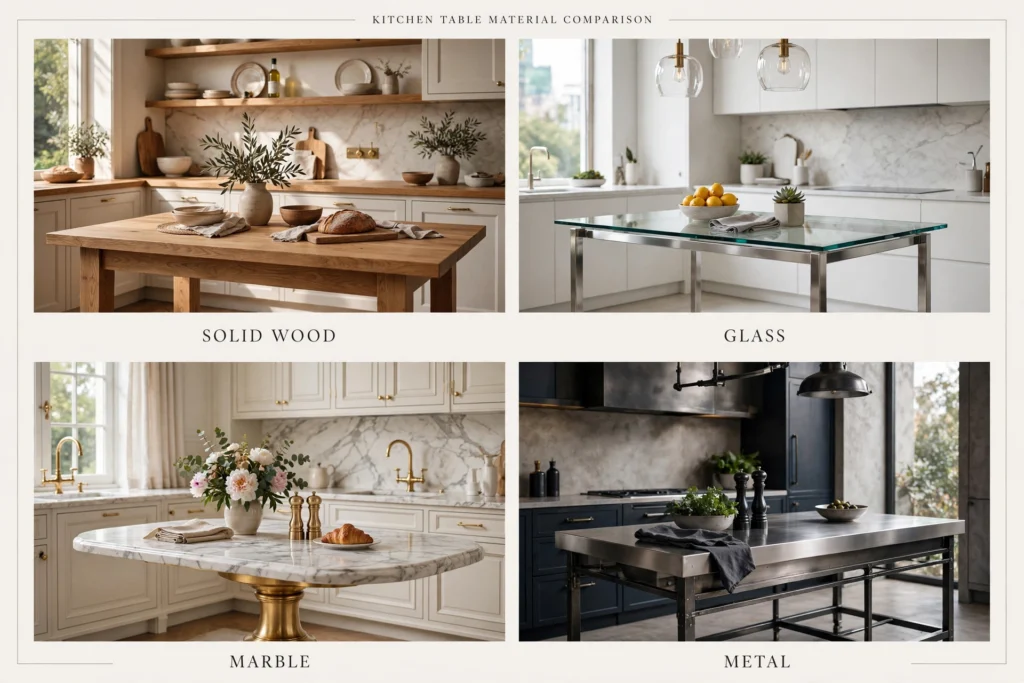
The material of your kitchen table greatly influences the overall atmosphere of the room.
| Material | Best Decor Style | Benefits | Considerations |
|---|---|---|---|
| Solid Wood | Farmhouse, Rustic, Traditional | Durable and timeless | Requires maintenance |
| Glass | Modern, Contemporary | Makes spaces feel larger | Shows fingerprints |
| Marble | Luxury, Modern | Elegant appearance | Heavy and expensive |
| Metal | Industrial | Extremely durable | Can feel cold without warm accents |
| Engineered Wood | Transitional | Budget-friendly | Less durable than solid wood |
Natural materials generally create a warmer, more inviting environment, while glass and metal produce a sleek, contemporary look.
Coordinate Colors Carefully
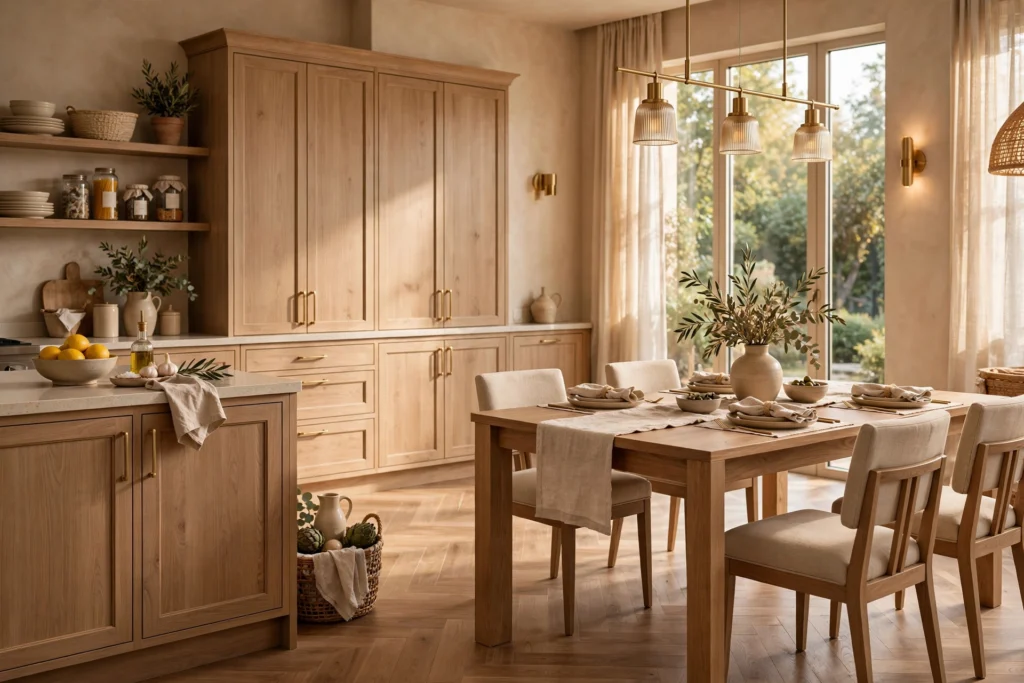
Color harmony plays one of the biggest roles in successful interior decorating.
Instead of trying to match every piece exactly, aim for complementary colors that create balance.
Light-Colored Kitchens
White or cream kitchens work well with:
- Light oak
- Natural maple
- Whitewashed wood
- Glass tables
- Soft gray finishes
These combinations create a fresh, airy appearance.
Dark Kitchens
Dark cabinets pair beautifully with:
- Walnut
- Espresso finishes
- Matte black tables
- Rich oak
- Dark-stained wood
To keep the room from feeling too heavy, add lighter chairs or a bright area rug.
Color Matching Tips
Use the following rule:
- Match one dominant color.
- Complement one secondary color.
- Introduce one contrasting accent.
For example:
White cabinets + oak flooring + black table legs create a balanced and modern design.
Choose the Right Table Shape
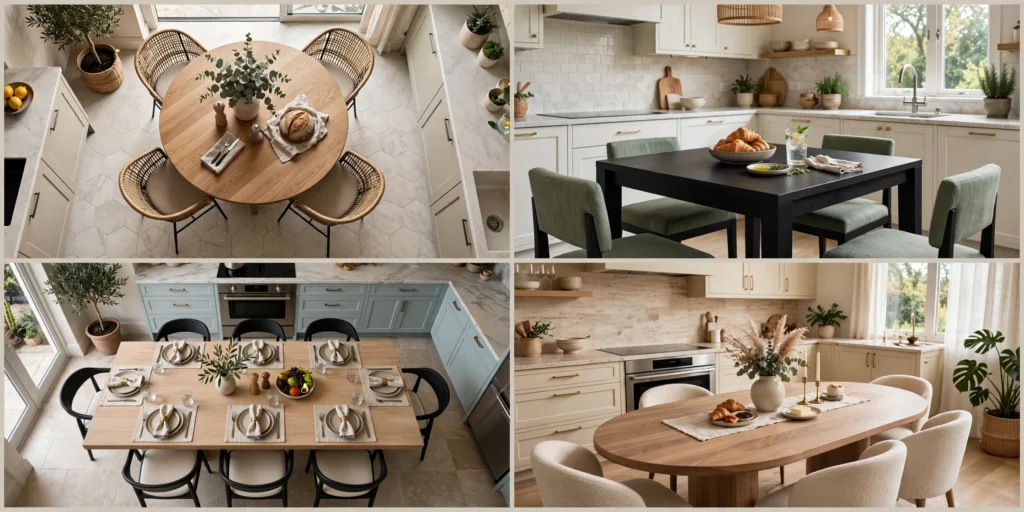
The shape of your kitchen table should complement both the room layout and your decorating style.
Round Tables
Perfect for:
- Small kitchens
- Apartments
- Breakfast nooks
- Family conversations
Advantages include:
- Easier movement
- Softer appearance
- Better social interaction
Rectangular Tables
Best for:
- Large families
- Open-concept kitchens
- Traditional homes
They maximize seating while creating a structured, formal look.
Square Tables
Ideal for:
- Square rooms
- Compact dining spaces
- Couples or small families
Their symmetry works well in minimalist interiors.
Oval Tables
Oval tables combine the best features of rectangular and round designs.
They:
- Soften sharp corners
- Improve traffic flow
- Add elegance
- Seat more guests comfortably
Balance Size with Your Room
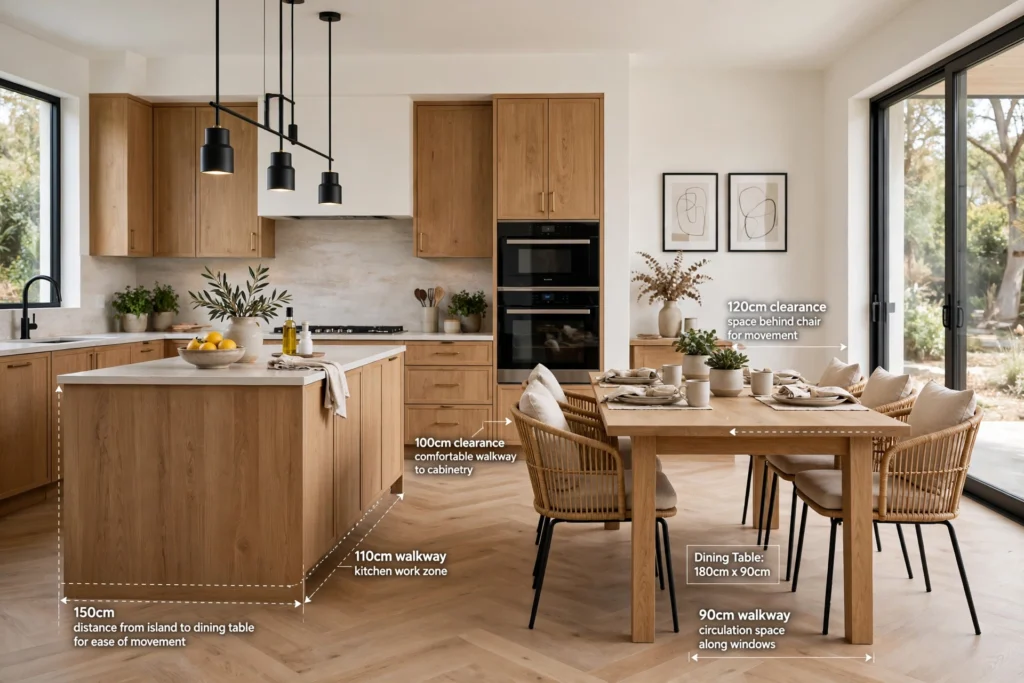
A beautiful table won’t look right if it’s too large or too small for the room.
Interior designers recommend leaving approximately 36 to 48 inches of clearance between the table and surrounding walls or cabinets. This allows people to move comfortably and pull out chairs without making the space feel cramped.
As a general guide:
| Kitchen Size | Recommended Table |
|---|---|
| Small | Round 36–48 inch table |
| Medium | Rectangle 60–72 inch table |
| Large | Rectangle 84–96 inch table |
| Open Concept | Extendable dining table |
When in doubt, use painter’s tape on the floor to outline the table’s dimensions before purchasing. This simple step helps you visualize how much space it will occupy and ensures the table fits comfortably within your kitchen layout.
Match the Table with Your Flooring
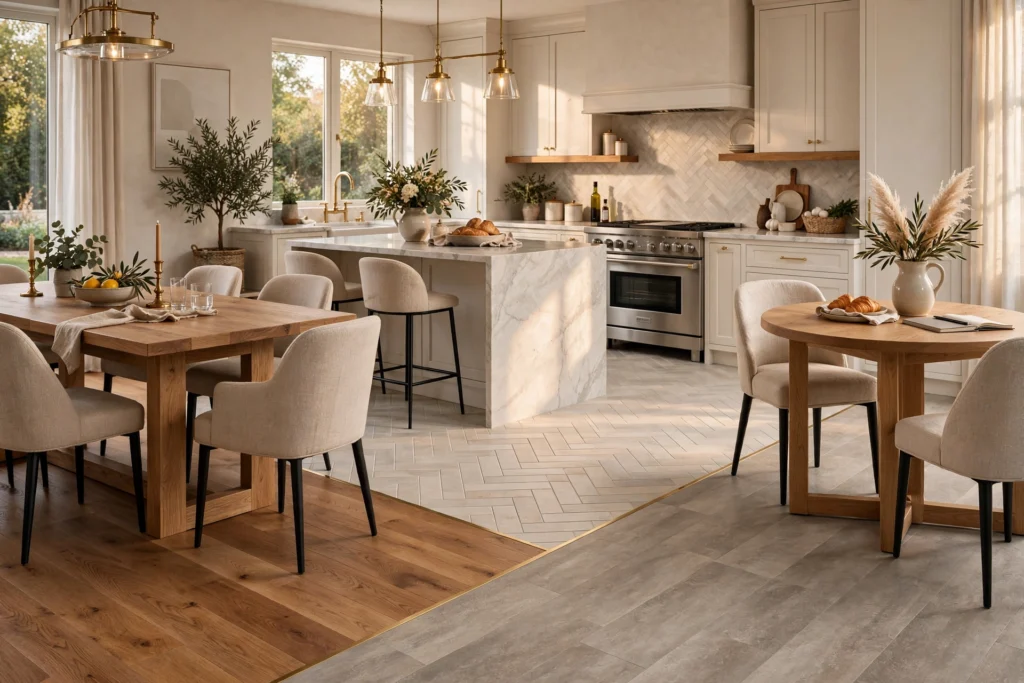
Your flooring serves as the foundation of your kitchen design, so your table should complement it rather than compete with it.
A common misconception is that the table must perfectly match the floor. In reality, slight contrast often creates a more attractive and layered look.
Hardwood Floors
For hardwood flooring:
- Choose a table that’s one or two shades lighter or darker.
- Avoid using an identical stain unless it’s part of a coordinated furniture collection.
- Mix wood tones carefully to add visual depth.
Tile Floors
Tile flooring pairs well with:
- Wood tables to add warmth
- Glass tables for a clean, modern appearance
- Marble tops for a luxurious feel
Luxury Vinyl or Laminate
These versatile floors work with almost every table material.
Natural wood tables help create a cozy atmosphere, while black metal frames add a modern industrial touch.
Coordinate the Kitchen Table with Cabinets
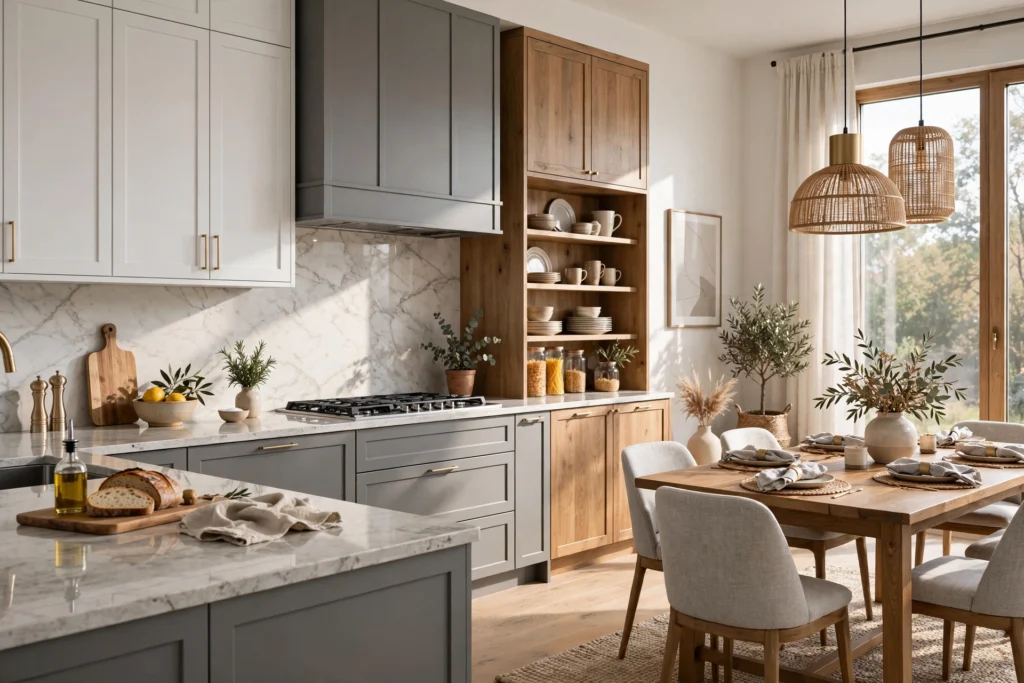
Cabinets usually occupy the largest visual area in the kitchen, making them an important design reference.
Instead of matching the table exactly, aim for complementary finishes.
White Cabinets
Excellent table choices include:
- Natural oak
- Walnut
- Matte black
- Glass
- Whitewashed wood
Gray Cabinets
Gray cabinets look beautiful with:
- Light oak
- Black wood
- Rustic pine
- Marble tops
Natural Wood Cabinets
If your cabinets already feature warm wood tones, create contrast by selecting a table with a different stain or a painted finish.
This prevents the room from looking overly uniform.
Choose Chairs That Complete the Look
Image Title:
Dining Chairs That Match Kitchen Tables
Alt Text:
Stylish dining chairs coordinated with different kitchen table designs.
Image Prompt:
Ultra Realistic, DSLR Photography, 8K, High Detail, collection of elegant dining chairs paired with farmhouse, modern, Scandinavian, and industrial kitchen tables. Bright natural lighting, professional composition, luxurious residential interior photography.
Many homeowners focus only on the table and overlook the importance of dining chairs.
The right chairs can completely transform the appearance of your dining space.
Popular chair combinations include:
| Table Style | Best Chair Style |
|---|---|
| Farmhouse | Cross-back wooden chairs |
| Modern | Upholstered minimalist chairs |
| Industrial | Metal-framed chairs |
| Scandinavian | Light wood chairs with white seats |
| Traditional | Upholstered high-back chairs |
Mixing chair styles can also create a designer-inspired look.
For example:
- Wooden table with black chairs
- White table with natural oak chairs
- Glass table with upholstered chairs
The key is maintaining a consistent color palette.
Use Rugs to Tie Everything Together
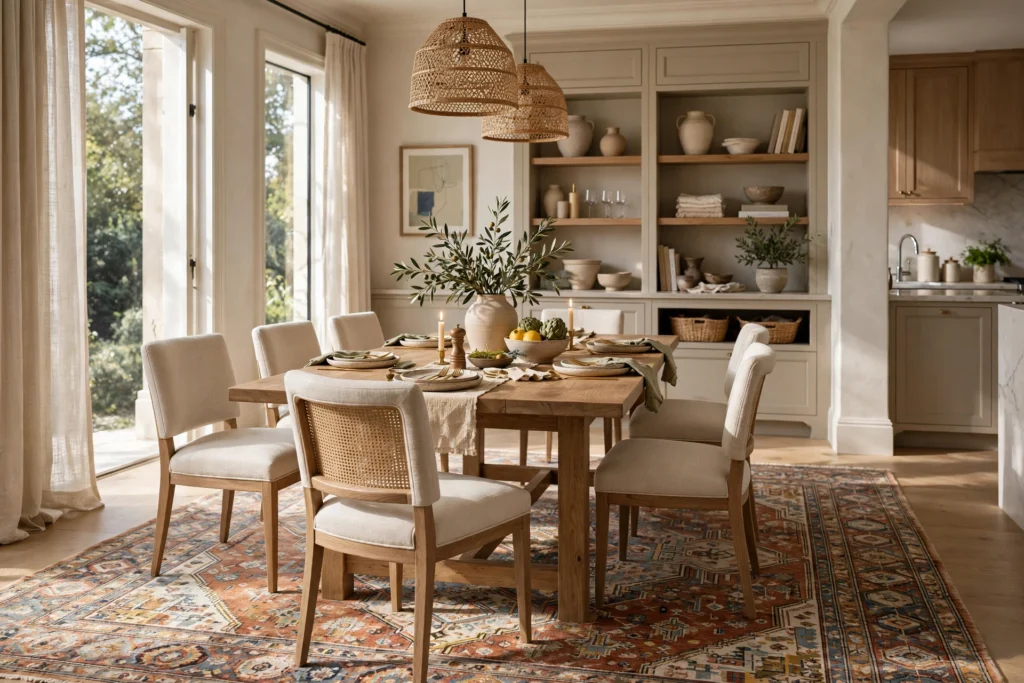
A rug helps define the dining area while adding warmth, texture, and color.
Choose a rug that extends at least 24 inches beyond each side of the table so chairs remain on the rug when pulled out.
Popular rug materials include:
- Wool
- Polypropylene
- Cotton blends
- Indoor-outdoor fabrics for easy cleaning
Neutral rugs suit minimalist kitchens, while patterned rugs add personality to simple spaces.
Decorate the Table Without Overcrowding It
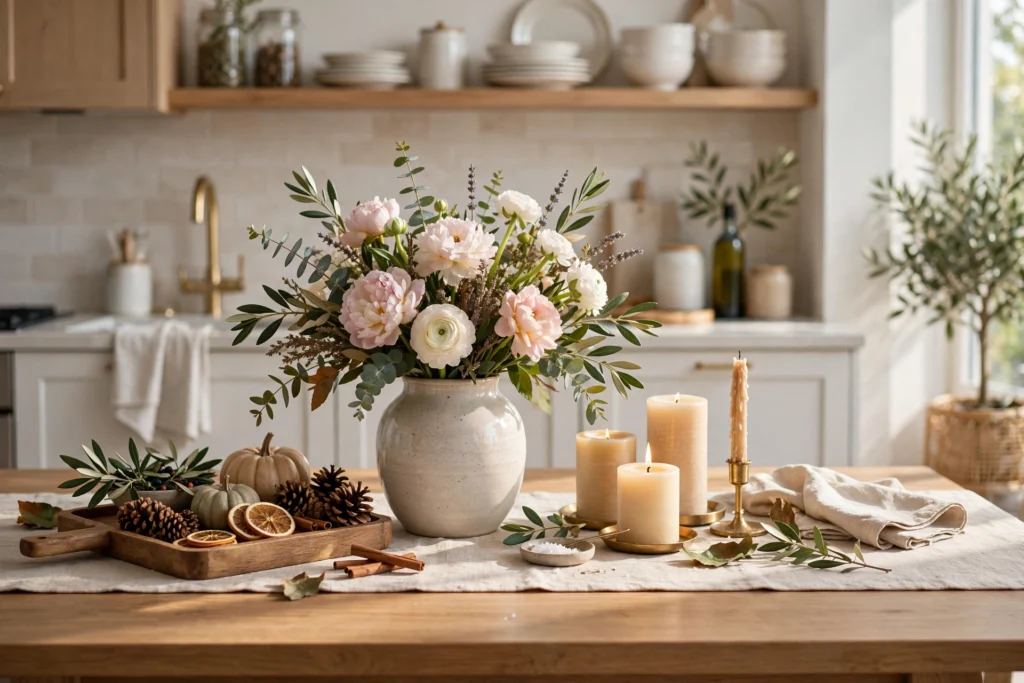
Once you’ve selected the perfect table, thoughtful styling completes the space.
Some beautiful centerpiece ideas include:
- Fresh flowers
- Wooden trays
- Decorative bowls
- Candles
- Small indoor plants
- Seasonal decorations
- Ceramic vases
- Fruit baskets
Avoid oversized centerpieces that interfere with conversations or daily use.
Common Decorating Mistakes to Avoid
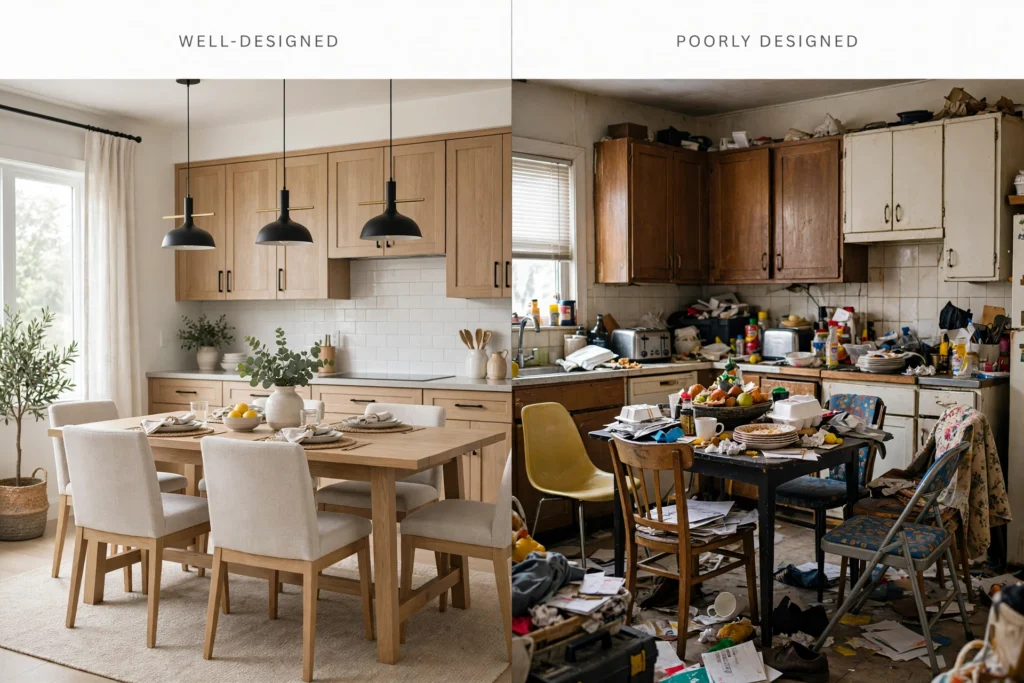
Even beautiful furniture can look out of place if common decorating mistakes aren’t avoided.
Some of the biggest mistakes include:
- Buying a table before measuring the room
- Matching every wood tone exactly
- Ignoring lighting
- Choosing style over comfort
- Selecting chairs that don’t fit beneath the table
- Blocking walkways
- Using oversized decorations
- Ignoring the room’s overall color palette
Taking time to plan before purchasing can save money and prevent design regrets.
Quick Styling Checklist
Use this checklist before purchasing your kitchen table.
| Checklist | Yes |
|---|---|
| Matches your home’s decorating style | ✓ |
| Fits comfortably in the room | ✓ |
| Coordinates with cabinet colors | ✓ |
| Complements the flooring | ✓ |
| Comfortable seating for your family | ✓ |
| Durable material for daily use | ✓ |
| Matches existing lighting fixtures | ✓ |
| Works with your overall color palette | ✓ |
| Allows easy movement around the room | ✓ |
| Easy to clean and maintain | ✓ |
Kitchen Table Style Comparison
| Style | Best Material | Best Colors | Ideal Home Style |
|---|---|---|---|
| Modern | Glass, Metal | Black, White, Gray | Contemporary |
| Farmhouse | Solid Wood | Natural Oak, White | Rustic |
| Scandinavian | Light Wood | White, Beige | Minimalist |
| Industrial | Metal, Reclaimed Wood | Black, Brown | Loft Style |
| Traditional | Hardwood | Walnut, Cherry | Classic |
| Coastal | Whitewashed Wood | Blue, White, Sand | Beach House |
Practical Example
Imagine a kitchen with white shaker cabinets, light gray walls, medium-toned hardwood flooring, and black pendant lighting.
A perfect match would be:
- A natural oak rectangular table with black metal legs.
- Upholstered dining chairs in light gray fabric.
- A cream-colored textured area rug.
- A matte ceramic vase filled with fresh greenery.
- Black candle holders to echo the pendant lights.
This combination creates contrast without overwhelming the space and ties together the colors and materials already present in the room, resulting in a balanced, inviting design.
Conclusion
Choosing the right kitchen table is about more than finding a piece of furniture you like—it’s about creating harmony throughout your space. When your table complements your home’s style, color palette, flooring, cabinetry, and accessories, the entire kitchen feels more inviting and thoughtfully designed.
Start by identifying your decorating style, then choose a table with the right material, shape, and finish to suit both your aesthetic and daily lifestyle. Don’t forget to consider room size, seating needs, lighting, and maintenance before making your final decision.
Remember that perfect coordination doesn’t mean everything has to match exactly. Mixing complementary colors, textures, and finishes often creates a more interesting and professionally designed space.
With careful planning and attention to detail, you can select a kitchen table that becomes the centerpiece of your home for years to come.
Frequently Asked Questions
1. How do I match a kitchen table with my existing decor?
Start by identifying your home’s decorating style and color palette. Then choose a table that complements your cabinets, flooring, lighting, and furniture rather than trying to match every element exactly.
2. Should my kitchen table match my cabinets?
Not necessarily. Your table should coordinate with your cabinets, but a complementary finish often looks more natural than an exact match.
3. What color kitchen table goes with white cabinets?
Natural oak, walnut, matte black, whitewashed wood, and glass tables all pair beautifully with white cabinets, depending on your preferred decorating style.
4. Is it okay to mix different wood tones?
Yes. Mixing wood tones adds depth and visual interest. Choose warm tones with warm tones and cool tones with cool tones to maintain a cohesive appearance.
5. What is the best material for a kitchen table?
Solid wood is one of the most durable and timeless choices. Glass is ideal for modern spaces, while marble offers a luxurious look. The best material depends on your budget, lifestyle, and decorating style.
6. How much space should I leave around a kitchen table?
Leave approximately 36 to 48 inches between the table and surrounding walls, cabinets, or other furniture to allow comfortable movement and seating.
7. Should dining chairs match the kitchen table?
They don’t have to match exactly. Coordinating colors and complementary styles often create a more custom, designer-inspired look.
8. What table shape is best for a small kitchen?
Round tables are usually the best option for smaller kitchens because they improve traffic flow, save space, and encourage conversation.
9. How do I decorate a kitchen table without making it look cluttered?
Use a simple centerpiece such as a vase with fresh flowers, a decorative bowl, a candle arrangement, or a small tray. Keep decorations low enough to allow easy conversation across the table.
10. What are the latest kitchen table trends?
Current trends include natural wood finishes, mixed-material tables with wood tops and metal bases, extendable dining tables, curved edges, sustainable materials, and minimalist Scandinavian-inspired designs.
Internal Linking Suggestions
- Bold Color Home Decor Ideas for Every Room
- Why Are Home Improvement Nails From Target So Cheap?
- Western Home Decor Ideas for a Cozy Rustic Home
- Mild Dish Soap for Cleaning Jewelry: Safe Cleaning Guide
- How to Build a Home Climbing Wall DIY Plans
- Old Palm Golf Club Palm Beach Gardens, Florida
- Are Home Improvements Tax Deductible? Complete 2026 Guide
By thoughtfully matching your kitchen table with your home’s decor, you create more than just a functional dining area—you build a welcoming space where everyday meals, celebrations, and lasting memories come together. A well-chosen table enhances your interior design, reflects your personal style, and adds lasting value to your home. Whether your taste leans toward modern simplicity, rustic farmhouse charm, classic elegance, or Scandinavian minimalism, investing time in selecting the right kitchen table ensures a beautiful, comfortable, and cohesive space that you’ll enjoy for years to come.