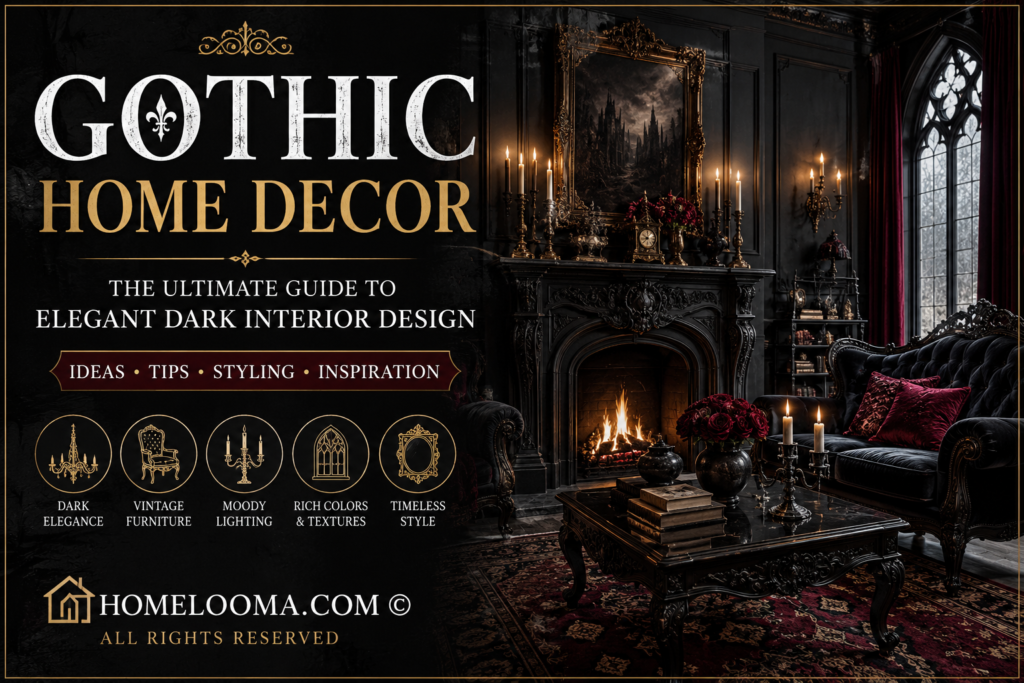
Discover the beauty of gothic home decor with decorating ideas, furniture, colors, lighting, DIY tips, and room inspiration for a timeless dark interior.
Gothic Home Decor: The Ultimate Guide to Creating a Dark Yet Elegant Living Space
Reading Time: 15 Minutes
What Is Gothic Home Decor?
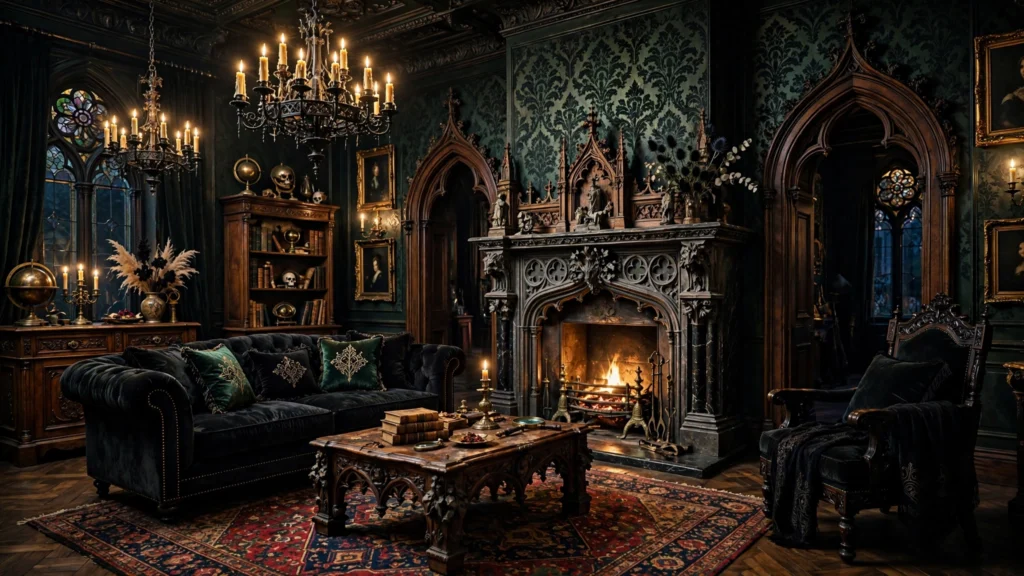
Gothic home decor is an interior design style inspired by medieval architecture, Victorian elegance, and dramatic artistic details. It embraces rich colors, ornate furniture, vintage accessories, and moody lighting to create spaces that feel luxurious, mysterious, and timeless.
Unlike the common misconception that gothic interiors are simply “dark” or “haunted,” modern gothic decor combines elegance with sophistication. The goal is to create an atmosphere that feels warm, dramatic, and inviting while maintaining an unmistakable sense of character.
Today’s homeowners often blend traditional gothic elements with modern furniture, creating what designers call Modern Gothic Interior Design. This approach balances deep colors with clean lines, allowing homes to feel stylish instead of overwhelming.
Whether you prefer a dramatic Victorian mansion aesthetic or a subtle gothic-inspired apartment, this decorating style can work in nearly every type of home.
The History of Gothic Interior Design
Understanding gothic home decor becomes easier when you know where it originated.
The Gothic style first appeared in Europe during the 12th century. While it is most famous for grand cathedrals featuring pointed arches and stained-glass windows, its influence eventually expanded into residential interiors.
Centuries later, during the Victorian era, homeowners embraced darker woods, carved furniture, velvet fabrics, elaborate chandeliers, and decorative fireplaces. These features became hallmarks of gothic-inspired homes.
Modern designers have reimagined the style by mixing traditional gothic architecture with contemporary interiors. Today, gothic decor is no longer limited to castles or historic homes—it can be incorporated into modern apartments, suburban houses, and luxury condos alike.
Why Gothic Home Decor Is Becoming Popular Again
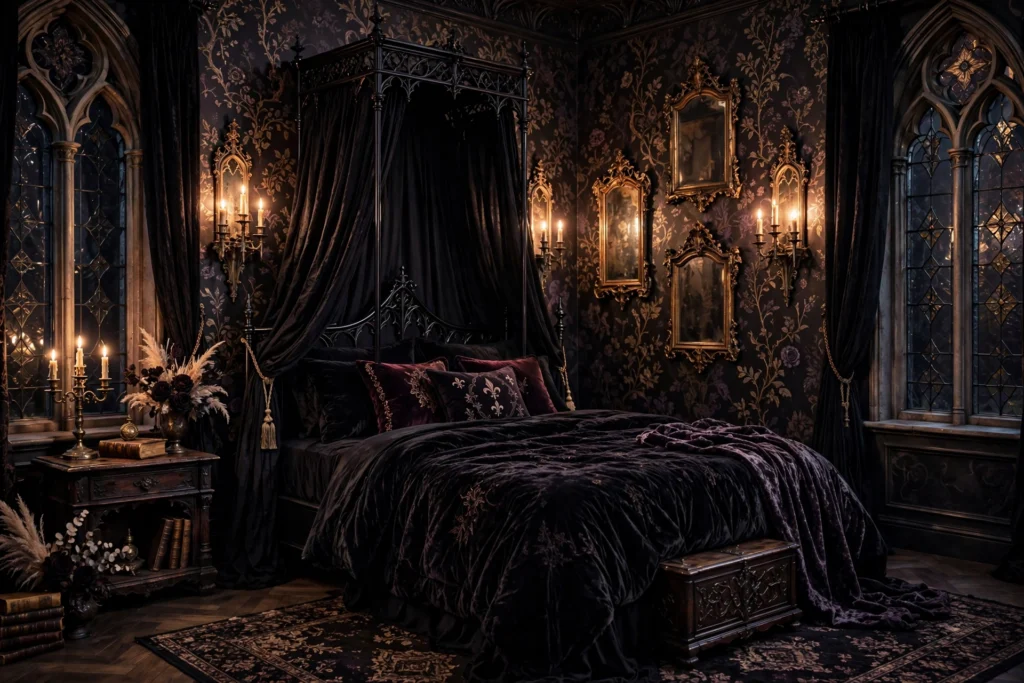
Several design trends have contributed to the growing popularity of gothic interiors.
1. Timeless Elegance
Unlike many trendy decorating styles that quickly become outdated, gothic interiors have remained beautiful for centuries.
2. Personality
Many homeowners are moving away from plain white interiors in favor of homes that reflect their individuality.
3. Luxury Appearance
Dark colors, premium fabrics, antique furniture, and dramatic lighting naturally create an upscale appearance.
4. Social Media Inspiration
Platforms like Pinterest and Instagram have made gothic interior inspiration more accessible than ever.
5. Cozy Atmosphere
Although dark colors may seem cold, they often create surprisingly warm and comfortable living spaces when paired with soft lighting.
Essential Characteristics of Gothic Home Decor
Creating a gothic-inspired home involves much more than painting walls black. Successful gothic interiors combine multiple design elements.
Rich Color Palette
The foundation of gothic decorating begins with bold, dramatic colors.
Popular colors include:
- Black
- Charcoal Gray
- Deep Burgundy
- Forest Green
- Navy Blue
- Dark Purple
- Chocolate Brown
- Emerald Green
Accent colors often include:
- Gold
- Brass
- Silver
- Bronze
- Antique Copper
These metallic finishes add warmth and prevent dark rooms from feeling flat.
Luxurious Fabrics
Texture plays a huge role in gothic decorating.
Popular fabric choices include:
- Velvet
- Silk
- Satin
- Leather
- Brocade
- Heavy Linen
- Faux Fur
Combining different textures creates depth and visual interest throughout the room.
Ornate Details
Gothic interiors celebrate craftsmanship.
Look for:
- Hand-carved wood
- Decorative molding
- Crown molding
- Intricate mirror frames
- Ornamental fireplace mantels
- Sculptural furniture legs
Small decorative details make a significant difference.
Dramatic Lighting
Lighting is one of the most important aspects of gothic home decor.
Instead of relying on bright overhead lights, gothic interiors use layered lighting.
Examples include:
- Chandeliers
- Wall sconces
- Table lamps
- Floor lamps
- Candles
- LED candle lanterns
Warm white lighting creates a cozy atmosphere while highlighting architectural details.
Choosing the Perfect Gothic Color Palette
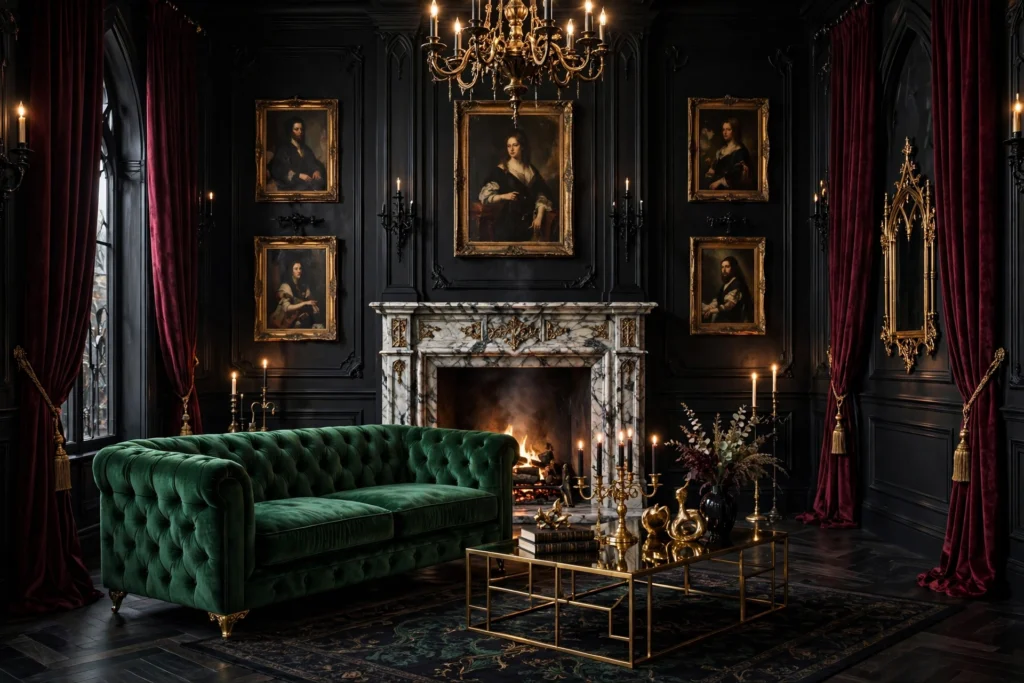
Selecting the right colors determines whether your gothic interior feels luxurious or overwhelming.
Black
Black remains the signature gothic color.
Best uses include:
- Accent walls
- Cabinets
- Bookshelves
- Doors
- Fireplace surrounds
Rather than painting every wall black, many designers recommend limiting black to focal points.
Deep Green
Emerald and forest green add richness without making rooms feel too dark.
They pair beautifully with:
- Brass
- Gold
- Walnut wood
- Marble
- Velvet
Deep green is especially popular in living rooms and libraries.
Burgundy
Burgundy introduces warmth while maintaining gothic sophistication.
It works wonderfully for:
- Curtains
- Velvet sofas
- Throw pillows
- Area rugs
Navy Blue
Dark blue provides elegance while making rooms feel slightly brighter than black.
It complements:
- White trim
- Gold fixtures
- Crystal chandeliers
- Dark hardwood flooring
Purple
Deep plum and aubergine colors create a luxurious Victorian atmosphere.
These shades work especially well in bedrooms.
Gothic Walls and Architectural Details
Walls provide the largest design surface in any room.
Instead of leaving them plain, gothic interiors embrace texture and architectural interest.
Dark Paint Colors
Popular paint choices include:
- Matte Black
- Iron Gray
- Midnight Blue
- Deep Olive
- Rich Burgundy
Matte finishes often create a softer, more sophisticated appearance than glossy paint.
Wallpaper
Wallpaper instantly transforms a room.
Popular gothic wallpaper designs include:
- Damask
- Floral Victorian
- Black botanical prints
- Medieval patterns
- Textured wallpaper
- Baroque-inspired motifs
Wallpaper can be used on a single accent wall or throughout the room.
Decorative Wall Panels
Wall molding adds architectural elegance.
Options include:
- Raised panels
- Wainscoting
- Picture-frame molding
- Board and batten
Painting the molding the same color as the wall creates a luxurious monochromatic effect.
Gothic Arches
Pointed arches are one of the defining characteristics of gothic architecture.
While structural arches may not be practical in every home, decorative arch mirrors and built-in shelving can capture a similar aesthetic.
Vintage Artwork
Artwork enhances gothic interiors beautifully.
Popular choices include:
- Oil paintings
- Botanical illustrations
- Medieval art
- Antique portraits
- Nature landscapes
- Classical sculptures
Oversized artwork often creates the strongest visual impact.
Flooring Ideas for Gothic Interiors
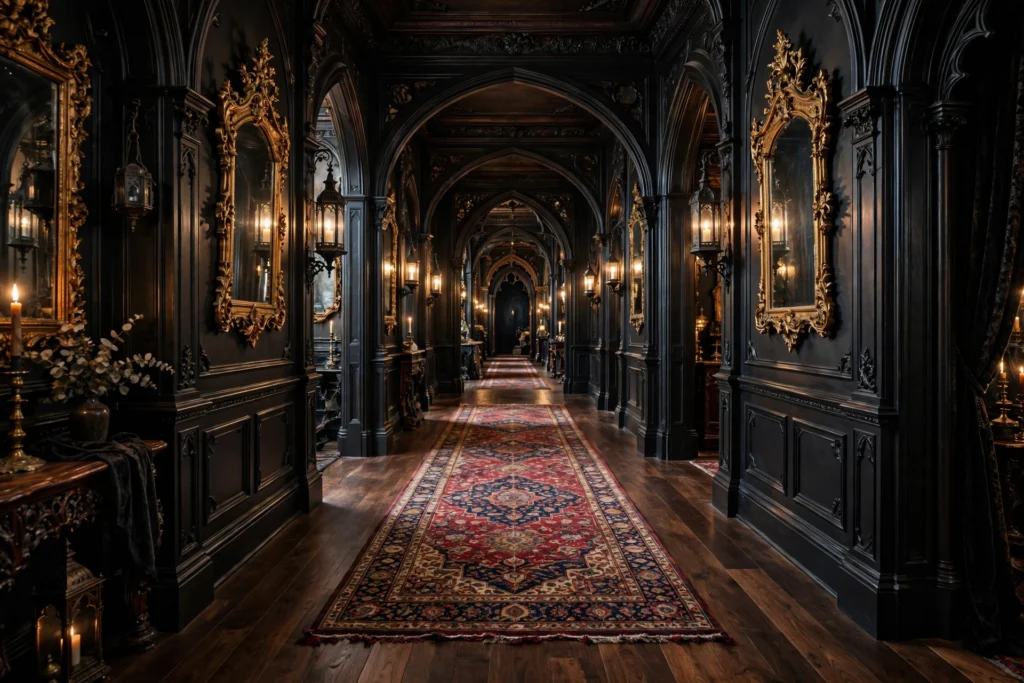
Flooring forms the foundation of the entire room.
The best options include:
Dark Hardwood
Dark walnut and mahogany floors remain classic choices.
Benefits include:
- Timeless appearance
- Easy coordination
- Luxury feel
- Long-lasting durability
Stone Flooring
Natural stone offers a castle-inspired appearance.
Popular materials include:
- Slate
- Marble
- Limestone
- Travertine
Stone works particularly well in entryways and fireplaces.
Patterned Rugs
Area rugs soften dark flooring while adding color and texture.
Choose rugs featuring:
- Persian designs
- Vintage florals
- Rich reds
- Navy blues
- Gold accents
Large rugs help define seating areas.
Gothic Furniture Essentials
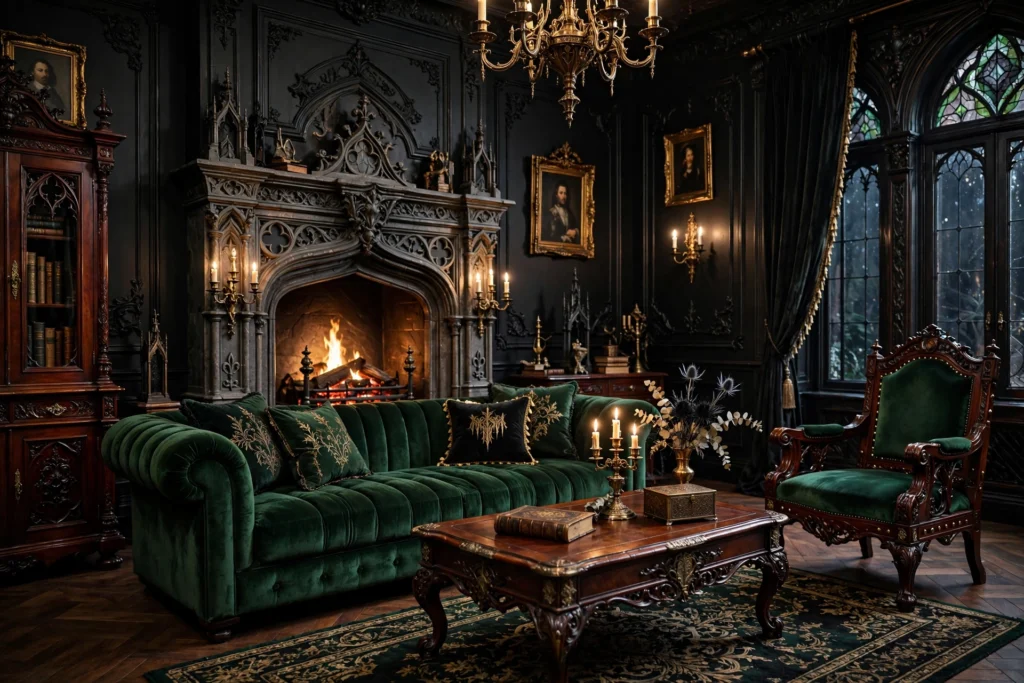
Furniture is the heart of any gothic interior. While dark paint and dramatic lighting set the mood, carefully selected furniture pieces bring authenticity and elegance to the space.
Unlike minimalist interiors that emphasize simplicity, gothic home decor celebrates craftsmanship, intricate detailing, and timeless materials. Investing in quality furniture helps create a luxurious look that remains stylish for years.
Choose Dark Wood Furniture
Dark wood is a defining feature of gothic interiors. Rich finishes add warmth while complementing deep wall colors.
Popular wood choices include:
- Mahogany
- Walnut
- Oak
- Cherry
- Ebony finishes
Look for furniture with carved details, decorative legs, and ornate hardware rather than plain modern designs.
Statement Pieces
Instead of filling every corner with furniture, choose a few statement pieces that become the focal points of the room.
Examples include:
- Carved coffee tables
- Antique display cabinets
- Ornate sideboards
- Vintage writing desks
- Grand bookcases
These pieces instantly add sophistication without overwhelming the room.
Velvet Seating
Velvet is one of the most luxurious fabrics in gothic decorating.
A velvet sofa or accent chair creates texture while making the room feel warm and inviting.
Popular colors include:
- Black
- Emerald Green
- Burgundy
- Navy Blue
- Plum Purple
Pair velvet furniture with brass or dark wood legs for a timeless appearance.
Canopy Beds
For bedrooms, few furniture pieces are more iconic than a canopy bed.
A black metal or carved wooden canopy instantly creates a dramatic atmosphere.
Complete the look with:
- Velvet bedding
- Heavy curtains
- Decorative pillows
- Faux fur throws
- Antique bedside tables
Display Cabinets
Glass-front cabinets are ideal for displaying gothic collectibles such as:
- Antique books
- Candlesticks
- Crystal pieces
- Vintage clocks
- Decorative skulls
- Porcelain figurines
Lighting inside the cabinet creates additional visual interest during the evening.
Decorative Accessories That Complete the Gothic Look
Accessories transform a beautifully furnished room into a truly gothic masterpiece.
The secret is choosing decorative objects with history, texture, and personality.
Mirrors
Large antique mirrors make rooms feel brighter while reflecting candlelight beautifully.
Popular frame finishes include:
- Gold
- Black
- Bronze
- Distressed silver
Arched mirrors work especially well because they resemble gothic architecture.
Candles
Candles create the warm, mysterious atmosphere that gothic interiors are known for.
Use a mixture of:
- Pillar candles
- Taper candles
- Lanterns
- LED candles
- Candelabras
Arrange candles in groups rather than placing them individually.
Books
Old books add character and authenticity.
Decorate shelves with:
- Leather-bound classics
- Vintage encyclopedias
- Antique journals
- Decorative book boxes
Books instantly make a gothic room feel intellectual and timeless.
Artwork
Choose artwork that reflects history and elegance.
Ideas include:
- Oil portraits
- Botanical prints
- Medieval illustrations
- Landscape paintings
- Architectural sketches
Large frames often make a stronger statement than multiple small pieces.
Indoor Plants
Plants soften dark interiors and introduce natural contrast.
Excellent choices include:
- Snake Plant
- Monstera
- Rubber Plant
- Fiddle Leaf Fig
- Ivy
- Ferns
Dark green foliage complements gothic color palettes beautifully.
Gothic Lighting Ideas
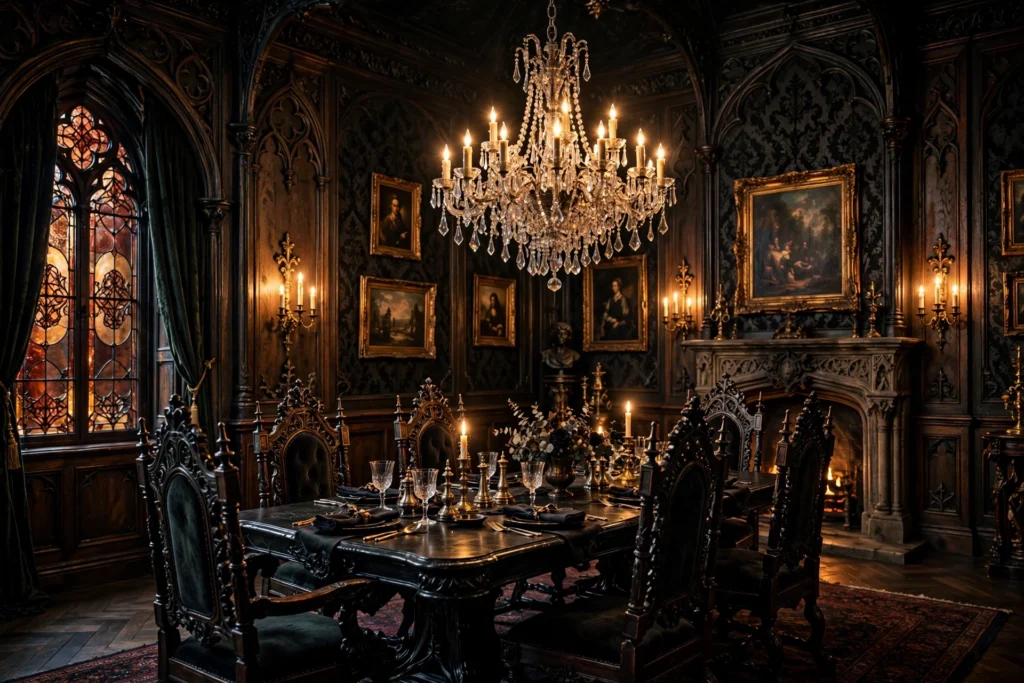
Lighting is one of the most important aspects of gothic home decor.
Without proper lighting, dark interiors may feel gloomy instead of elegant.
The goal is to create layers of warm illumination.
Chandeliers
A chandelier instantly becomes the centerpiece of any gothic room.
Popular materials include:
- Crystal
- Black iron
- Bronze
- Antique brass
Choose warm LED bulbs for a soft glow.
Wall Sconces
Wall sconces add both function and decoration.
Install them:
- Beside fireplaces
- Along hallways
- Near mirrors
- Above artwork
- Beside beds
This layered lighting creates depth throughout the room.
Table Lamps
Vintage lamps with fabric shades provide comfortable lighting for reading and relaxing.
Look for:
- Brass bases
- Black ceramic
- Marble
- Stained glass
- Crystal accents
Natural Light
Contrary to popular belief, gothic homes do not eliminate natural light.
Instead, they soften it using:
- Heavy velvet curtains
- Sheer black drapes
- Roman shades
- Decorative window treatments
This preserves brightness while maintaining a dramatic atmosphere.
Room-by-Room Gothic Decorating Ideas
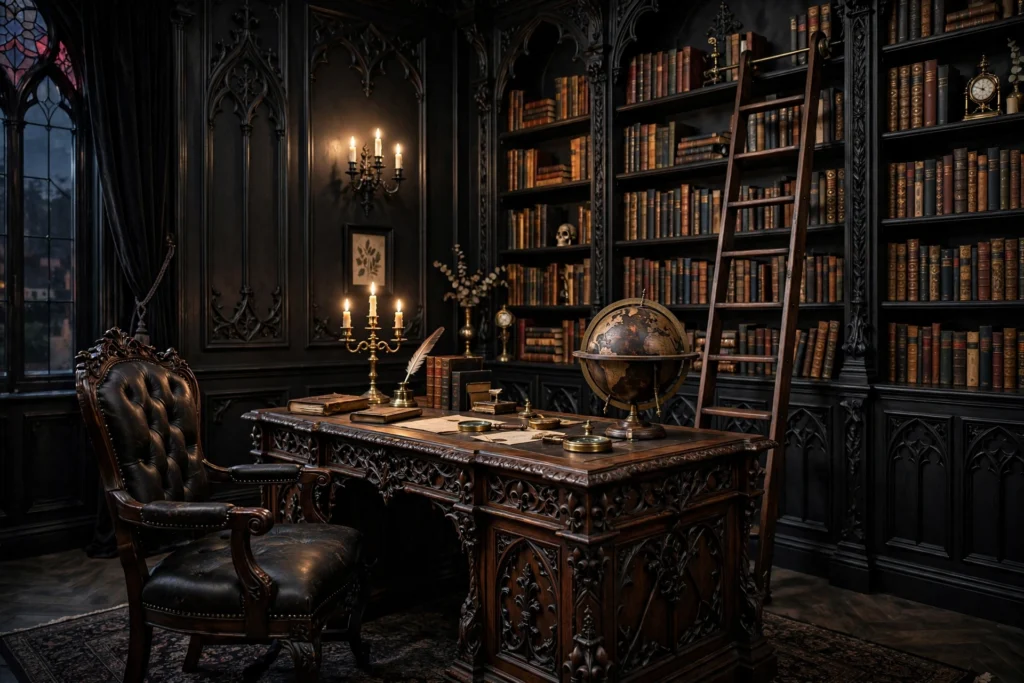
Every room can embrace gothic style while remaining comfortable and functional.
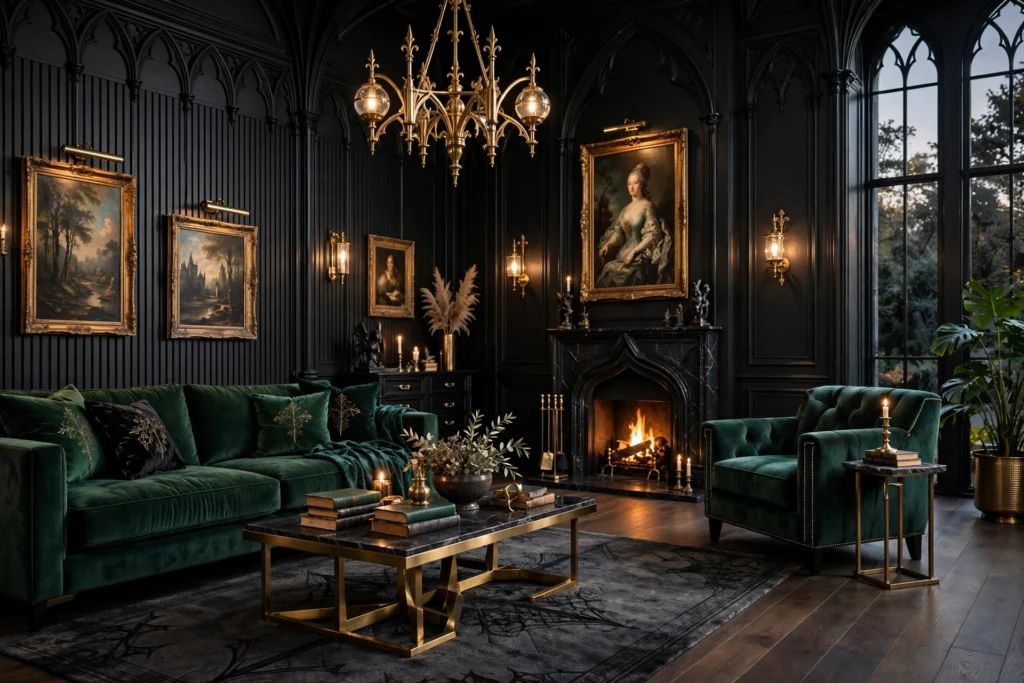
Gothic Living Room
The living room should balance elegance with comfort.
Key elements include:
- Velvet sofa
- Antique coffee table
- Dark feature wall
- Persian rug
- Large mirror
- Fireplace
- Brass accessories
- Floor lamps
Avoid overcrowding the space.
Instead, let each furniture piece become part of the overall design story.
Gothic Bedroom
Bedrooms should feel luxurious rather than intimidating.
Recommended features include:
- Canopy bed
- Velvet bedding
- Black bedside tables
- Antique lamps
- Dark wallpaper
- Decorative mirrors
- Soft area rugs
Layer different fabrics to create warmth and comfort.
Gothic Dining Room
Dining rooms naturally suit gothic design because of their formal atmosphere.
Essential pieces include:
- Dark wood dining table
- Upholstered chairs
- Chandelier
- Sideboard
- Candlesticks
- Vintage artwork
Fresh flowers can provide beautiful contrast against dark interiors.
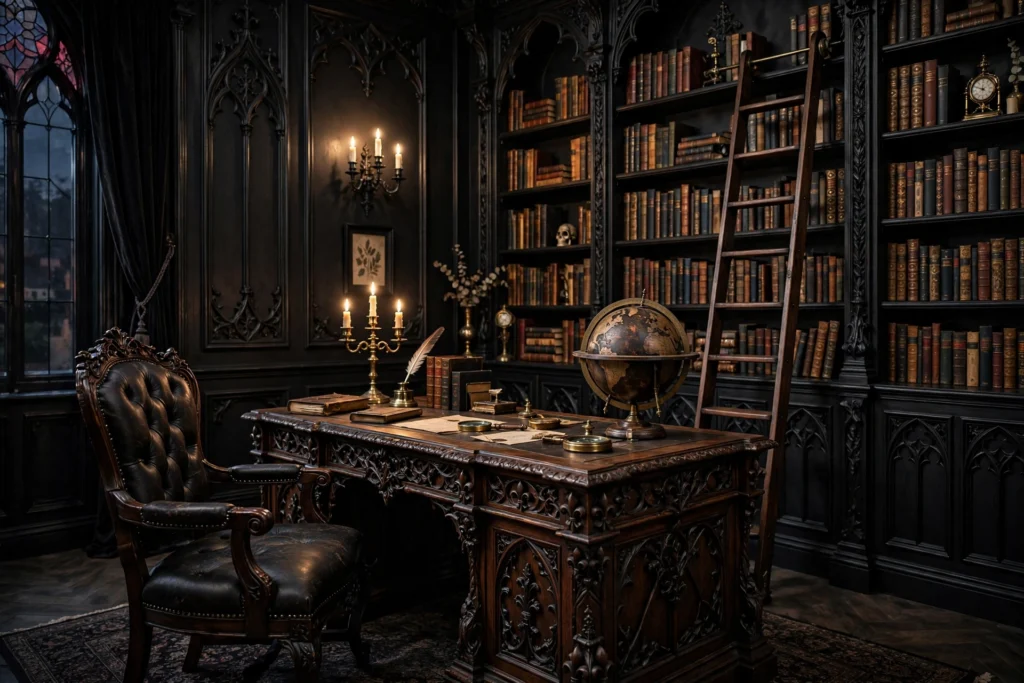
Gothic Home Office
A gothic office feels elegant and inspiring.
Include:
- Wooden desk
- Leather chair
- Large bookshelf
- Antique globe
- Desk lamp
- Framed artwork
The result is a workspace that encourages focus and creativity.
DIY Gothic Home Decor Ideas
Creating a gothic-inspired home doesn’t always require expensive furniture.
Simple DIY projects can achieve a luxurious appearance on a budget.
Paint Old Furniture
Transform outdated furniture using matte black or deep emerald paint.
Replace modern handles with antique brass hardware for an instant upgrade.
Create Gallery Walls
Frame vintage artwork, botanical prints, or downloadable antique illustrations.
Mix different frame sizes for a curated appearance.
Distress Picture Frames
Apply black paint followed by light sanding to create an aged finish.
This inexpensive technique mimics antique furniture.
Decorate with Candles
Arrange candles on trays with books, dried flowers, or vintage objects.
Layering accessories creates depth without spending much money.
Budget-Friendly Gothic Decorating Tips
You don’t need a castle-sized budget to achieve a luxurious gothic aesthetic.
Here are practical ways to save money:
- Shop at thrift stores for vintage furniture.
- Visit antique markets for unique décor.
- Repurpose existing furniture with dark paint.
- Buy quality statement pieces gradually.
- Use peel-and-stick wallpaper for accent walls.
- Add inexpensive velvet pillow covers.
- Decorate with secondhand books.
- Incorporate faux candles for affordable ambiance.
Patience often leads to a more authentic and personalized gothic home than purchasing everything at once.
Common Gothic Home Decor Mistakes to Avoid
Creating a beautiful gothic interior requires balance. While the style embraces drama and rich colors, overusing certain elements can make a room feel cluttered or uncomfortable.
Here are some common mistakes to avoid.
1. Using Too Much Black
Black is the signature color of gothic decor, but painting every wall, ceiling, and piece of furniture black can make a room feel smaller and darker.
Instead, balance black with:
- Deep emerald green
- Burgundy
- Navy blue
- Charcoal gray
- Dark walnut wood
- Brass or gold accents
This combination creates depth while maintaining a welcoming atmosphere.
2. Ignoring Lighting
Lighting is just as important as furniture.
A dark room with poor lighting feels gloomy rather than elegant.
Use multiple light sources such as:
- Chandeliers
- Wall sconces
- Floor lamps
- Table lamps
- Candles
- LED lanterns
Layered lighting adds warmth and highlights architectural details.
3. Buying Cheap Decorative Pieces
Mass-produced decorations often lack the craftsmanship associated with gothic interiors.
Instead of purchasing many inexpensive accessories, invest in a few high-quality statement pieces that will last for years.
4. Overcrowding the Room
Not every wall or shelf needs decoration.
Leave some open space to allow furniture and artwork to stand out.
A balanced room always looks more luxurious.
5. Mixing Too Many Styles
While modern gothic interiors can incorporate contemporary elements, combining too many unrelated styles may create visual confusion.
Stick to a consistent color palette and complementary furniture styles for a cohesive design.
Seasonal Gothic Home Decor Ideas
One of the greatest advantages of gothic decor is its timeless appeal. With a few seasonal updates, your home can remain fresh throughout the year.
Spring
Introduce life and freshness with:
- White lilies
- Green plants
- Botanical artwork
- Lighter velvet throws
- Fresh floral arrangements
These additions soften dark interiors while preserving the gothic aesthetic.
Summer
Keep the room comfortable by using:
- Lightweight curtains
- Natural sunlight
- Marble accessories
- Glass décor
- Fresh greenery
A touch of natural light prevents the room from feeling too heavy during warmer months.
Autumn
Autumn naturally complements gothic interiors.
Decorate with:
- Burgundy pumpkins
- Dark wreaths
- Dried flowers
- Candles
- Copper accessories
- Warm blankets
This season perfectly enhances the cozy atmosphere of gothic spaces.
Winter
Winter is when gothic interiors truly shine.
Add:
- Faux fur throws
- Heavy velvet curtains
- Pine garlands
- Lanterns
- Crystal candle holders
- Layered lighting
The result is a warm, luxurious retreat perfect for colder evenings.
Buying Guide for Gothic Home Decor
If you’re starting from scratch, prioritize purchases that have the biggest visual impact.
Must-Have Items
Begin with:
- Velvet sofa or accent chair
- Dark wood coffee table
- Large vintage mirror
- Persian-style rug
- Chandelier
- Decorative candles
- Antique-style artwork
- Floor lamp
- Bookshelf
- Indoor plants
Building your collection gradually allows you to invest in better-quality pieces over time.
Where to Shop
You can find beautiful gothic-inspired furniture and décor at:
- Antique stores
- Vintage markets
- Estate sales
- Home décor retailers
- Online furniture stores
- Artisan marketplaces
- Thrift shops
Mixing vintage finds with modern furniture often creates the most authentic look.
Final Thoughts
Gothic home decor is far more than a trend—it’s a timeless design style that combines elegance, history, and individuality. Whether you prefer a dramatic Victorian-inspired home or a subtle modern gothic apartment, the key is finding the right balance between dark colors, luxurious textures, quality furniture, and warm lighting.
Start with foundational elements such as a rich color palette, dark wood furniture, and layered lighting. Then personalize your space with antique accessories, artwork, books, and plants to create a home that reflects your personality.
Remember that gothic design isn’t about making a room feel dark or intimidating. Instead, it’s about creating an inviting environment filled with depth, character, and timeless sophistication.
With thoughtful planning and attention to detail, you can transform any room into a stunning gothic-inspired space that feels both luxurious and comfortable.
Frequently Asked Questions (FAQs)
1. What is gothic home decor?
Gothic home decor is an interior design style inspired by medieval architecture, Victorian elegance, and luxurious dark color palettes. It emphasizes ornate furniture, rich textures, dramatic lighting, and vintage accessories.
2. Can gothic decor work in a small apartment?
Yes. Focus on accent walls, velvet furnishings, decorative mirrors, and layered lighting rather than filling the space with heavy furniture.
3. What colors are best for gothic interiors?
Popular choices include black, charcoal gray, emerald green, burgundy, navy blue, plum purple, and dark brown, often paired with brass or gold accents.
4. Is gothic home decor expensive?
Not necessarily. You can achieve the look by shopping at thrift stores, repainting furniture, using peel-and-stick wallpaper, and investing gradually in quality statement pieces.
5. Can gothic decor be combined with modern design?
Absolutely. Modern gothic interiors blend contemporary furniture with classic gothic colors, textures, and architectural details for a sophisticated appearance.
6. What type of lighting works best?
Warm lighting from chandeliers, sconces, table lamps, candles, and floor lamps creates the cozy ambiance associated with gothic interiors.
7. Which fabrics are commonly used?
Velvet, leather, silk, satin, brocade, heavy linen, and faux fur are popular choices because they add texture and luxury.
8. Are plants suitable for gothic interiors?
Yes. Plants such as snake plants, monstera, ivy, rubber plants, and ferns provide natural contrast against dark color palettes.
9. Can I decorate one room in a gothic style?
Yes. Many homeowners start with a living room, bedroom, or home office before expanding the style throughout the house.
10. What is the biggest decorating mistake?
The most common mistake is relying only on black without balancing it with texture, warm lighting, natural wood, and metallic accents.
Internal Linking Suggestions
- Are Home Improvements Tax Deductible? Complete 2026 Guide
- How to Improve Home Security With Better Locks: A Complete Homeowner’s Guide
These internal links help visitors discover more content while improving your site’s overall search engine optimization.






2 thoughts on “Gothic Home Decor: Ultimate Guide to Elegant Dark Interior Design”