
Wondering if home improvements are tax deductible? Learn which home upgrades qualify for tax benefits, IRS rules, tax credits, capital improvements, and more in this complete US homeowner’s guide.
Are Home Improvements Tax Deductible? A Complete US Homeowner’s Guide (2026)

Are Home Improvements Tax Deductible GuideWhen homeowners invest thousands of dollars in remodeling a kitchen, replacing an old roof, installing solar panels, or upgrading a bathroom, one of the most common questions they ask is:
“Are home improvements tax deductible?”
The answer isn’t as simple as yes or no.
In most situations, regular home improvements are not immediately tax deductible for homeowners living in their primary residence. However, that doesn’t mean these upgrades offer no tax advantages. Depending on the type of improvement and how the property is used, certain renovations may qualify for valuable tax credits, increase your home’s tax basis, or provide deductions if the property is used for business or rental purposes.
Understanding these IRS rules can help homeowners save hundreds—or even thousands—of dollars over time.
In this comprehensive guide, you’ll learn exactly which home improvements qualify for tax benefits, which do not, and how to maximize your savings while staying compliant with IRS regulations.
Understanding the Difference Between Home Improvements and Home Repairs
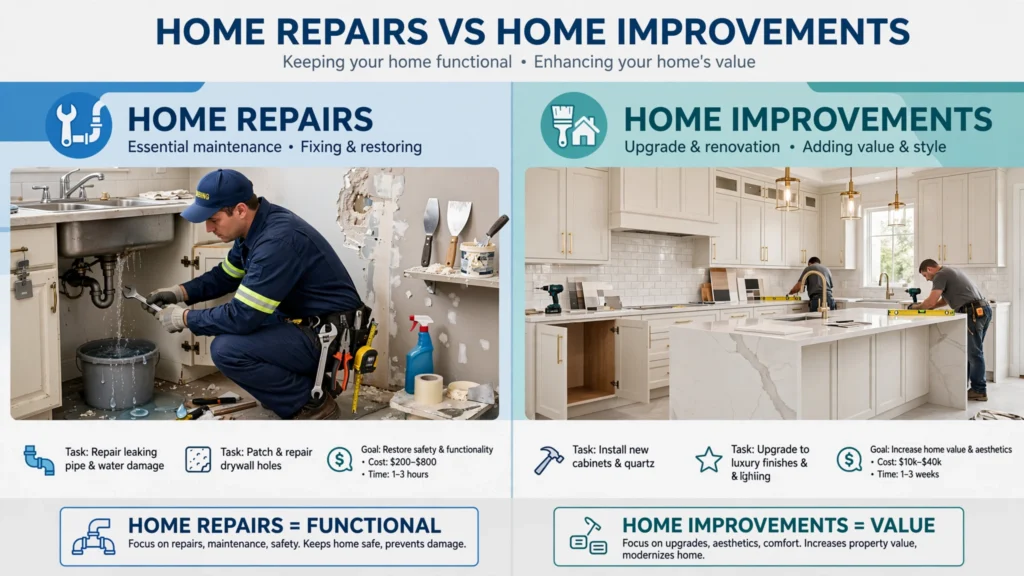
Before discussing tax deductions, it’s essential to understand the difference between a home improvement and a home repair.
Many homeowners mistakenly believe these terms mean the same thing. From a tax perspective, they are very different.
What Is a Home Improvement?

A home improvement is a permanent upgrade that increases the property’s value, extends its useful life, or adapts it to a new use.
Examples include:
- Installing a new roof
- Remodeling a kitchen
- Renovating a bathroom
- Adding a deck
- Finishing a basement
- Replacing old plumbing
- Installing central air conditioning
- Building an addition
- Replacing windows with energy-efficient models
- Installing hardwood flooring
These projects generally add long-term value to your property.
What Is a Home Repair?
A repair simply restores your home to its previous condition without significantly increasing its value.
Examples include:
- Fixing a leaking faucet
- Repairing drywall
- Replacing broken window glass
- Patching a roof leak
- Painting a single damaged room
- Fixing electrical outlets
- Repairing gutters
Repairs are considered routine maintenance rather than improvements.
Why Does This Difference Matter?
The IRS treats repairs and improvements differently.
For most homeowners:
- Repairs usually do not provide tax benefits.
- Improvements usually are not immediately deductible, but they may provide tax advantages later when you sell your home or qualify for certain tax credits.
Understanding this distinction is the first step toward making smarter financial decisions.
Are Home Improvements Tax Deductible?
Here’s the short answer:
Most home improvements made to your primary residence are not tax deductible in the year you pay for them.
This surprises many homeowners.
For example, if you spend:
- $20,000 on a kitchen remodel
- $12,000 replacing your roof
- $18,000 renovating your bathroom
you generally cannot deduct these expenses on your federal income tax return for that year.
However, these improvements may still reduce your taxes in other ways.
Some improvements can:
- Increase your home’s cost basis
- Qualify for federal energy tax credits
- Qualify for medical-related deductions
- Be depreciated for rental properties
- Provide deductions for qualified home office spaces
This is where many homeowners overlook significant tax-saving opportunities.
IRS Rules on Home Improvements
The IRS distinguishes between personal expenses and expenses connected to investments or income-producing property.
Your personal residence is generally considered a personal expense.
That means improvements made purely for personal enjoyment usually are not deductible.
However, several important exceptions exist.
The IRS allows tax benefits in situations involving:
- Energy-efficient home upgrades
- Medical necessity improvements
- Home offices used for business
- Rental properties
- Capital improvements affecting future capital gains calculations
We’ll explore each of these exceptions in detail later in this guide.
Why Home Improvements Still Matter for Taxes
Although you usually cannot deduct improvements immediately, they often provide future tax savings.
The key concept is your adjusted cost basis.
What Is Cost Basis?
Your home’s cost basis starts with:
- The purchase price
- Certain closing costs
- Eligible improvements made over the years
When you eventually sell your home, your taxable capital gain is calculated using this adjusted basis.
A higher basis means:
- Lower taxable profit
- Potentially lower capital gains taxes
This is why keeping records of improvements is extremely important.
Example
Imagine the following situation.
Purchase price:
$350,000
Home improvements over 12 years:
- New roof — $18,000
- Kitchen remodel — $30,000
- Bathroom renovation — $14,000
- HVAC replacement — $12,000
Total improvements:
$74,000
Adjusted basis:
$350,000 + $74,000 = $424,000
Now assume you later sell the property for $600,000.
Without adding improvements:
Capital gain:
$600,000 − $350,000 = $250,000
With documented improvements:
Capital gain:
$600,000 − $424,000 = $176,000
That’s a difference of $74,000 in taxable gain calculations.
Although many homeowners qualify for the capital gains exclusion when selling a primary residence, maintaining an accurate cost basis can still be valuable, especially if your gain exceeds the exclusion limits or if the property’s use changes over time.
What Qualifies as a Capital Improvement?
The IRS generally considers a project a capital improvement if it:
- Adds substantial value
- Prolongs the property’s useful life
- Adapts the property to a new use
These improvements become part of the home’s basis.
Examples of Capital Improvements
Structural Improvements
- New roof
- Foundation replacement
- Home addition
- Garage construction
- New driveway
- Basement finishing
Interior Remodeling
- Kitchen remodel
- Bathroom renovation
- Custom cabinetry
- Hardwood flooring
- Built-in appliances
- Major plumbing upgrades
Exterior Improvements
- New siding
- Deck construction
- Patio installation
- Fence installation
- Landscaping with permanent features
- Retaining walls
Mechanical Systems
Replacing major home systems often qualifies as a capital improvement, including:
- HVAC systems
- Water heaters
- Plumbing systems
- Electrical panel upgrades
- Whole-home rewiring
- Sewer line replacement
Improvements That Usually Do NOT Increase Cost Basis
Not every project counts as a capital improvement.
Routine maintenance generally does not increase your home’s basis.
Examples include:
- Interior painting
- Carpet cleaning
- Pressure washing
- Lawn maintenance
- Fixing broken windows
- Replacing door handles
- Repairing gutters
- Minor plumbing repairs
- Appliance repairs
These expenses help maintain your home’s condition but don’t significantly improve or extend its useful life.
Home Improvements That May Offer Tax Benefits
While most renovations aren’t directly deductible, certain categories of improvements can provide tax advantages under specific circumstances.
Some common examples include:
Energy-Efficient Upgrades
Homeowners who install qualifying energy-efficient equipment may be eligible for valuable federal tax credits.
Examples include:
- Solar panels
- Heat pumps
- High-efficiency water heaters
- Insulation upgrades
- Energy-efficient windows and doors
These incentives can directly reduce the amount of federal income tax you owe if you meet the applicable requirements.
Medical Necessity Improvements
If a home modification is made primarily for medical reasons, part or all of the expense may qualify as a medical deduction, depending on IRS rules and your individual tax situation.
Examples include:
- Wheelchair ramps
- Stair lifts
- Widened doorways
- Accessible bathrooms
- Modified kitchens
- Handrails and support bars
Rental Property Improvements
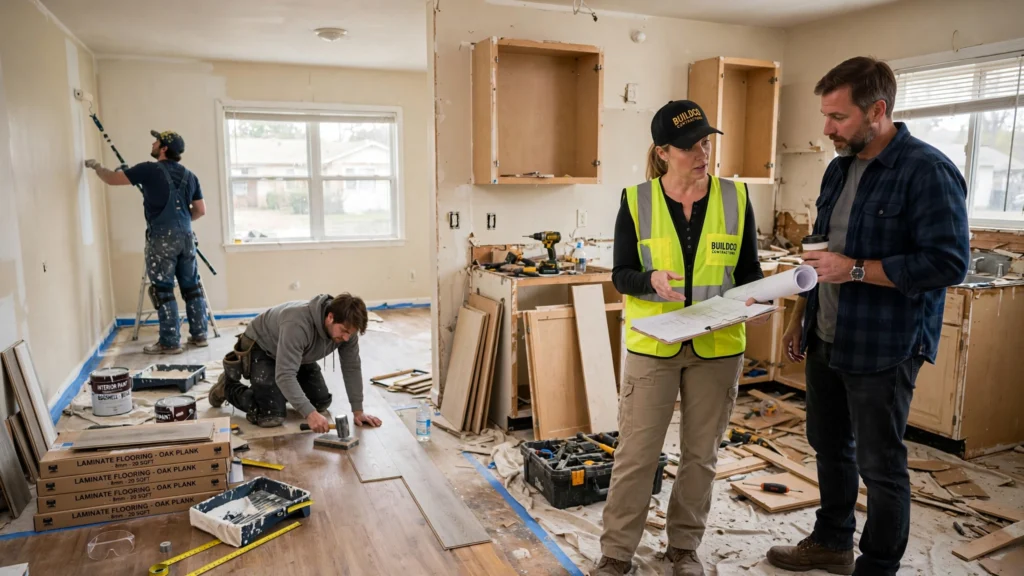
If you own a rental property, improvements are generally treated differently than those made to a personal residence.
Instead of deducting the full cost immediately, many improvements are recovered over time through depreciation, allowing landlords to gradually deduct eligible expenses over the property’s recovery period.
Home Office Improvements

If you qualify for the home office deduction, improvements that benefit only the office portion of your home may be deductible, while improvements that benefit the entire home may need to be allocated based on business use.
Why Good Recordkeeping Matters
Whether or not you receive an immediate tax benefit, keeping detailed records of home improvement projects is one of the smartest financial habits a homeowner can develop.
Consider maintaining a dedicated file that includes:
- Contractor invoices
- Receipts for materials
- Building permits
- Before-and-after photos
- Inspection reports
- Proof of payment
- Warranty documents
These records can help support your home’s adjusted basis, simplify future tax filings, and provide documentation if questions arise later.
Energy-Efficient Home Improvements That May Qualify for Tax Credits

One of the biggest exceptions to the general rule is energy-efficient home improvements. While most renovations are not tax deductible, certain qualifying upgrades may make you eligible for federal tax credits, which directly reduce the amount of income tax you owe.
Unlike a tax deduction, which lowers your taxable income, a tax credit reduces your tax bill dollar for dollar.
For many homeowners, this can represent significant savings.
What Is the Energy Efficient Home Improvement Credit?
The federal government encourages homeowners to improve energy efficiency by offering tax incentives for qualifying upgrades.
Eligible improvements may include:
- Energy-efficient exterior doors
- Energy-efficient windows
- Skylights
- Insulation materials
- Air sealing improvements
- Central air conditioning systems
- Qualified furnaces
- Boilers
- Electric heat pumps
- Heat pump water heaters
- Biomass stoves and boilers
- Home energy audits
The exact credit amount depends on the type of improvement, applicable annual limits, and whether the product meets required efficiency standards.
Tip: Always keep the manufacturer’s certification, receipts, and installation records for qualifying energy-efficient products.
Solar Energy Systems
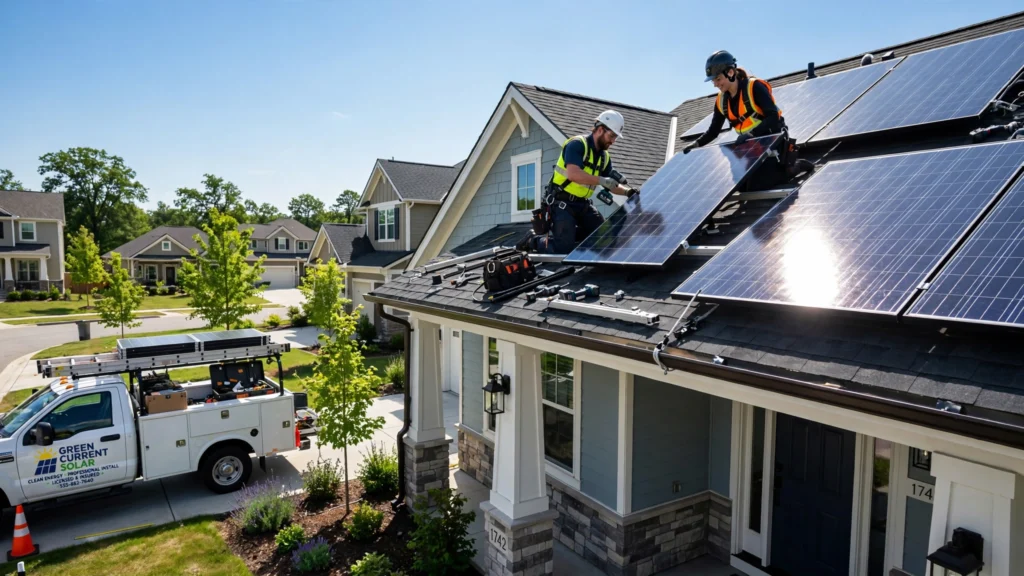
Solar energy systems often provide some of the most valuable tax incentives available to homeowners.
Eligible systems may include:
- Solar electric panels
- Solar water heating systems
- Battery storage systems (if they meet applicable requirements)
Installing solar energy equipment can significantly lower both your utility bills and your federal tax liability.
Example
Sarah installs a residential solar panel system costing $24,000.
If the installation qualifies under current federal rules, she may be eligible to claim a substantial federal tax credit, reducing the amount of tax she owes rather than simply lowering her taxable income.
This makes solar one of the most financially attractive home improvements for many homeowners.
Heat Pumps
Modern electric heat pumps are designed to provide both heating and cooling while using considerably less energy than many traditional HVAC systems.
Benefits include:
- Lower electricity usage
- Reduced utility bills
- Improved indoor comfort
- Potential eligibility for federal tax credits
Insulation Upgrades
Improving insulation can increase comfort while lowering heating and cooling costs.
Examples include:
- Attic insulation
- Crawlspace insulation
- Basement insulation
- Exterior wall insulation
- Air sealing around windows and doors
Because insulation reduces energy loss, many qualifying improvements may be eligible for tax incentives.
Energy-Efficient Windows and Doors
Replacing outdated windows and exterior doors with qualifying energy-efficient models can improve:
- Home comfort
- Energy efficiency
- Noise reduction
- Property value
Many homeowners choose these upgrades primarily for energy savings, with tax credits serving as an additional financial benefit.
Medical Home Improvements

Another important exception involves medically necessary home modifications.
Some improvements made primarily for medical care may qualify as deductible medical expenses, provided they meet IRS requirements.
These projects are intended to help someone with a medical condition safely access or use the home.
Examples of Medical Improvements
Examples include:
- Wheelchair ramps
- Stair lifts
- Elevators designed for accessibility
- Widened hallways
- Accessible bathrooms
- Roll-in showers
- Grab bars
- Lower kitchen countertops
- Modified cabinets
- Automatic door openers
Medical Necessity Is Important
The purpose of the improvement matters.
For example:
Installing a luxury bathroom renovation generally does not qualify.
However, installing a wheelchair-accessible shower because of a permanent disability may qualify if the modification is primarily for medical care.
Improvements That Increase Home Value
Sometimes a medically necessary improvement also increases your home’s value.
For example:
A homeowner spends $18,000 installing an accessibility elevator.
A professional appraisal determines that the home’s value increased by $10,000.
In certain situations, only the portion of the cost that exceeds the increase in home value may be treated as a qualifying medical expense, subject to IRS rules and medical expense deduction thresholds.
Because these calculations can be complex, many homeowners consult a qualified tax professional.
Rental Property Improvements
Rental properties are treated very differently from primary residences.
If you own rental real estate, improvements are generally considered business expenses that are recovered over time through depreciation rather than deducted all at once.
This is one of the biggest tax advantages of owning investment property.
Repairs vs. Improvements for Rental Property
The distinction between repairs and improvements is especially important for landlords.
Repairs
Repairs generally restore the property to its previous condition.
Examples include:
- Fixing a broken faucet
- Repairing drywall
- Replacing a damaged light fixture
- Repairing a roof leak
- Fixing a broken window
In many cases, qualifying repairs may be deductible in the year they are incurred.
Improvements
Improvements add value or extend the property’s useful life.
Examples include:
- Installing a new roof
- Replacing all plumbing
- Building an addition
- Remodeling the kitchen
- Installing new HVAC systems
These costs are generally capitalized and depreciated over the applicable recovery period rather than deducted immediately.
Example
Suppose you own a rental home.
You spend:
- $600 repairing a leaking pipe
- $15,000 replacing the roof
The plumbing repair may qualify as a current deductible repair expense.
The roof replacement is generally treated as a capital improvement and recovered through depreciation over time.
Home Office Improvements
Many Americans now work remotely, making the home office deduction more relevant than ever.
If you qualify for the home office deduction, certain improvements may provide tax benefits.
Direct Improvements
Direct improvements benefit only the home office.
Examples include:
- Painting the office
- Installing office lighting
- Replacing office flooring
- Building custom office shelving
These expenses may qualify as business-related expenses if all IRS requirements are met.
Indirect Improvements
Indirect improvements benefit the entire house.
Examples include:
- New roof
- HVAC replacement
- Exterior painting
- Whole-home electrical upgrades
These costs generally must be allocated between business and personal use based on the percentage of the home used exclusively and regularly for business.
Example
A homeowner uses 15% of their home exclusively as a qualifying office.
A new HVAC system costs $12,000.
Only the business-use portion may potentially be considered when calculating allowable business deductions, subject to applicable tax rules.
Home Improvements That Increase Property Value
Even when there is no immediate deduction, many improvements can increase your home’s market value.
Some projects consistently provide strong long-term returns.
Kitchen Remodeling
Kitchen renovations remain one of the most popular home improvements.
Common upgrades include:
- New cabinets
- Quartz countertops
- Modern appliances
- Tile backsplashes
- Improved lighting
- Kitchen islands
A modern kitchen often improves both daily living and resale appeal.
Bathroom Renovations
Bathroom upgrades may include:
- Walk-in showers
- Double vanities
- New flooring
- Modern fixtures
- Improved ventilation
Updated bathrooms are highly attractive to prospective buyers.
Finished Basements
Converting an unfinished basement into usable living space may add:
- Bedrooms
- Entertainment rooms
- Home gyms
- Guest suites
- Offices
Finished basements can significantly increase a home’s functional square footage.
Outdoor Living Spaces
Outdoor improvements have become increasingly desirable.
Examples include:
- Decks
- Patios
- Outdoor kitchens
- Fire pits
- Pergolas
- Landscaping with permanent features
These upgrades may improve enjoyment while also enhancing resale value.
Real-Life Tax Scenarios
Understanding how different projects are treated becomes easier with practical examples.
Scenario 1: New Roof
Cost: $20,000
Primary residence
Result: Generally not immediately tax deductible, but the cost may increase your home’s adjusted basis.
Scenario 2: Solar Panels
Cost: $22,000
Primary residence
Result: May qualify for a federal clean energy tax credit if the installation and equipment meet current eligibility requirements.
Scenario 3: Wheelchair Ramp
Cost: $8,500
Installed because of a documented medical condition.
Result: Part or all of the expense may qualify as a medical expense deduction, depending on IRS rules and your individual circumstances.
Scenario 4: Rental Property Kitchen Remodel
Cost: $30,000
Rental home
Result: Generally treated as a capital improvement and recovered over time through depreciation.
Scenario 5: Office Remodel
Cost: $4,500
Dedicated home office
Result: If the space qualifies for the home office deduction, some or all of the improvement may be treated as a business expense, depending on how the improvement relates to the office.
Smart Strategies to Maximize Tax Benefits
Homeowners can often improve their tax position by planning projects carefully.
Consider these best practices:
- Keep every receipt and invoice.
- Save before-and-after photos.
- Retain copies of permits and inspection reports.
- Separate repair costs from improvement costs.
- Document any medically necessary modifications.
- Keep records for energy-efficient products, including manufacturer certifications where applicable.
- Maintain organized records for rental property improvements.
- Consult a qualified tax professional before claiming significant deductions or credits.
Good documentation can make tax filing easier and help substantiate your claims if questions arise later.
Home Improvements That Are Not Tax Deductible
Understanding what doesn’t qualify for a tax deduction is just as important as knowing what does. Many homeowners assume that any money spent on improving their home can be deducted on their tax return. Unfortunately, that’s not how the IRS treats most personal home expenses.
Below are some common projects that generally do not qualify for an immediate federal tax deduction when completed on a primary residence.
Cosmetic Improvements
These upgrades may improve your home’s appearance but usually don’t qualify for an immediate tax deduction.
Examples include:
- Interior painting
- Wallpaper installation
- Decorative trim
- Crown molding
- New curtains or blinds
- Replacing light fixtures for style
- Installing decorative shelving
These projects may increase your home’s appeal, but they are generally considered personal expenses.
Routine Maintenance
Regular maintenance helps preserve your home but usually doesn’t create a tax benefit.
Examples include:
- Cleaning gutters
- Power washing the exterior
- Roof inspections
- HVAC servicing
- Chimney cleaning
- Pest control
- Lawn mowing
- Tree trimming
- Carpet cleaning
Routine maintenance keeps your home in good condition but typically doesn’t increase its cost basis.
Minor Repairs
Simple repairs generally restore something to its original condition instead of improving it.
Examples include:
- Fixing a leaking faucet
- Replacing broken tiles
- Repairing drywall
- Repairing a fence
- Fixing electrical outlets
- Replacing broken window glass
These costs are usually considered personal expenses for homeowners living in their primary residence.
Common Tax Mistakes Homeowners Should Avoid
Many taxpayers unintentionally miss valuable tax benefits—or claim deductions they aren’t entitled to. Avoiding these common mistakes can help reduce the risk of filing errors.
1. Throwing Away Receipts
Receipts are essential for documenting eligible improvements.
Without proof of your expenses, it can be difficult to support your adjusted cost basis or claim certain tax credits.
Keep copies of:
- Contractor invoices
- Material receipts
- Permits
- Inspection reports
- Payment confirmations
- Warranty documents
Digital copies stored in cloud storage are a smart backup.
2. Confusing Repairs with Improvements
This is one of the most common mistakes.
For example:
Repair:
- Fixing a roof leak
Improvement:
- Replacing the entire roof
The repair restores existing functionality.
The replacement extends the home’s useful life and generally qualifies as a capital improvement.
3. Missing Energy Tax Credits
Some homeowners purchase qualifying energy-efficient products but never claim the available tax credit.
Always save:
- Product documentation
- Manufacturer certifications (if applicable)
- Installation receipts
- Contractor invoices
4. Forgetting About Home Basis
Many homeowners only think about taxes when selling their home.
If you’ve owned your property for many years, documented improvements could substantially increase your adjusted basis and potentially reduce taxable capital gains.
5. Poor Record Organization
Instead of storing papers in multiple places, create one dedicated folder for each home improvement project.
Include:
- Receipts
- Photos
- Contracts
- Inspection records
- Payment history
- Product manuals
- Warranty information
Home Improvement Recordkeeping Checklist
Before starting any renovation, create a recordkeeping system.
Here’s a simple checklist:
- ✔ Save all contractor contracts
- ✔ Keep every receipt
- ✔ Photograph the project before work begins
- ✔ Photograph the completed project
- ✔ Save permit documentation
- ✔ Keep inspection reports
- ✔ Store warranty documents
- ✔ Record payment dates
- ✔ Save product model numbers
- ✔ Back up everything digitally
Good documentation can save significant time and stress during tax season or when selling your home.
Frequently Asked Questions (FAQ)
1. Are home improvements tax deductible for a primary residence?
Generally, no. Most improvements made to your primary residence are not immediately tax deductible. However, some may qualify for federal tax credits or increase your home’s adjusted cost basis.
2. Does replacing a roof qualify for a tax deduction?
A new roof is generally considered a capital improvement. While it usually isn’t immediately deductible for a primary residence, it may increase your home’s basis and could qualify for certain tax benefits if installed on a rental property or if it includes qualifying energy-efficient features.
3. Can I deduct a kitchen remodel?
A kitchen remodel for your primary home is generally not tax deductible. However, it may increase your home’s adjusted basis, which can affect capital gains calculations when you sell.
4. Are bathroom renovations tax deductible?
Most bathroom remodels are not immediately deductible. An exception may apply if the renovation is medically necessary or relates to qualifying business or rental property use.
5. Are solar panels tax deductible?
Solar panels typically qualify for a federal tax credit rather than a tax deduction, provided they meet current eligibility requirements.
6. Do energy-efficient windows qualify for tax benefits?
Certain energy-efficient windows and doors may qualify for federal tax credits if they meet applicable efficiency standards and other requirements.
7. Are home office improvements deductible?
If you qualify for the home office deduction, improvements related to the office may provide tax benefits. Eligibility depends on meeting IRS requirements for business use.
8. Can landlords deduct home improvements?
Improvements to rental properties are generally recovered through depreciation rather than deducted all at once. Repairs, however, may often be deductible in the year they are incurred.
9. Should I keep receipts for home improvements?
Absolutely. Receipts and supporting documents help establish your home’s adjusted basis and support claims for eligible tax credits or deductions.
10. When should I consult a tax professional?
Consider speaking with a qualified tax professional if you have:
- Major renovations
- Rental properties
- A home office
- Medical accessibility improvements
- Energy-efficient upgrades
- Questions about capital gains or depreciation
Professional guidance can help ensure you claim available tax benefits correctly.
Internal Linking Suggestions
To strengthen your website’s SEO and improve user experience, consider linking this article to related content such as:
- Home Remodeling Cost Guide
- Best Kitchen Renovation Ideas
- Bathroom Remodeling Tips
- Energy-Efficient Home Upgrades
- Solar Panel Installation Guide
- How Much Does a New Roof Cost?
- HVAC Replacement Cost Guide
- Home Maintenance Checklist
- Best Flooring Options for Every Room
- Ways to Increase Your Home’s Value Before Selling
Internal links help search engines understand your site’s structure and encourage visitors to explore more content.
Conclusion
Home improvements can enhance your property’s comfort, functionality, and long-term value—but they don’t always provide an immediate tax deduction.
For most homeowners, renovations made to a primary residence are considered personal expenses and are not deductible in the year they’re completed. However, that doesn’t mean these investments offer no tax advantages.
Certain projects—such as qualifying energy-efficient upgrades, medically necessary modifications, home office improvements, and rental property renovations—may provide valuable tax credits, deductions, or depreciation benefits. In addition, many capital improvements increase your home’s adjusted cost basis, which may reduce taxable capital gains when you eventually sell the property.
The key to maximizing these benefits is keeping thorough records, understanding the difference between repairs and improvements, and staying informed about current IRS rules. By planning carefully and maintaining organized documentation, you can make smarter financial decisions and potentially save money over the life of your homeownership.






1 thought on “Are Home Improvements Tax Deductible? Complete 2026 Guide”